• I never thought I'd hear myself say that I'm going to spend a night in a Berber camp on the Sahara and we'd be riding camels to get there. Today's the day, it looks like it's really going to happen.

    We were picked up by a driver at 7:00 am, dropped off at the staging area for mini buses, a modern caravanserais. Off we went with another dozen fellow campers from Argentina, Italy, England, France, Spain and Morocco, for a ten hour trip to Zagora, one of the Moriccan gateway cities to the Sahara Desert.

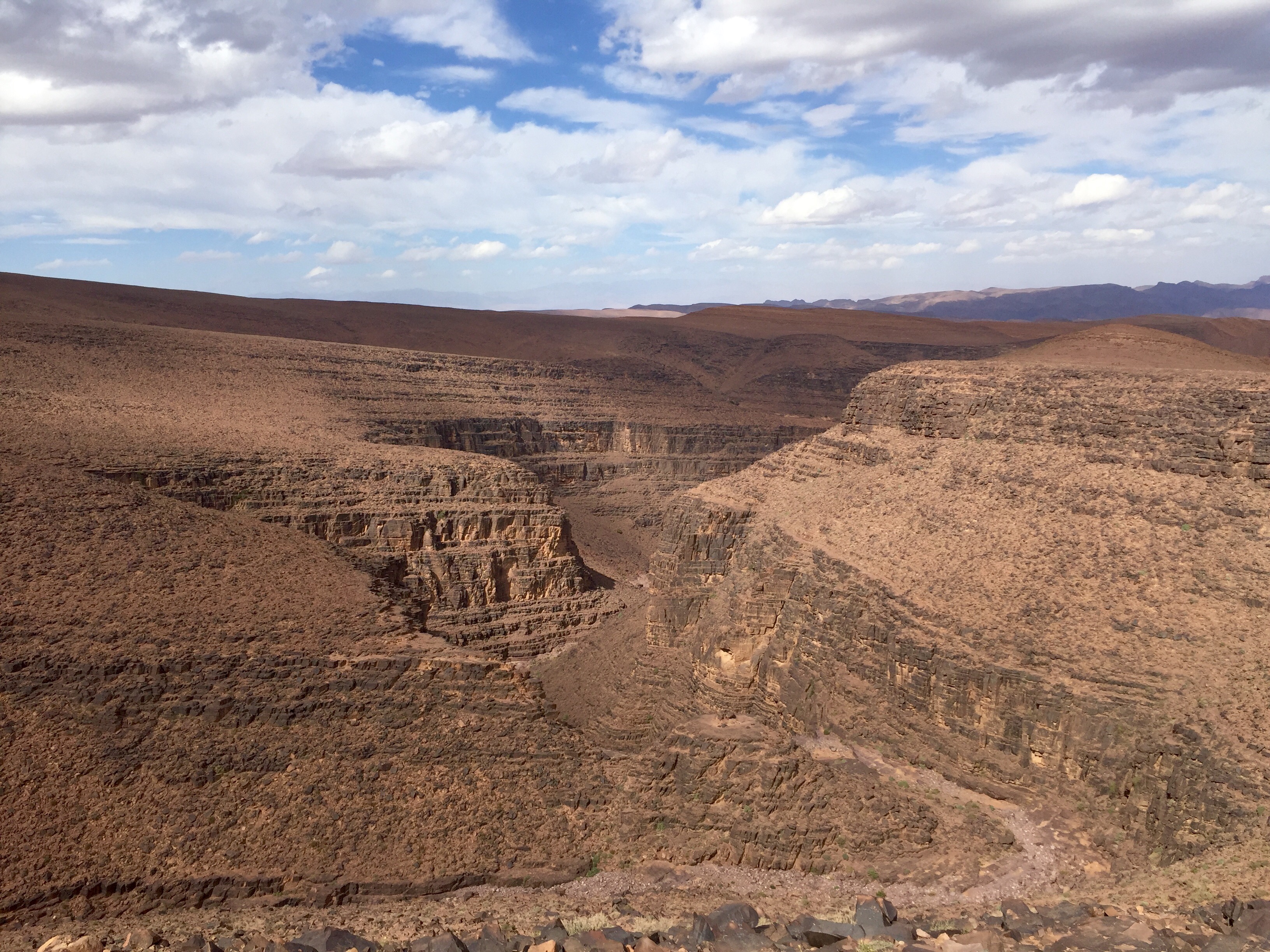
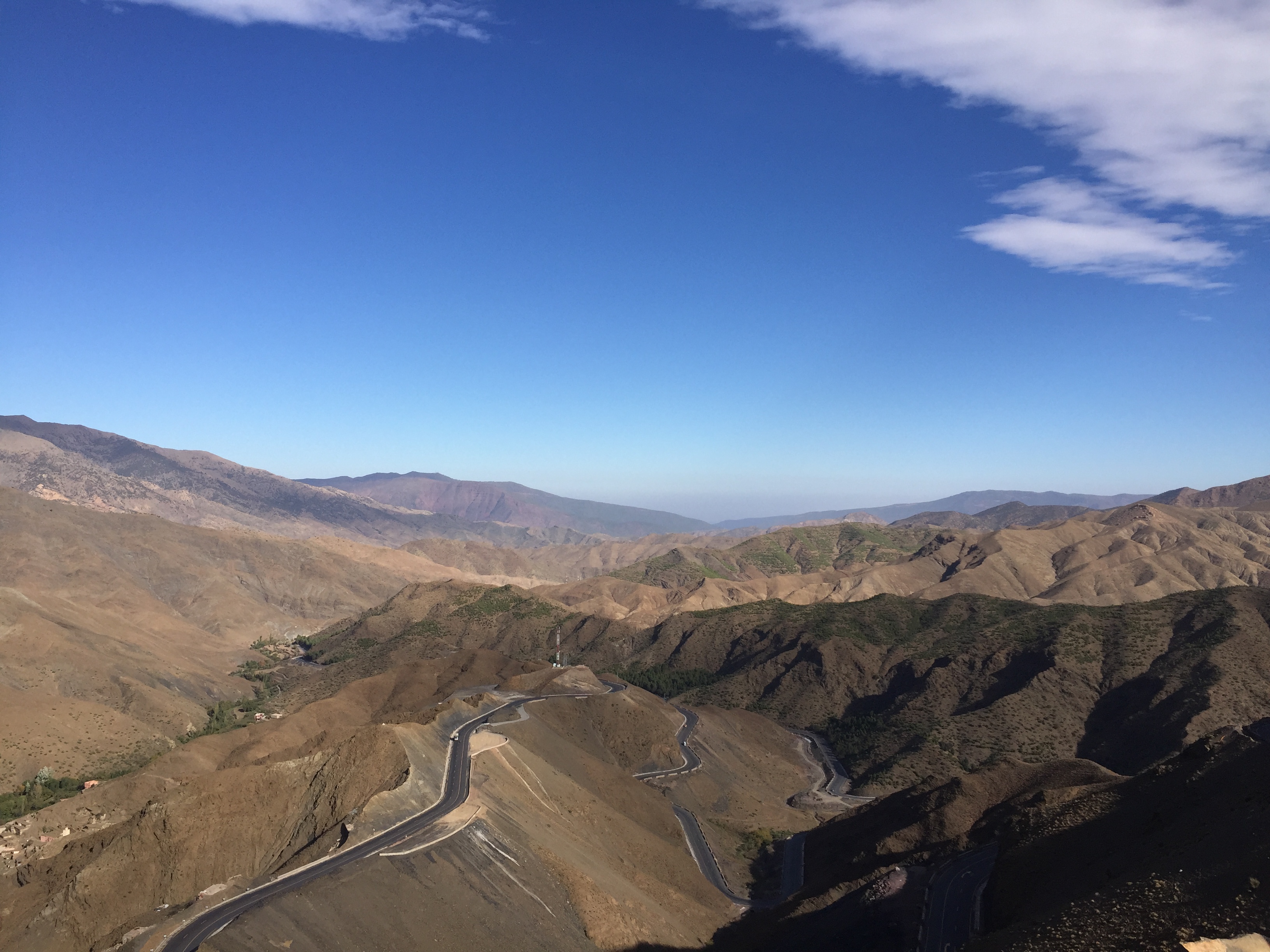
    Ten hours, 34 degree heat, no air conditioning, we were all so excited it didn't matter. 80% of the ride was on twisty mountain roads with a driver who felt he could straighten out some of the curves by driving in the left lane. As I said we were all so excited it didn't matter. He also passed every vehicle we encountered on those roads, including semis and full sized buses, paying no attention to the solid line in the middle of the road. It's a good thing we were so excited. 
    Image

    Image

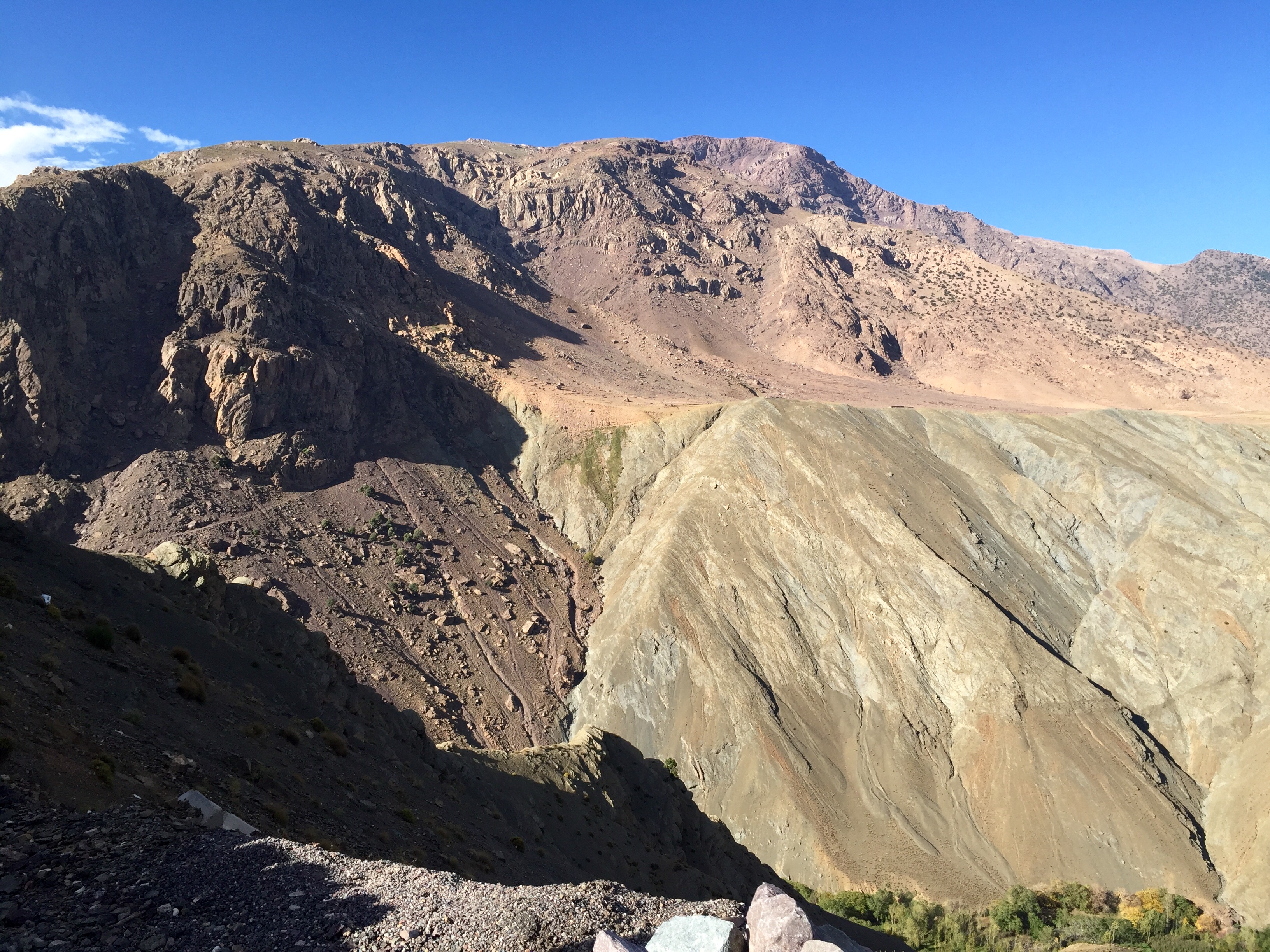
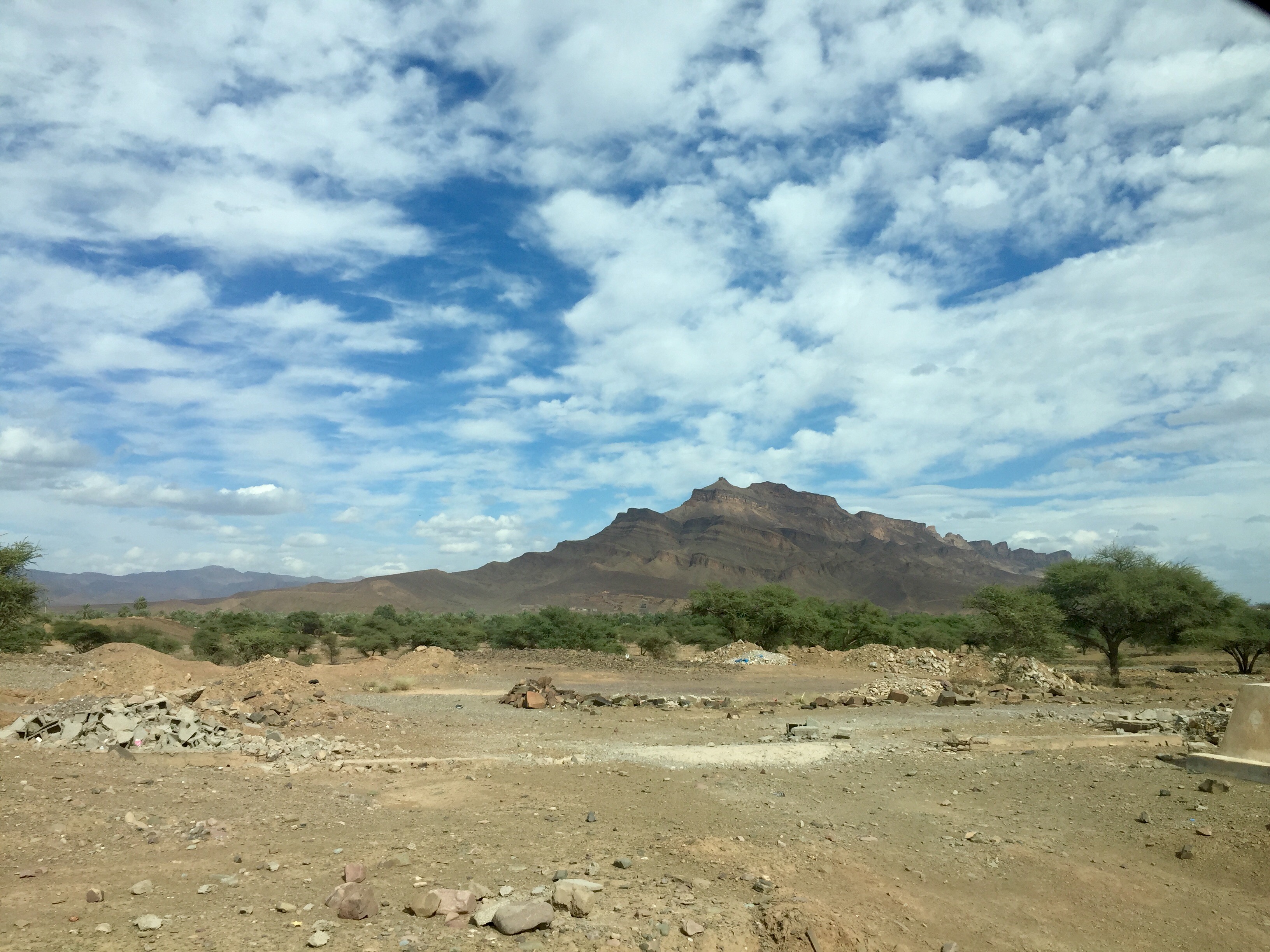
    Who knew there were so many mountains between Marakech and the Sahara? Good thing for Dramamine.
    Image

    Image

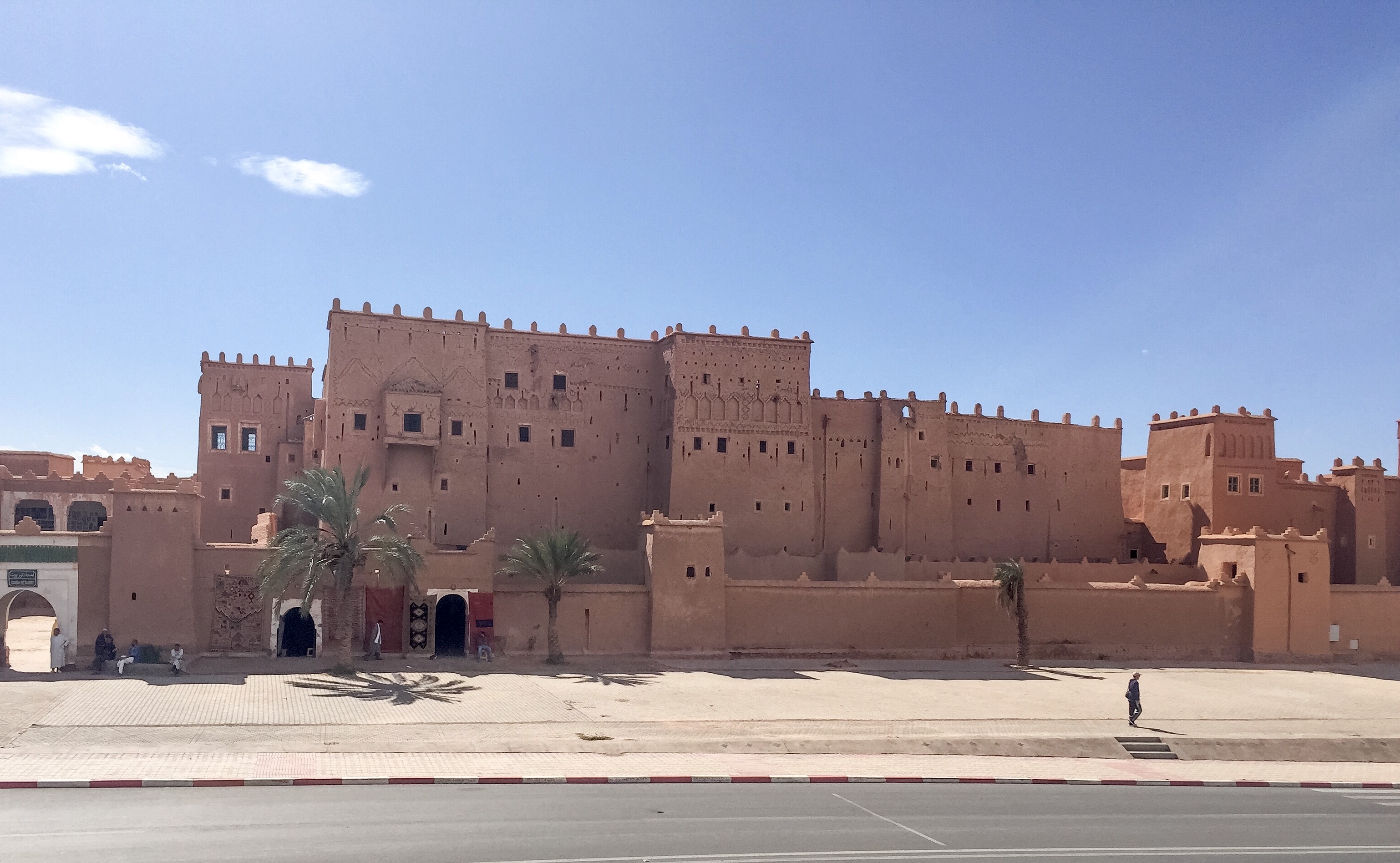
    There were many stops scheduled for photo opportunities and washroom breaks. We had a mediocre lunch in the town of  Ouarzazate, Morocco's film capitol. Any desert film you've ever seen pribably had a bit of its filming and production here: The Bible, the Prince of Persia, Gladiator, Game of Thrones…
    Image

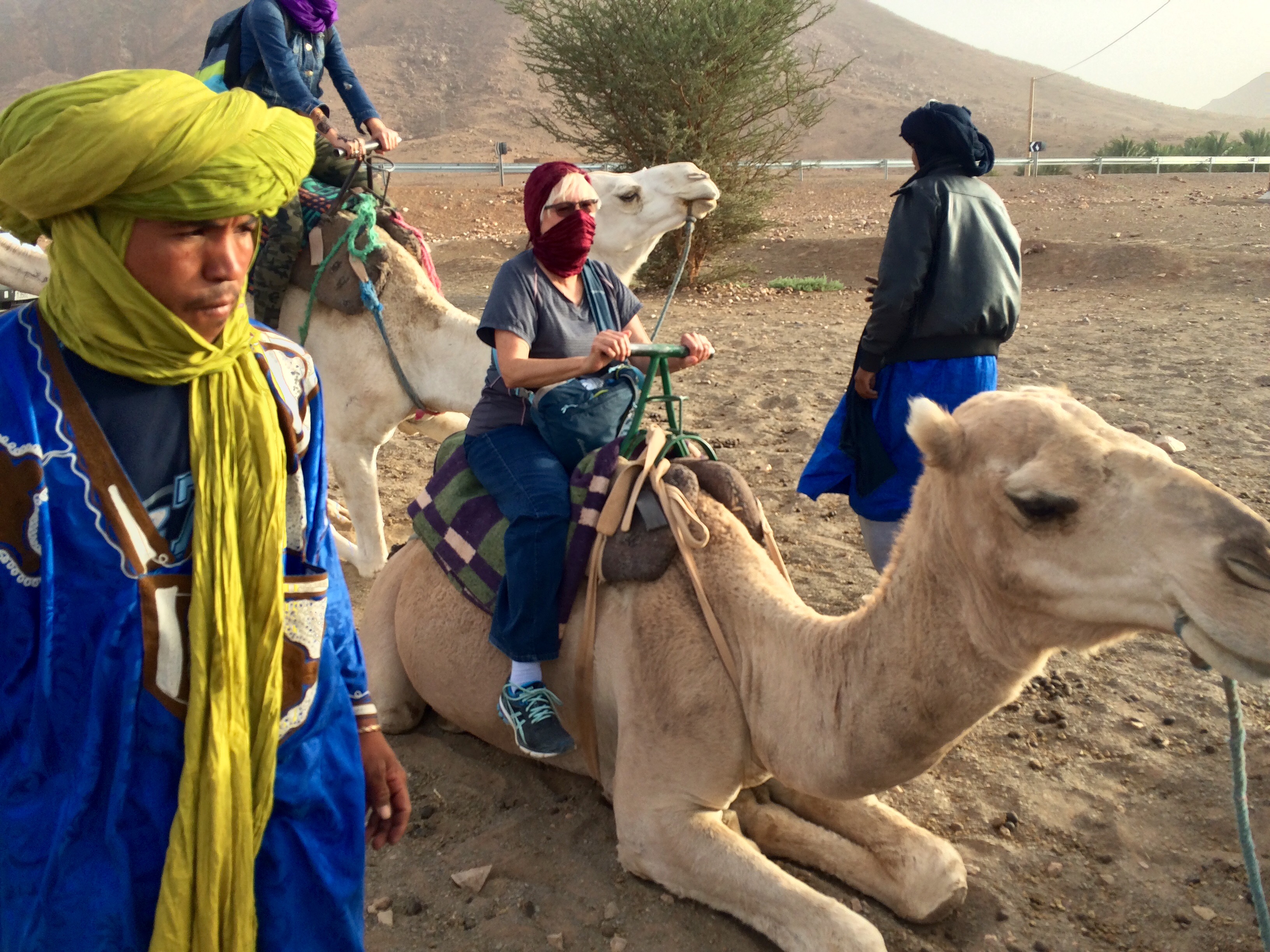
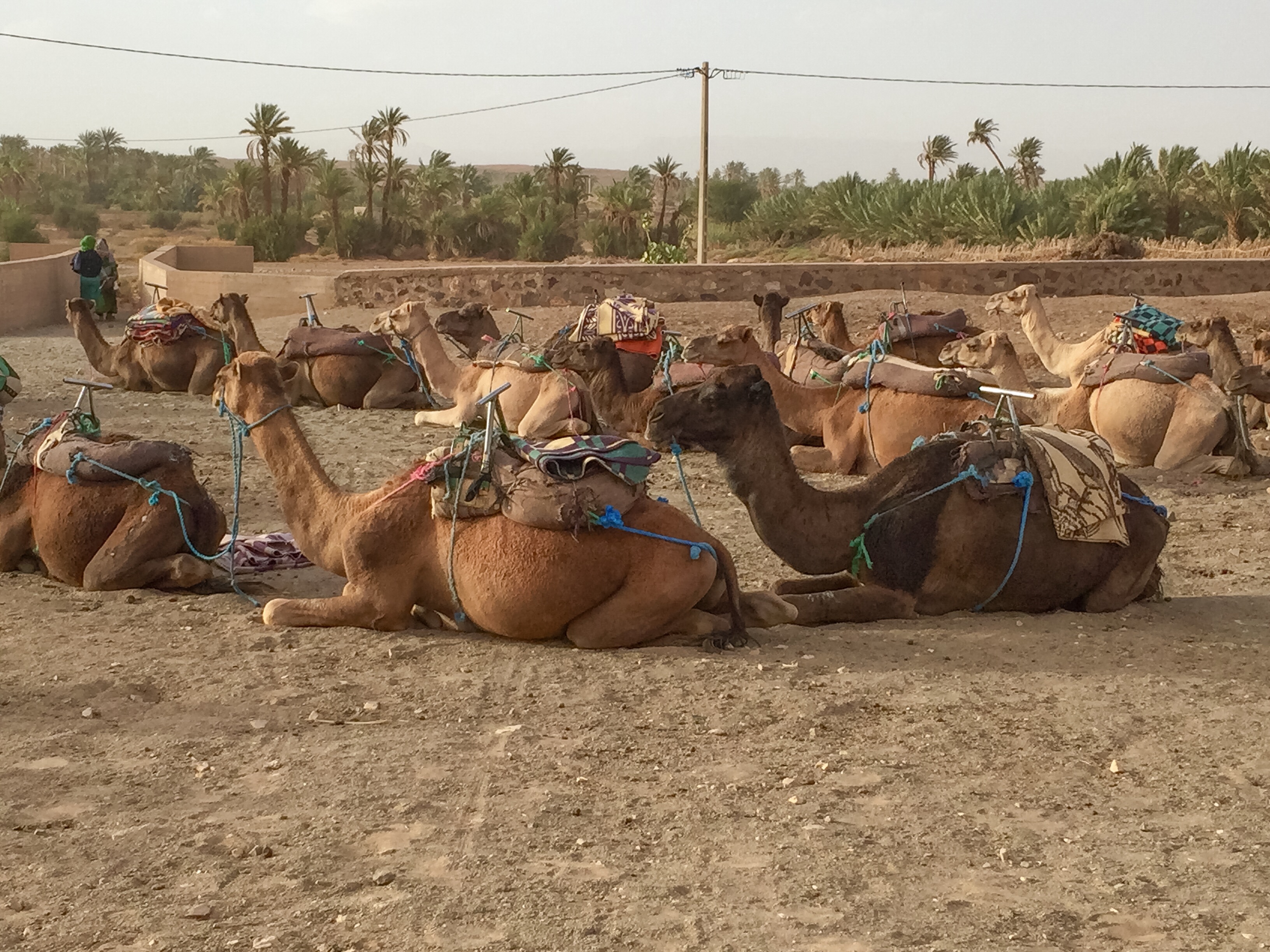
    Another three hours hours and we were most happy to meet our camels.
    Image

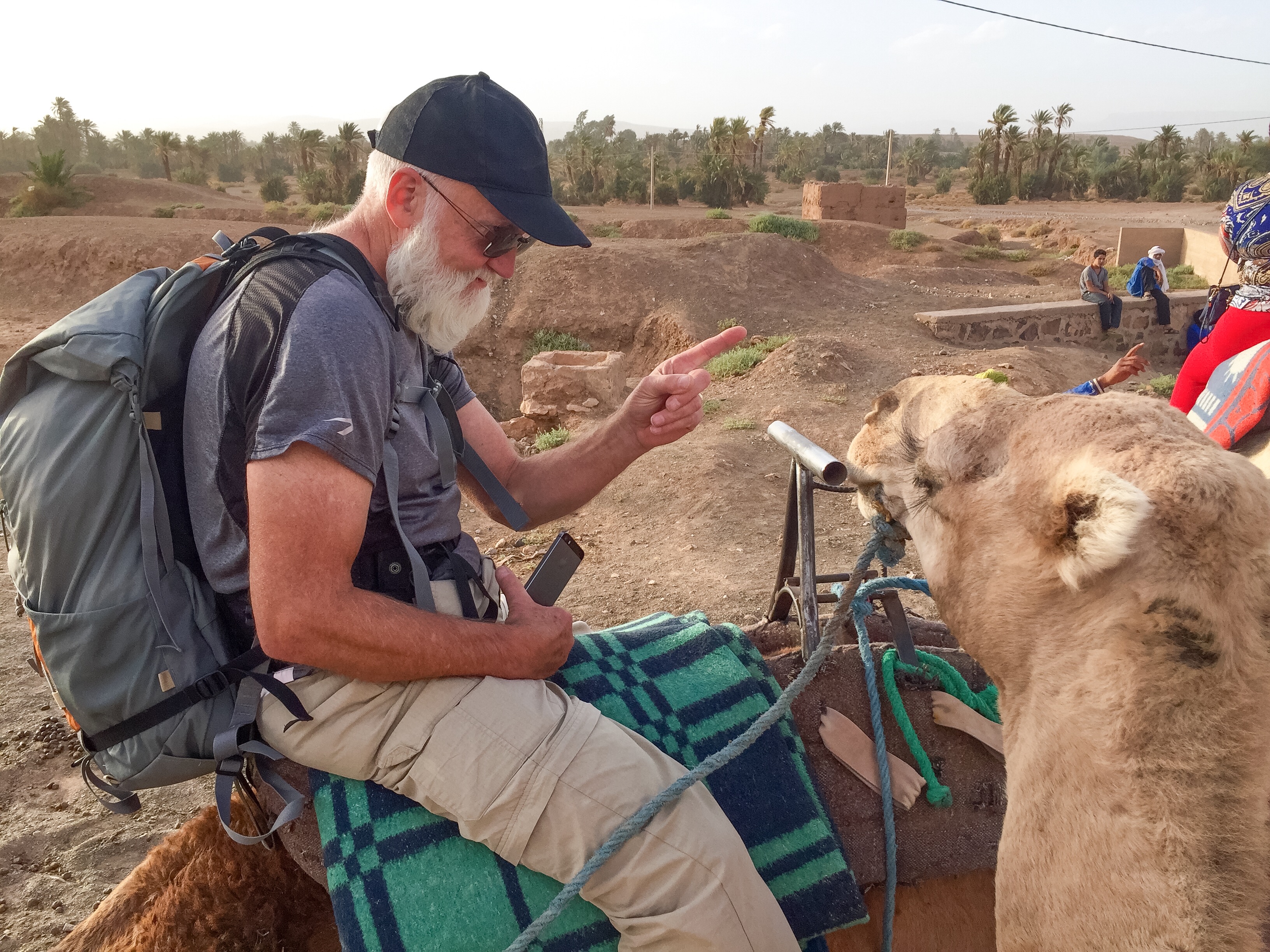
    Chuck instructs my camel not to even think about spitting:
    Image

    Hey, how do you start this thing?

    Image

    Ever wonder how a camel stands up? it's a four stage process.

    Or how it scratches itself?

    Riding a camel is nothing like riding a horse. First off, they are much wider. Then there is a constant rolling motion. Flat ground is fine, uphills are ok, but those downhills are downright painful.

    More dromedary fun tomorrow.
  • Chuck has a new persona. No longer called Hemmingway, as on the Camino, in Morocco people call to him "Ali Baba!" It's the beard. 

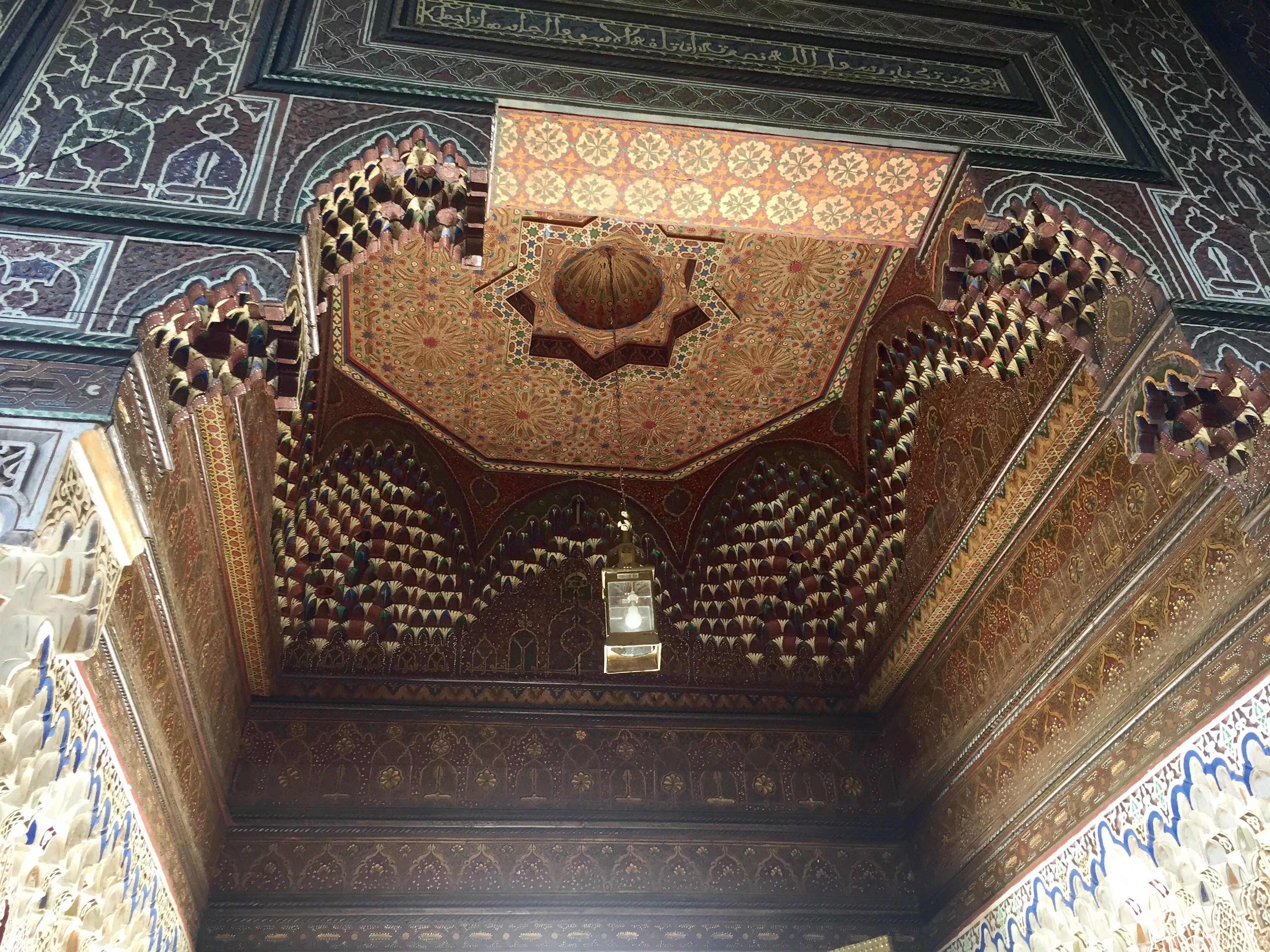
    Back to the tour. We walked through the Jewish Quarter ins on to The Bahia Palace, built in the 1800's by Si Moussa, the Grand Vizier of the Sultan, and named for his favourite wife. It's good to be the favourite wife. 

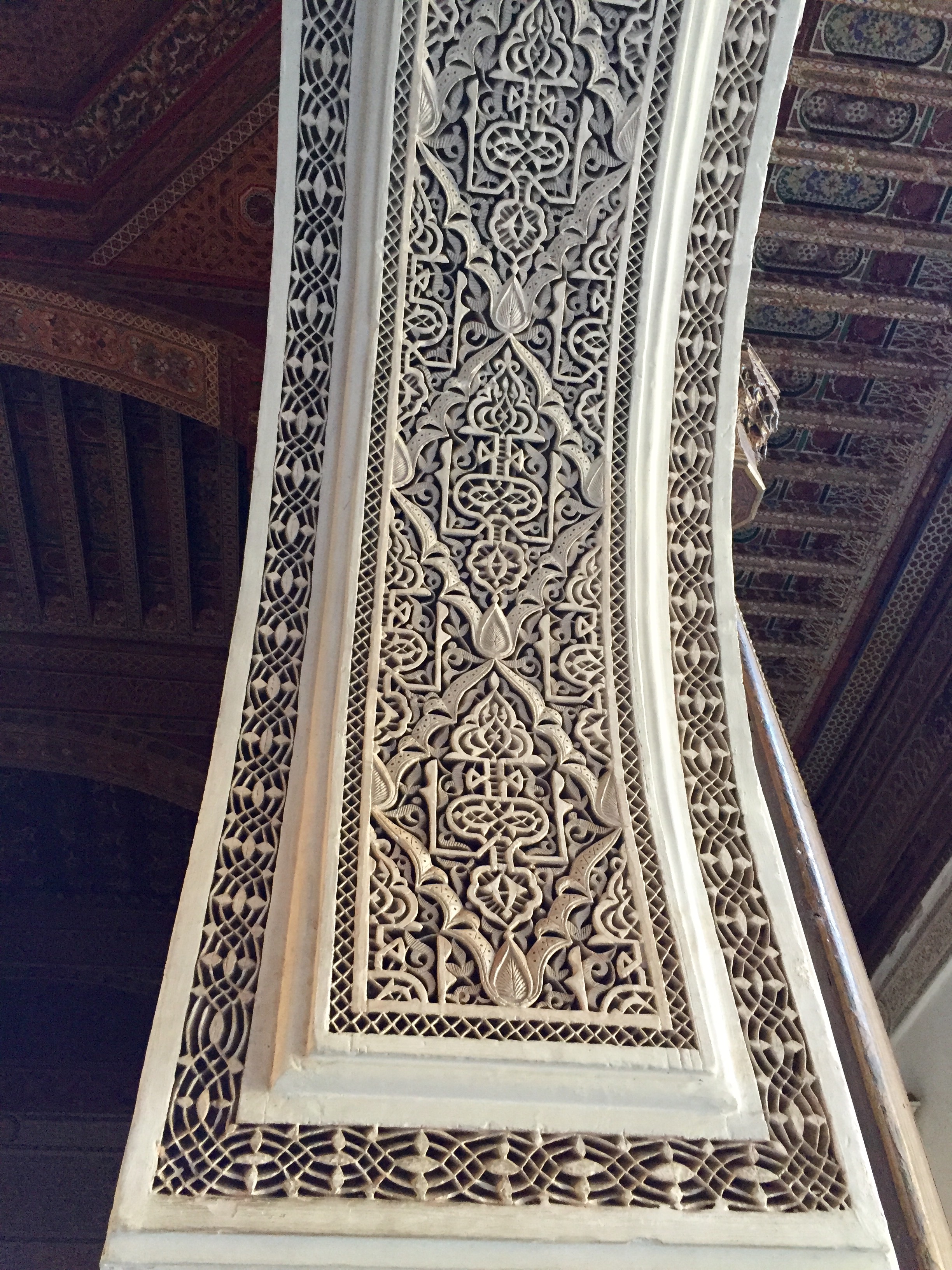
    The detail in this building was spectacular, particularly the ceilings, something we don't pay much attention to in North America. But when they are over 20 feet high, the room feels airy no matter how decorated the ceiling.

    Image

    Image

    You'll notice the geometric patterns and shapes in the artwork, as depiction of the human form or animals is viewed as idolatry and is not allowed in the Sunni Islamic faith.

    Skirting the large city square, Jamaa el Fnaa, we'll come back after nightfall when things get lively with snake charmers, storytellers, snail eating stalls and other food and entertainment 

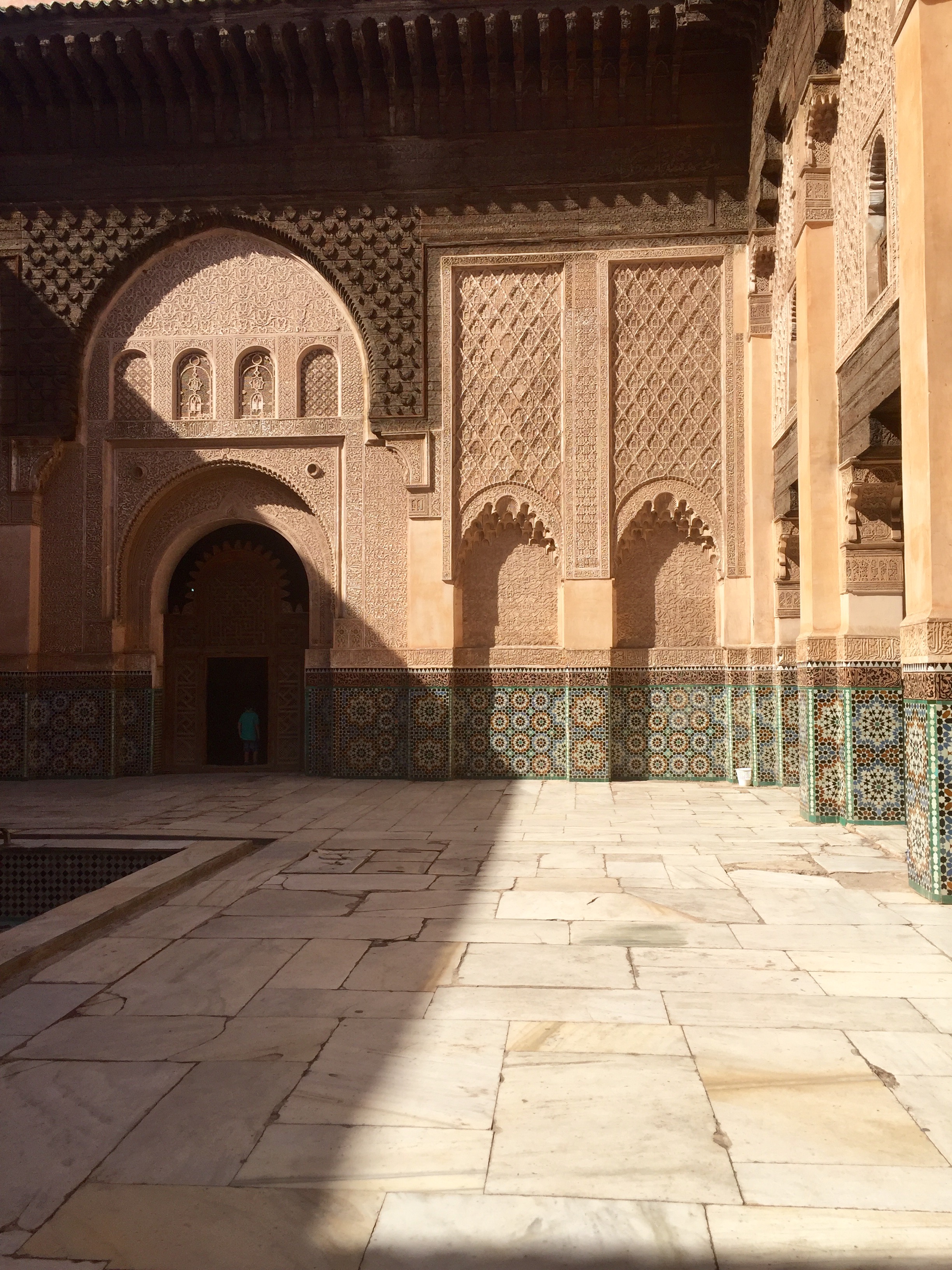
    We wound through the souks in the marketplace and found the Ben Youssef Madrasa, an Islamic college founded in the 1500's. the word 'ben' in a name means 'son of.' C's last name, instead of the Scandinavian version, would be Ben Bo. Someone has to think about these things 😉

    Image

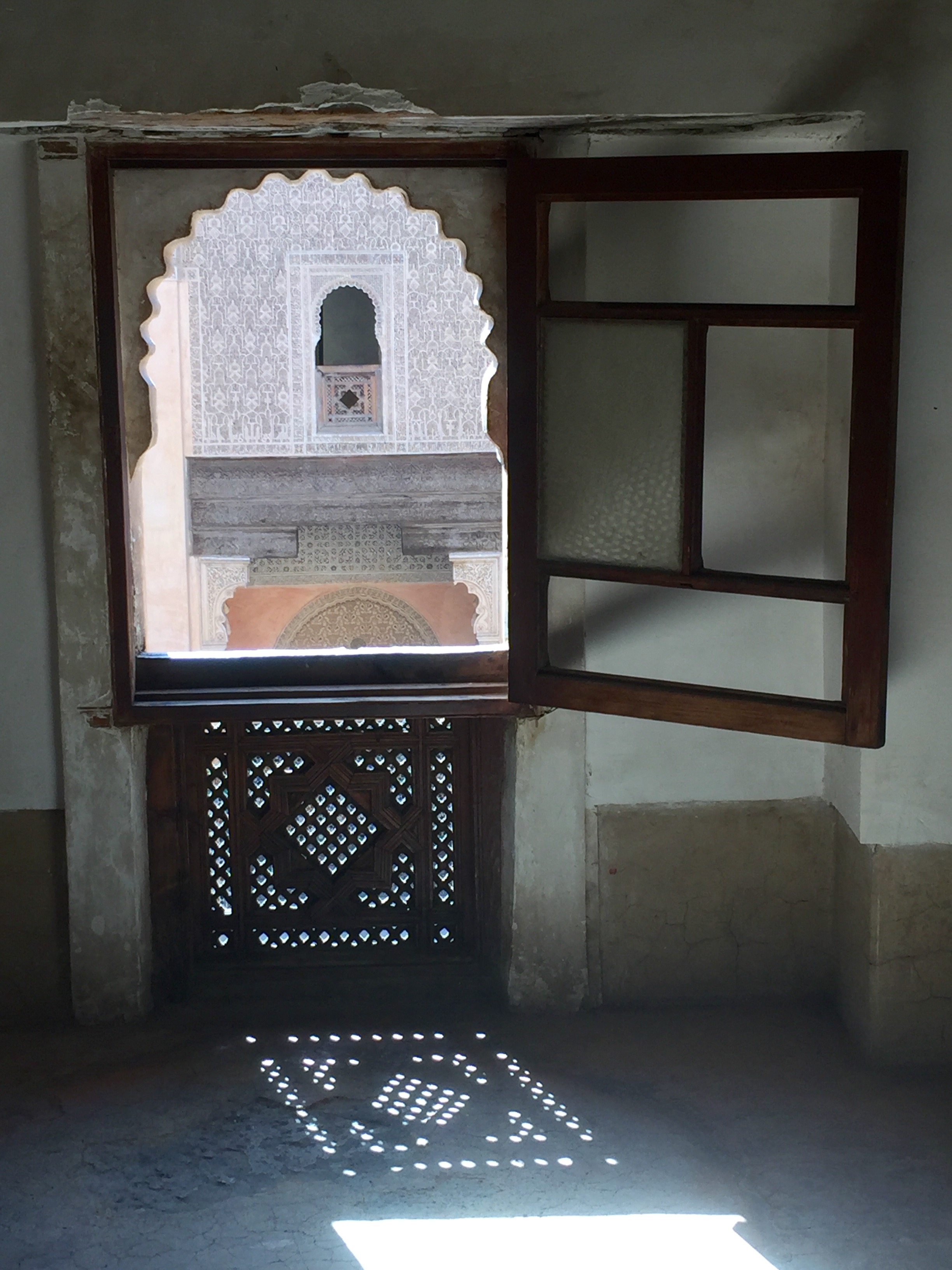
    View from a 16th century dorm room:

    Image

    Walked a little way more by the Hammam  (public baths), still used today. Women's hours are during daylight and men's at night. You scrub up with black soap a use an exfoliating glove. Massages are available. Underneath a man keeps the fire stoked, by shovelling sawdust into a furnace with his bare hands, to heat the water. In the ash are buried tagines, someone's dinner-to-be. He is also a renowned musician. C had a lesson in tassel twirling:

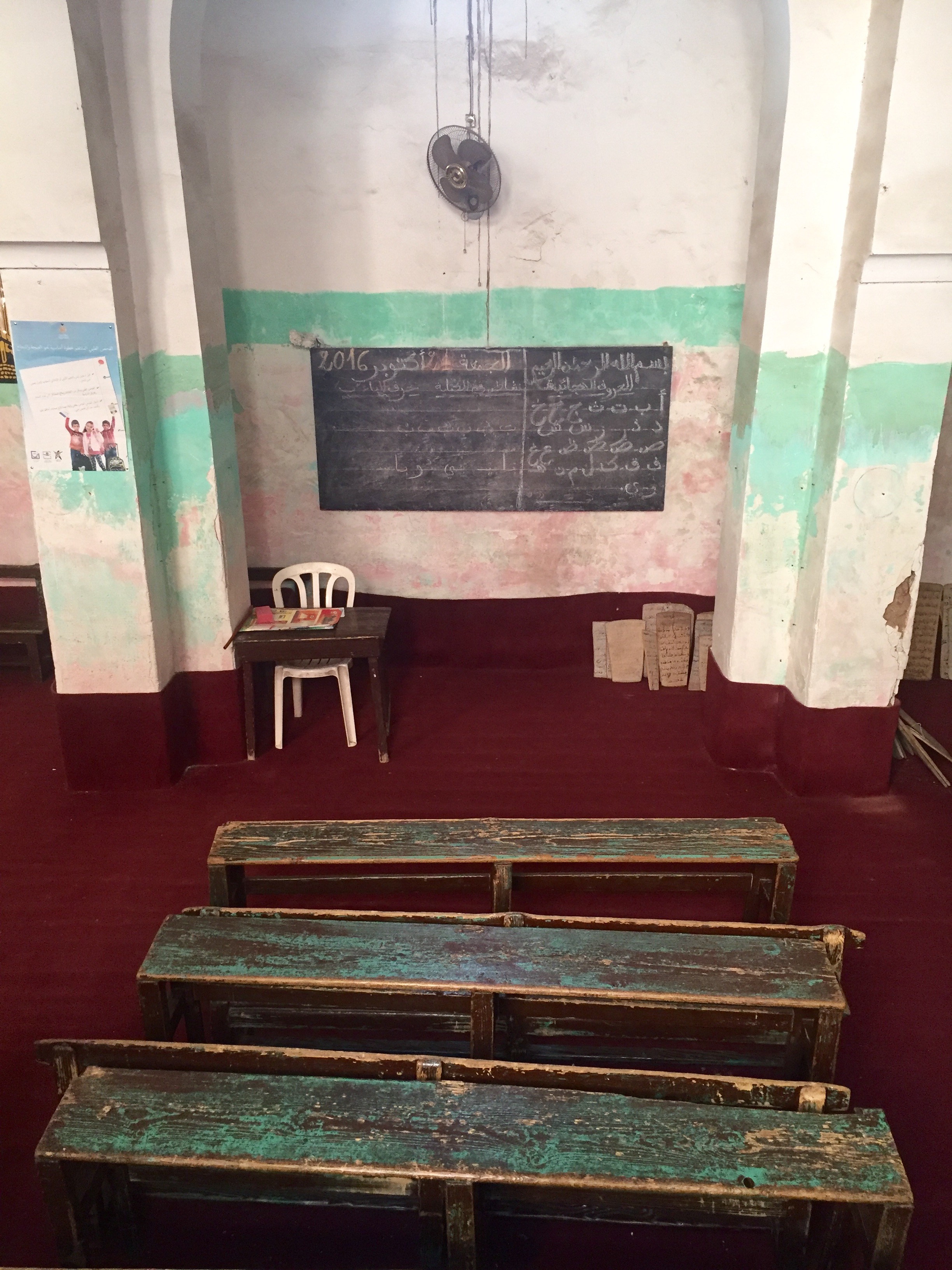
    One more stop at "the Stork House," a mansion donated by a western woman for the purpose of turning it into an arts centre, then past the Koranic school still used today:

    Image

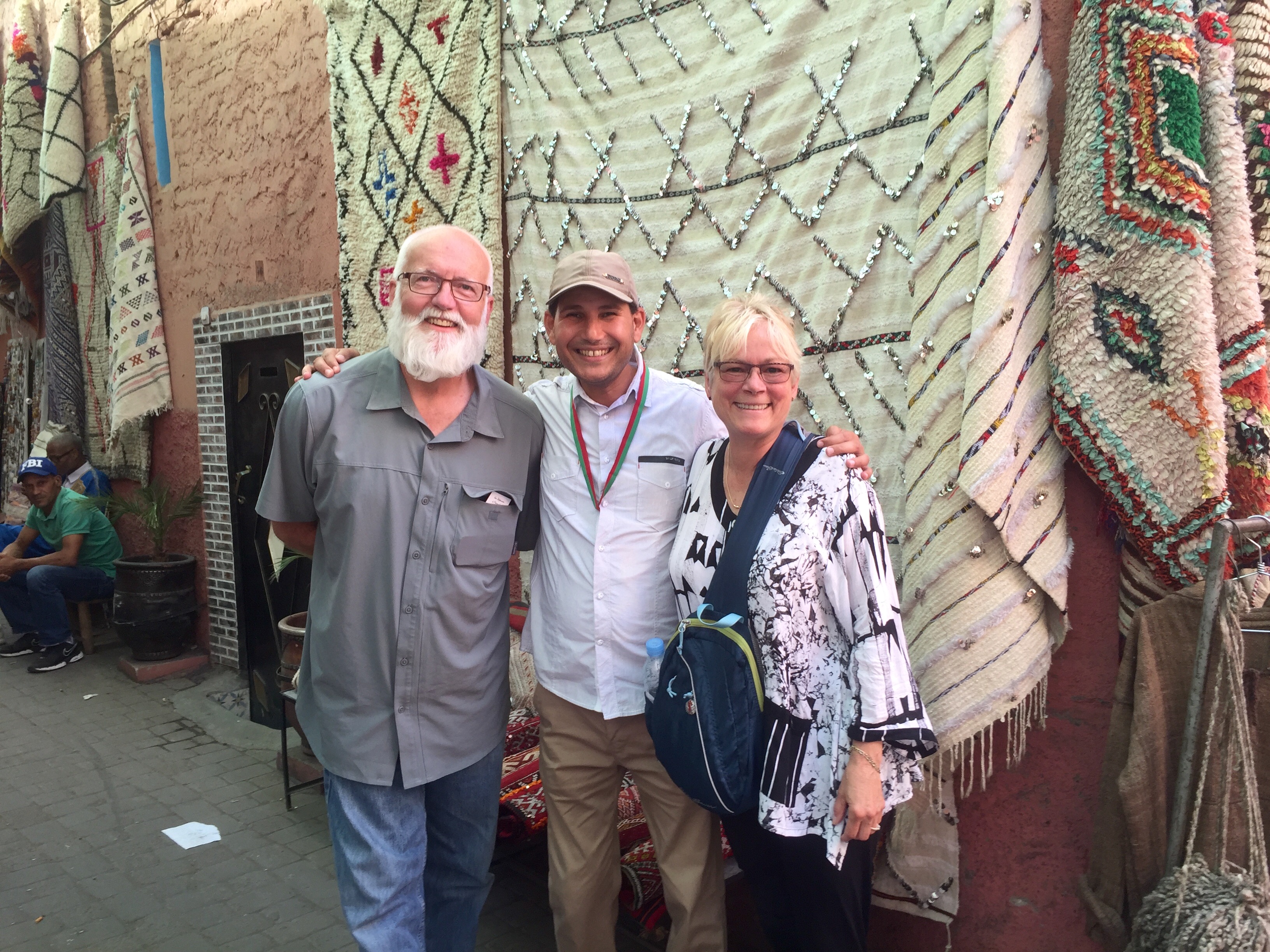
    We said goodbye to Nour, our excellent guide an ambassador for Marrakech. 

    Image

    After the your we successfully found my first African geocache, just 60 meters from our riad. It had a lovely story. A family, concerned about the lack of water available to the poor, installed a water spigot outside their little business, for anyone to access. The older generation has passed, but the adult kids keep up the tradition. They also maintain the cache, which is owned by a friend in Germany.

    Tomorrow Ali Baba and I are scheduled to leave for our camel camping trip on the Sahara.


  • This is how we were awoken at 6:00 a.m., all was dark.

    It's the Muslim call to prayer, heard five times per day. We didn't realize we were so close to the loudspeakers in the mosque's minaret. When you think of the intention, a call to prayer is a nice thing to be witnessing. It seemed to vary in length, one morning it was 15 minutes.

    We hired a licensed guide for a day of walking. Nour was an intelligent gentle man who is fluent in eight languages and knows another, but not to his satisfaction. We found that to be a common trait, multilingualism. Even in a small town we later visited, we heard the Moroccan server conversing with the customers at the next table in Japanese. 

    If you are visiting for a short trip, hiring a guide in advance is a wise decision. Beware of unlicensed young men in particular, persistently offering their services. They are illegal guides and tend to use unscrupulous methods to target your money. A licensed  guide must have a bachelor's degree or be educated in other languages, successfully complete a government training course and wear an official name tag. 

    Nour concentrated on history and culture, he educated us on shopping, but that is not his focus. We invited him to join us for lunch and had an interesting discussion on religion and life in Marrakech. The Islam practiced in Morocco is based on principles similar to other world religions. In fact one of the main tenets is to respect holy books including the Bible, the Torah and the Quar'an.

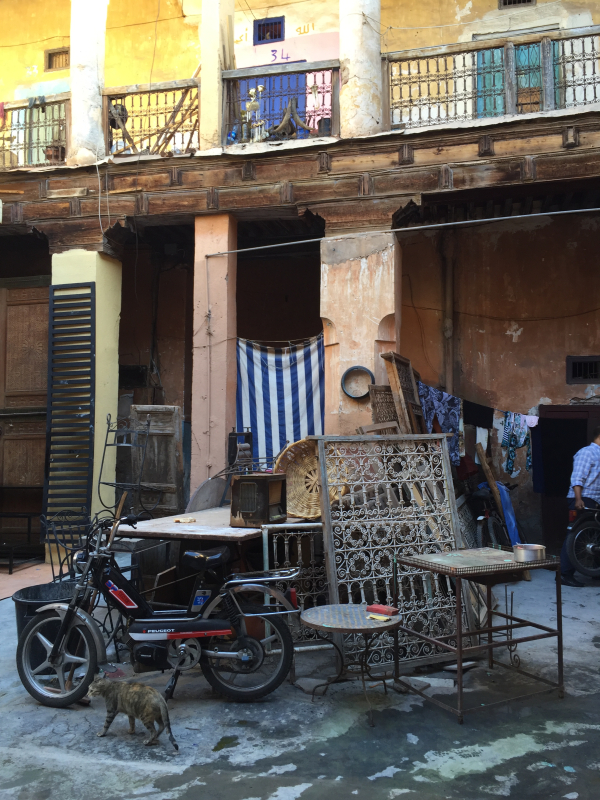
    We walked through the souks, the medina's shopping areas, each specializing in specific items: leather, metal works, spices and dyes, garments… More on that in a later post. We past caravanserais, the central point for organizing caravans for travel across ancient trade routes, along with accommodation for the people and animals involved. This one has yet to be renovated:

    Image

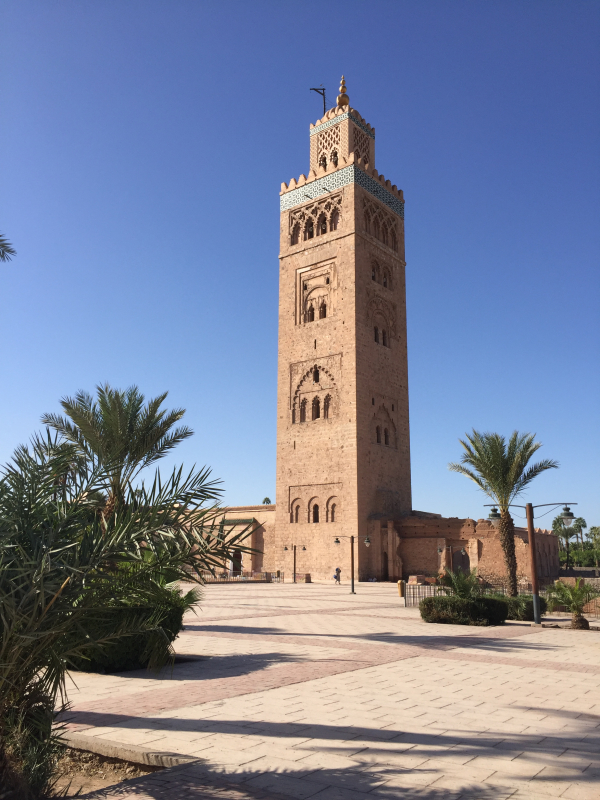
    He guided us to the Koutoubia Mosque and Minaret:

    ImageMinarets in this region are square rather than round. This mosque complex was originall built in th 12th century and was rebuilt when it was discovered the orientation to Mecca was off by five degrees. The new one is supposedly off by ten degrees. It's not an issue as those praying can adjust their position to be in correct alignment.

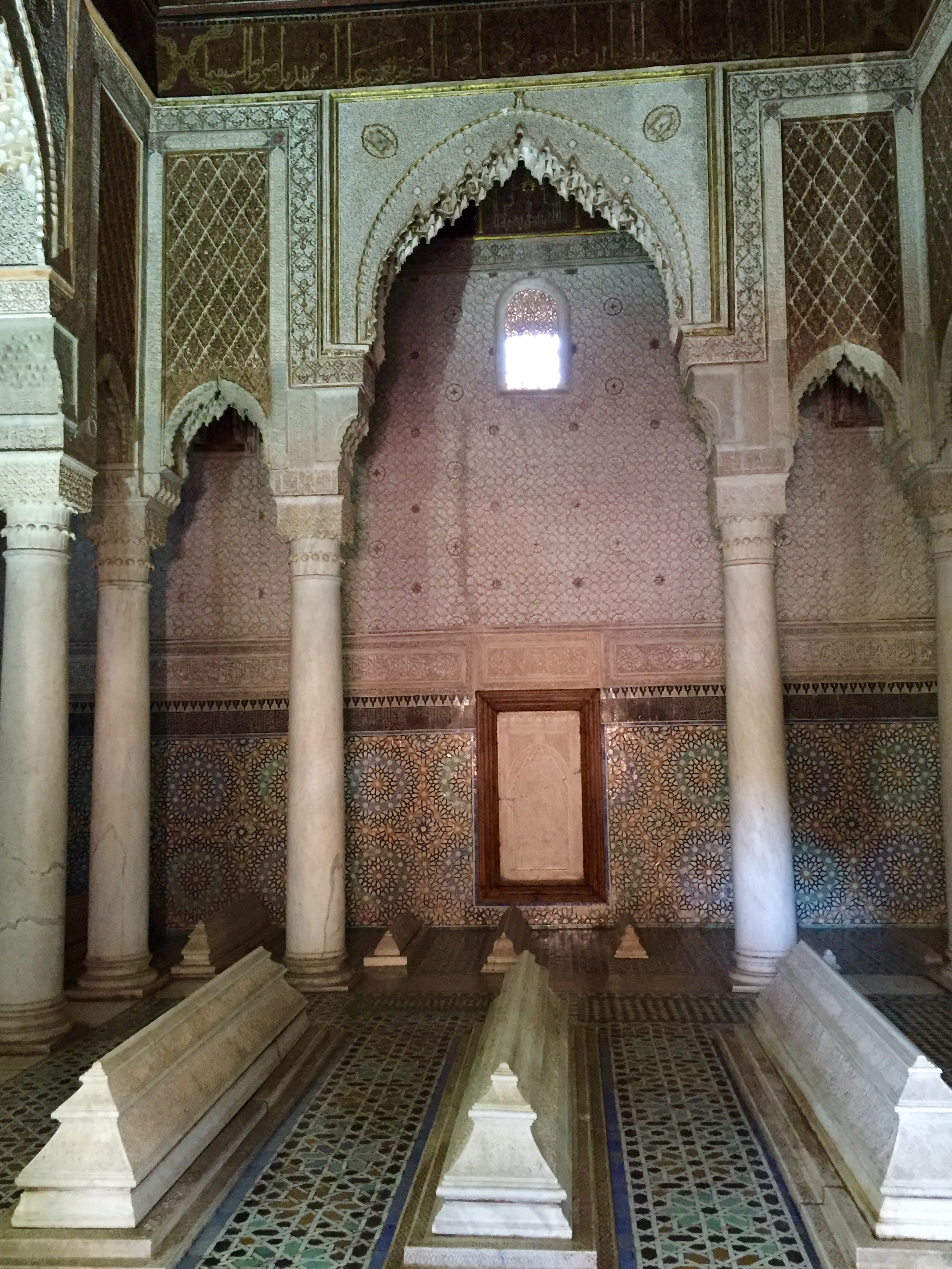
    Next was the 16th century burial site of members of the Saadian dynasty. Servants and others were buried in the garden, the difference being that the non Muslim ones are not positioned to face east toward Mecca.

    Image

    These buildings, nowhere near as old as the Roman ruins we visited in Spain (I believe the oldest building in Marakech was built in the 1100's), are in excellent condition with intricate detail made of carved plaster, marble and cedar, plus inlaid wood.  said Hmad (1841-1900) . 

    Are you experiencing information overload? We felt that way at times, but I want to get it all down before it melts in our memory into a jumble of beautiful buildings, markets and squares. More tomorrow.
     

  • Image

    We spent more than we needed to for an airport transfer through Viator. It was comforting, in an unfamiliar foreign country, having the security of someone waiting with your name on a sign while you go through the long lineup for Morrocan immigration. I believe that nearly all world passports are machine readable, but for some reason the information was being hand entered by the agents. 

    We picked up our one medium suitcase (the Camino does have that impact, learning to travel on the light side), which was nicely shrink wrapped by the airline for its layover in Casablanca.

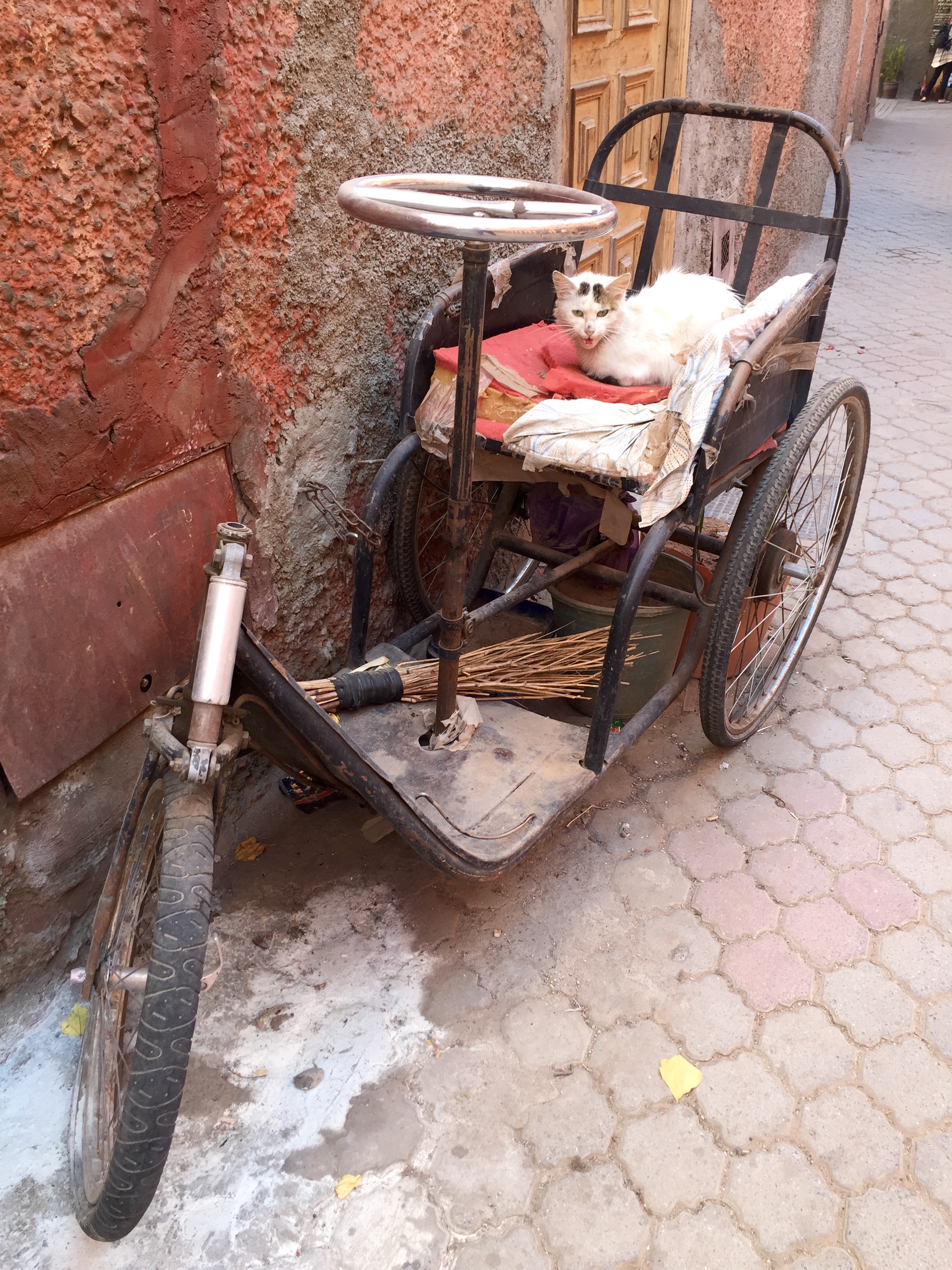
    It was the end of a long day, so first impressions were tainted with tiredness. Marrakech's medina is an overwhelming crowded maze by day, and at night throw in the dark to add to the confusion potential. Packs of people, neon lights, no cars, but loud mopeds scooting on the same track as pedestrians, lots of cats in front, behind and above. It was pretty much what I was expecting, C was thinking the old town would be less run down. 

    Image

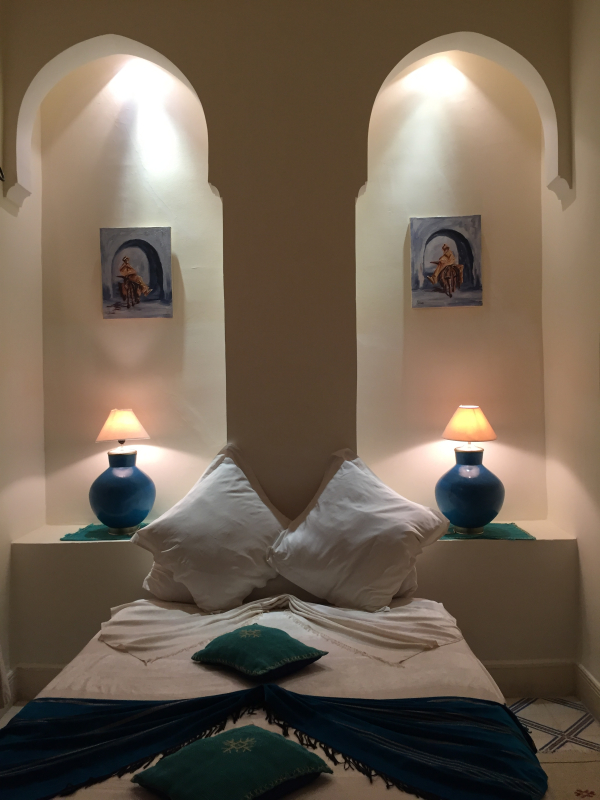
    We are staying in a riad, a traditional guest house right in the middle of the medina. The manager met us at the point where cars were no longer permitted and walked us in.  

    Image

    He later walked us to a restaurant for our first tagine, one with chicken and apricots, the other lamb and prune. There we met a couple from the Netherlands, although he was originally from Iran, who gave us a course in Marrakesh 101: how to bargain, don't get directions from the young men on the street who misguide you then charge you to escort you to the correct place (use the Maps.Me offline app instead) where to eat…

    We found our way back to the riad dodging mopeds and bikes, and fell into bed just before midnight.

    Image

    It looks way more upscale than it is, but it's nice for a lower priced riad in the medina.

  • October 22

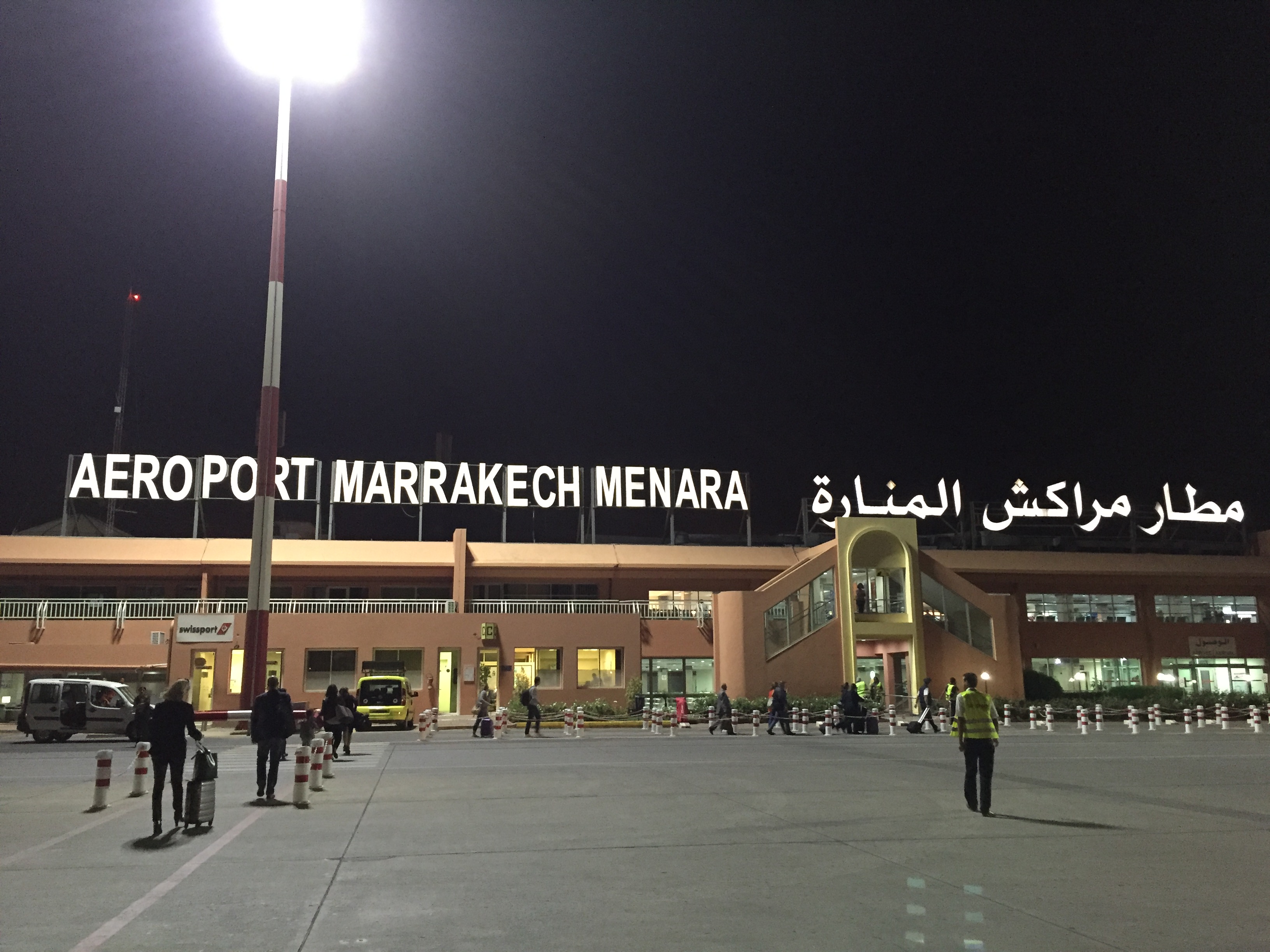
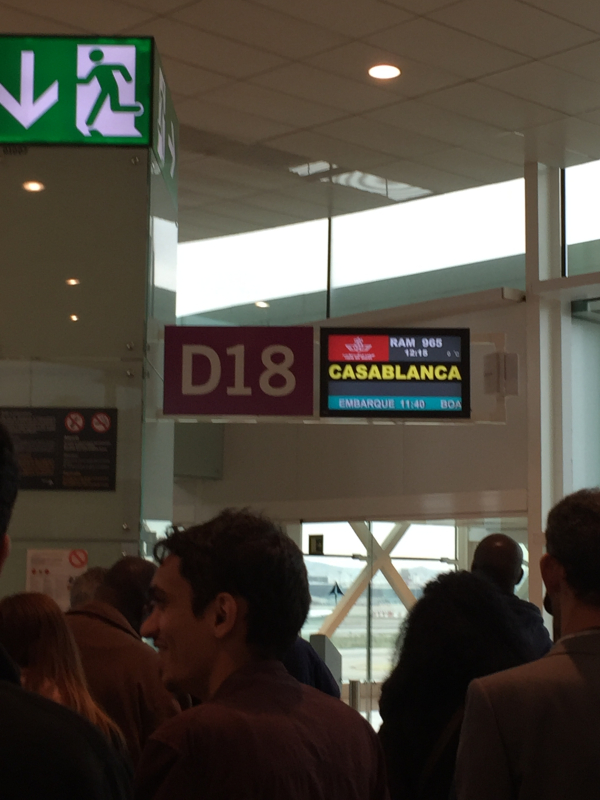
    Waiting for our flight to Casablanca where our feet will first touch a new continent, the airport sign seemed unreal. 

    Image

    By the end of the day we're scheduled to be at Riad Al Jana in Marrakech. I'm told by a fellow passenger that it translates to a house like heaven. 

    We read that the authentic Moroccan experience includes a stay in a riad, a traditional home with a garden courtyard in the middle rather than windows to the outside. It was explained that a house without the garden has exposed windows with elaborate grillwork so nobody can see inside, in order to protect the privacy of the women. Would prefer the garden variety, the bars looked a wee bit prisonesque to me.

    Our riad is located in Marrakech's medina, the maze like old city, which contains historic sites and the souks (marketplaces). We have booked a personal guide for an all day tour tomorrow.
    In the meantime, however, we're laying over in the Casablanca airport. The flight was good, more legroom than most, but in need of housekeeping. Royal Air Morac has apparently not received the memo that flights no longer include food, so we were pleasantly surprised when on a two hour flight, lunch was served: four chunks of nicely spiced Moroccan chicken, couscous, pasta and olive salad, bread and cream cheese and plain sweetened yogurt for dessert.

    We had heard that the Casablanca airport had shopping, restaurants, and an opportunity to change money, however, that's in the international terminal. It's a good thing we had lunch; for our 5.75 hour layover we've been sequestered in the domestic section, a large echoey room with eight gates, a predictable number of unhappy children and antsy smokers pacing the floor. 

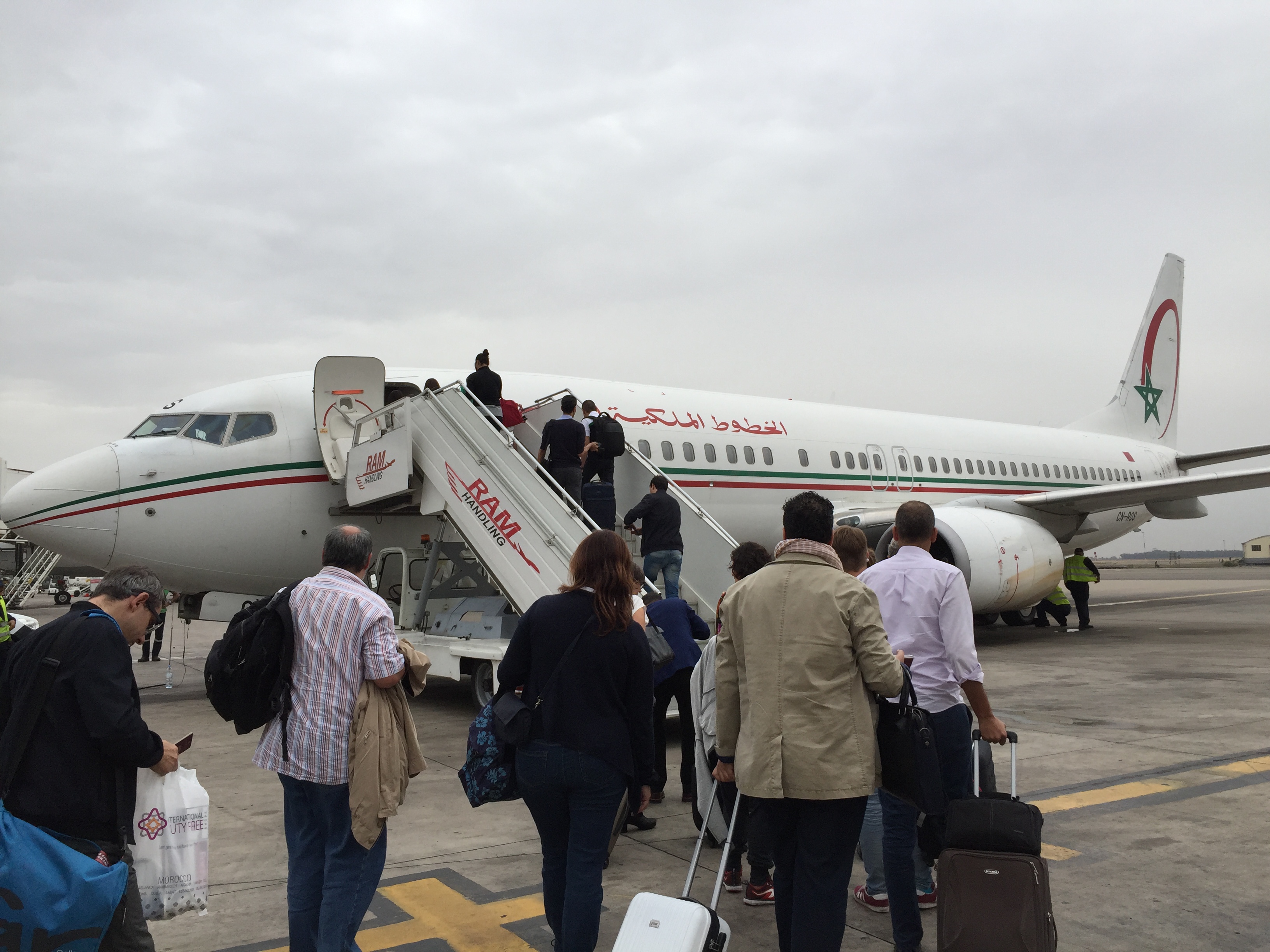
    Royal Air Maroc plane in Casablanca:

    Image

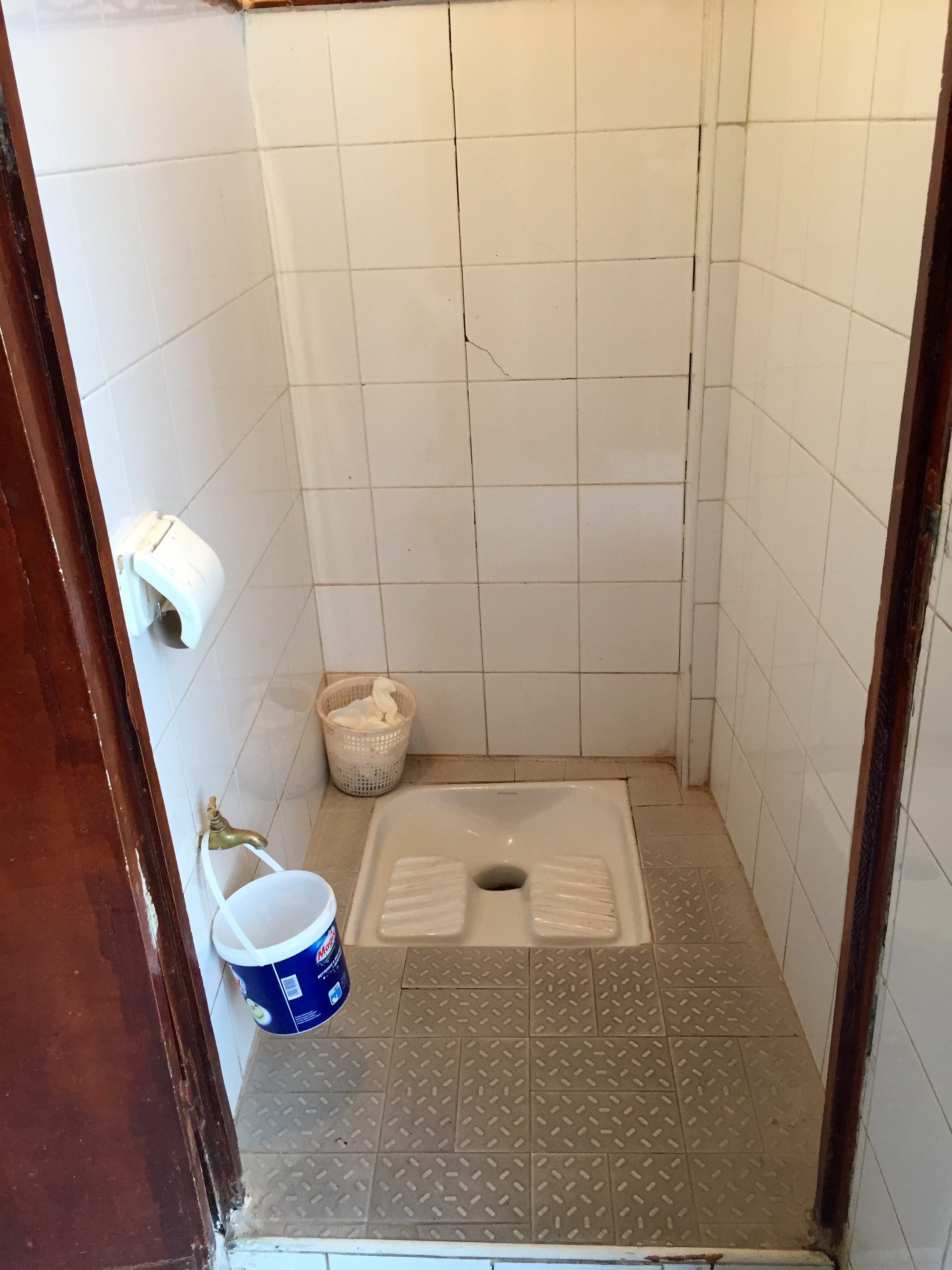
    This is an appropriate time to bring up the Camino concept of the bathroom score, having made a trip to the washroom. We had fun with other pilgrims coming up with a scoring system, assigning a point for each item:

    – A toilet seat. Thus is a spotty occurrence in parts of Europe, and now I can say the same holds true in Africa. Really, though, the presence of a toilet or lack thereof, is even a possibility. The foot pads on either side of a hole in the floor still exist, although I've yet to have to utilize one.

    Image

    – Toilet paper. Pilgrims always have a supply in their pockets.

    – Water other than cold. Rarely happens.

    – Soap

    – A means to dry one's hands: paper towels or a functioning hand dryer.

    – Extra points given for cleanliness.

    Only one bathroom came close to having everything and that was in France. I think it was at a cafe.

    One other Camino observation by a pilgrim I met. Why, on long stretches of the path without services, do you find so much toilet paper strewn about, when you hardly ever find any in a bathroom?

    Tomorrow: Marrakech


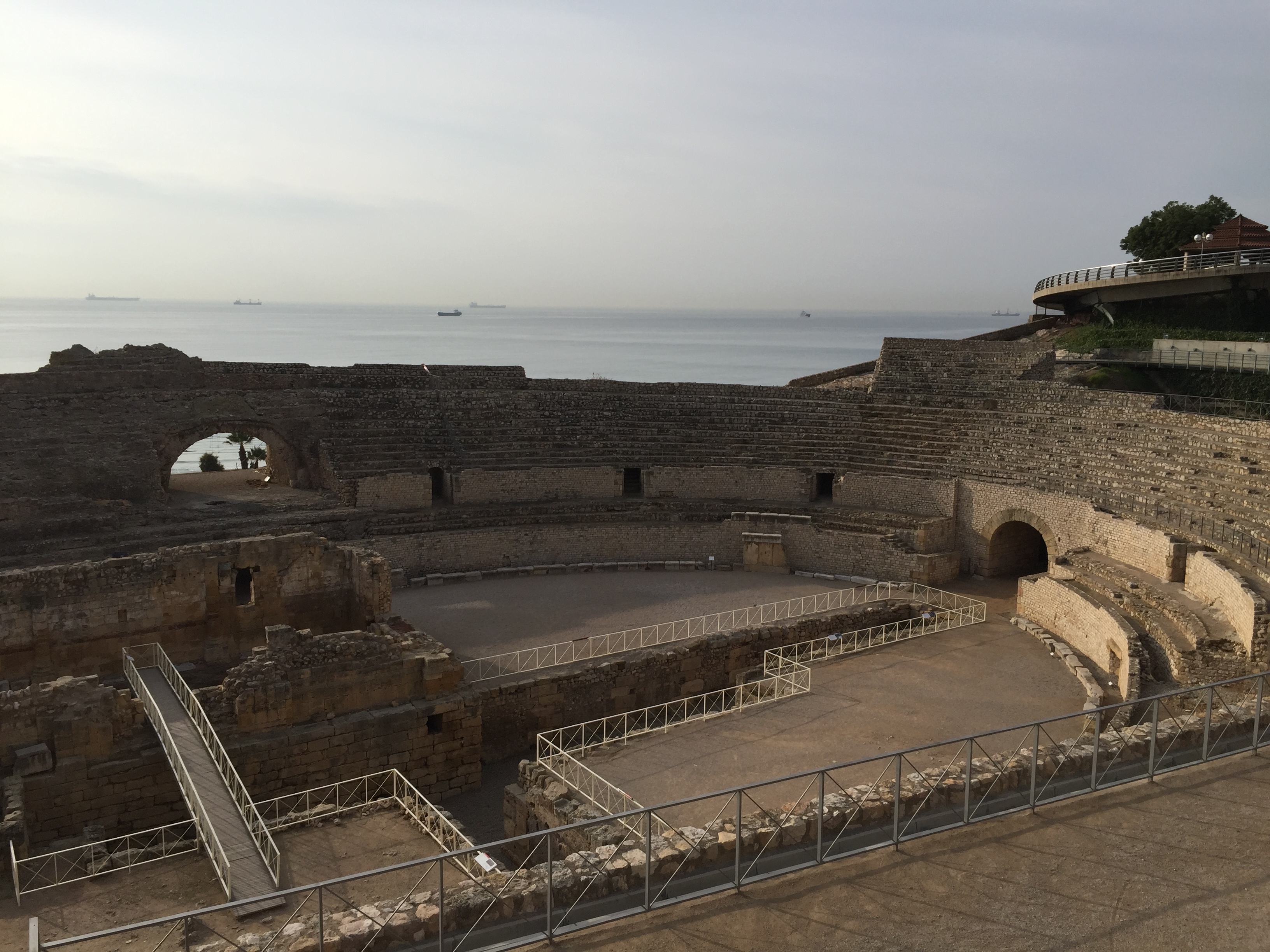
  • Another example of the stretch of the Roman Empire and its impact on infrastructure. After 2000 years, amphitheatres, roads, bridges, aqueducts and other buildings still stand. 

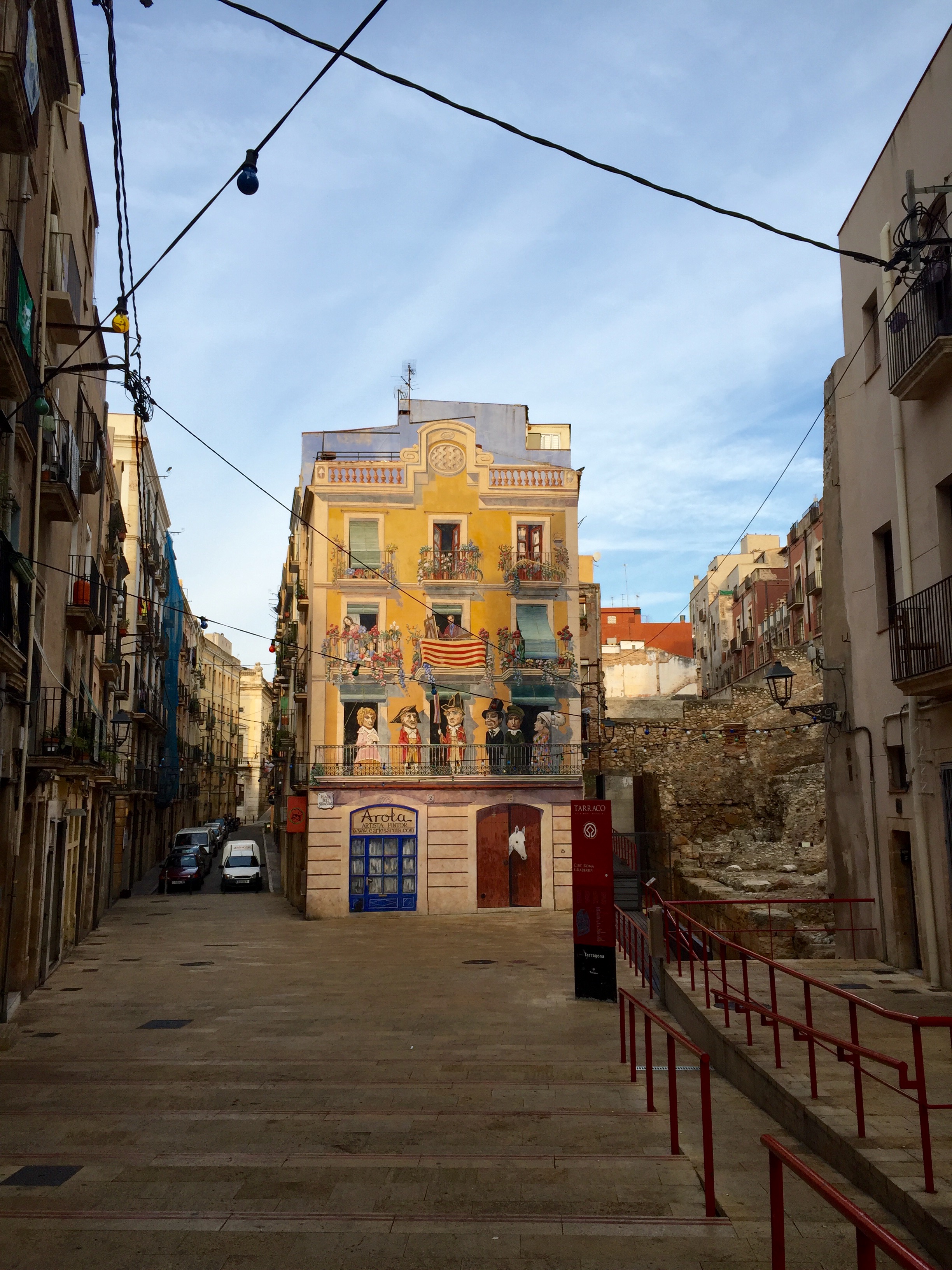
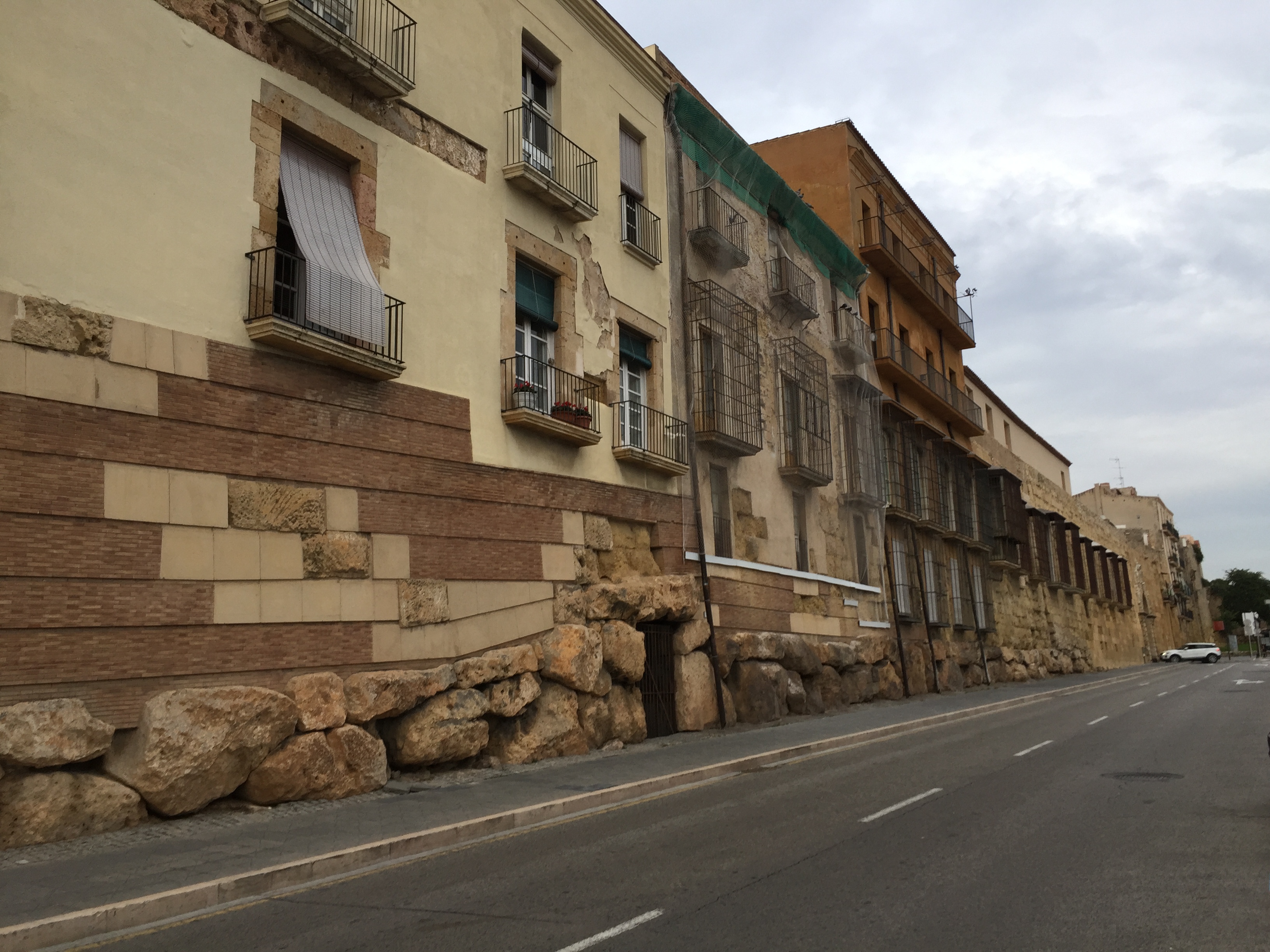
    Tarragona was the ancient Roman city of Tarraco. Today's city was built right on top of the original settlement. Like the picture of the bank in yesterday's post, there are places where you can't separate the old and new. Apartments located right in the ruins, newer structures using Roman foundations. 
    Image

    Image

    We're staying in the old town in a 4th floor Air B$B walk up apartment. About 220 square feet, it's laid out brilliantly to include a separate bedroom, kitchenette and living area. The bathroom is 2.25 ft wide by 8 ft including the shower. We're within walking distance of:

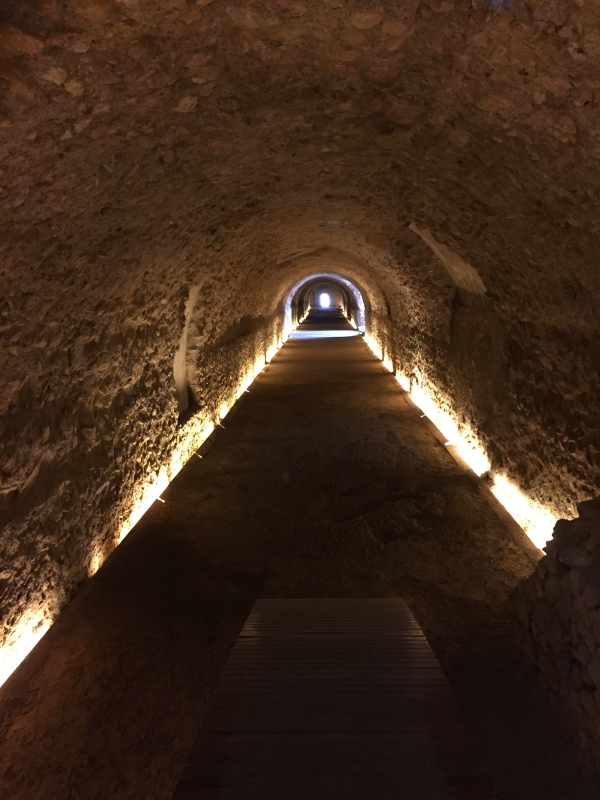
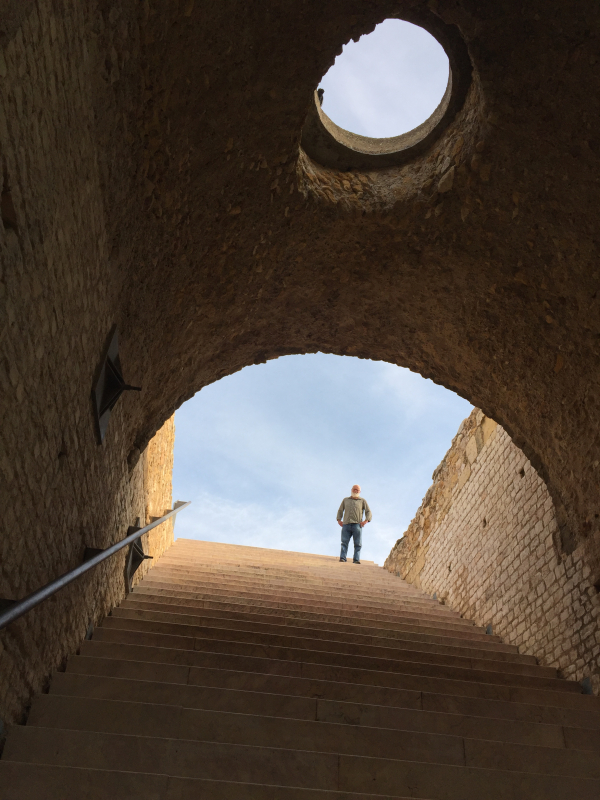
    The Circus, which held the gladiator races and 30,000 spectators:

    Image

    Image

     The amphitheater: Image
     And the forum:

      Image

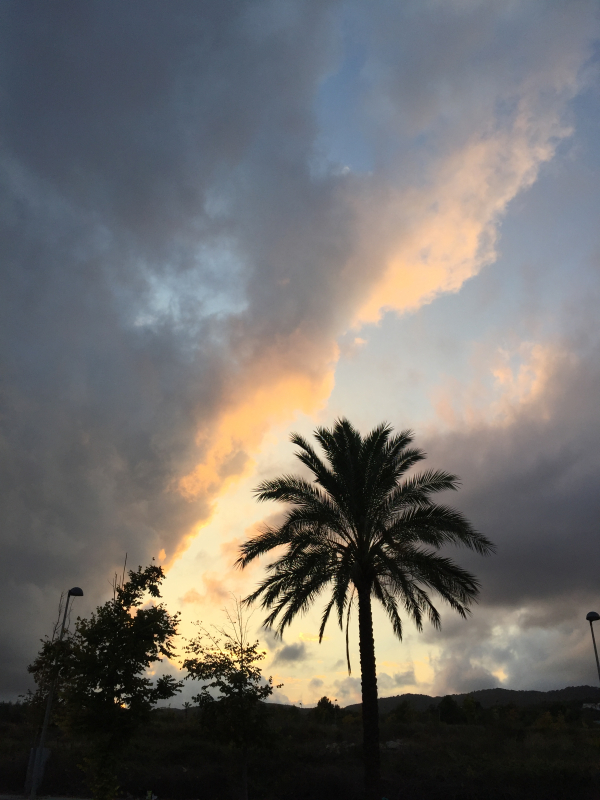
    We headed back up the coast to depart from Barcelona's airport where we will start our next adventure in Marrakech, Morocco. The evening sunset was beautiful:

    Image

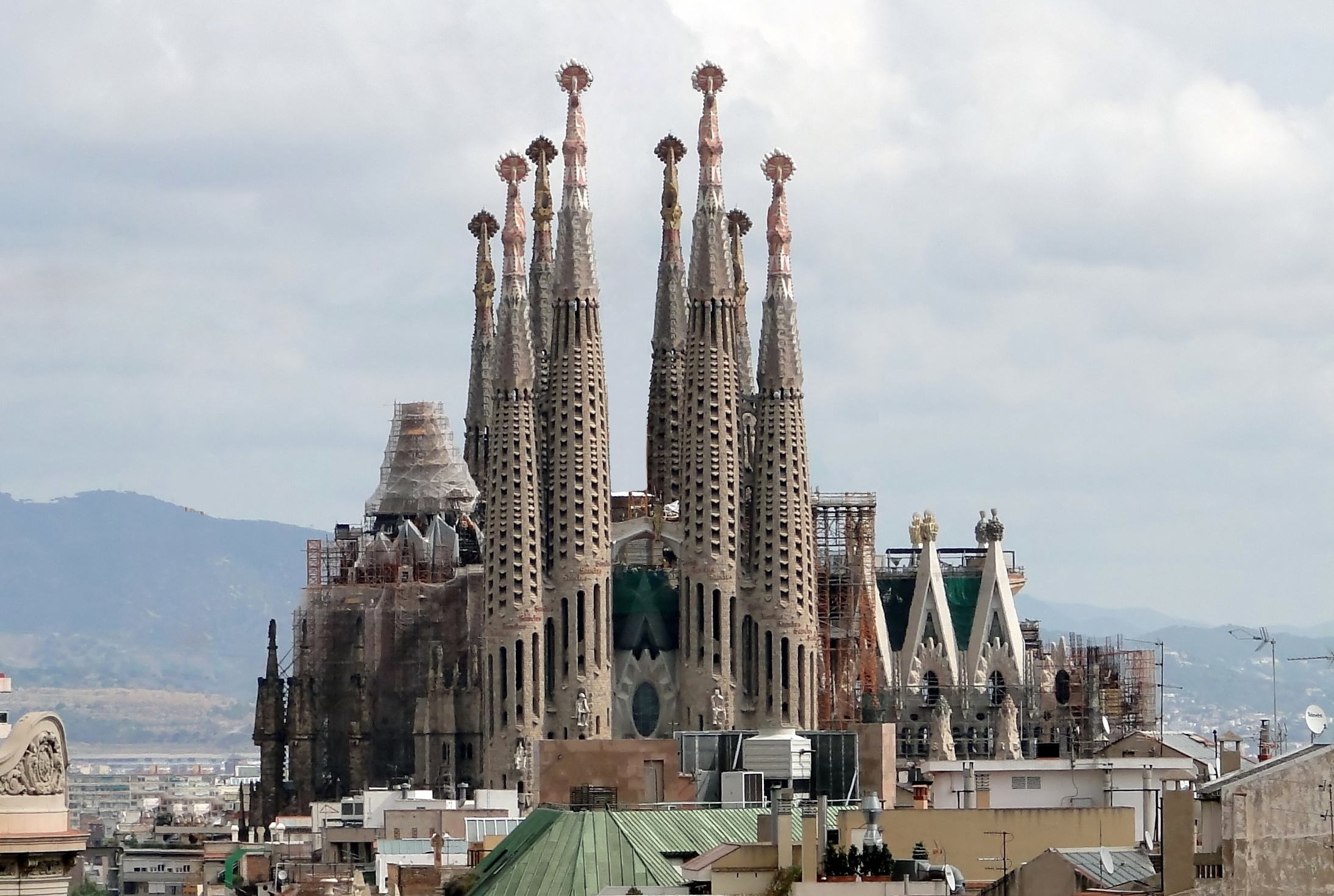
  • Reus is the birthplace of Barcelona's famous architect, Antoni Gaudi, who is best known for the design of La Sagrada Familia church, Parc Guell and a number of large homes and palaces in the area.

    Image

    I was in Barcelona once without C and toured La Sagrada Familia. Unfortunately on a return trip together the lines were too long for C to have the tour. This trip he wasn't interested in battling the crowds, but I was determined to have him learn more about Gaud's work as I was sure he'd enjoy it. Many of C's photographs of texture in nature, and his former work in stained glass, reminded me of Gaudi's projects inspired by nature.

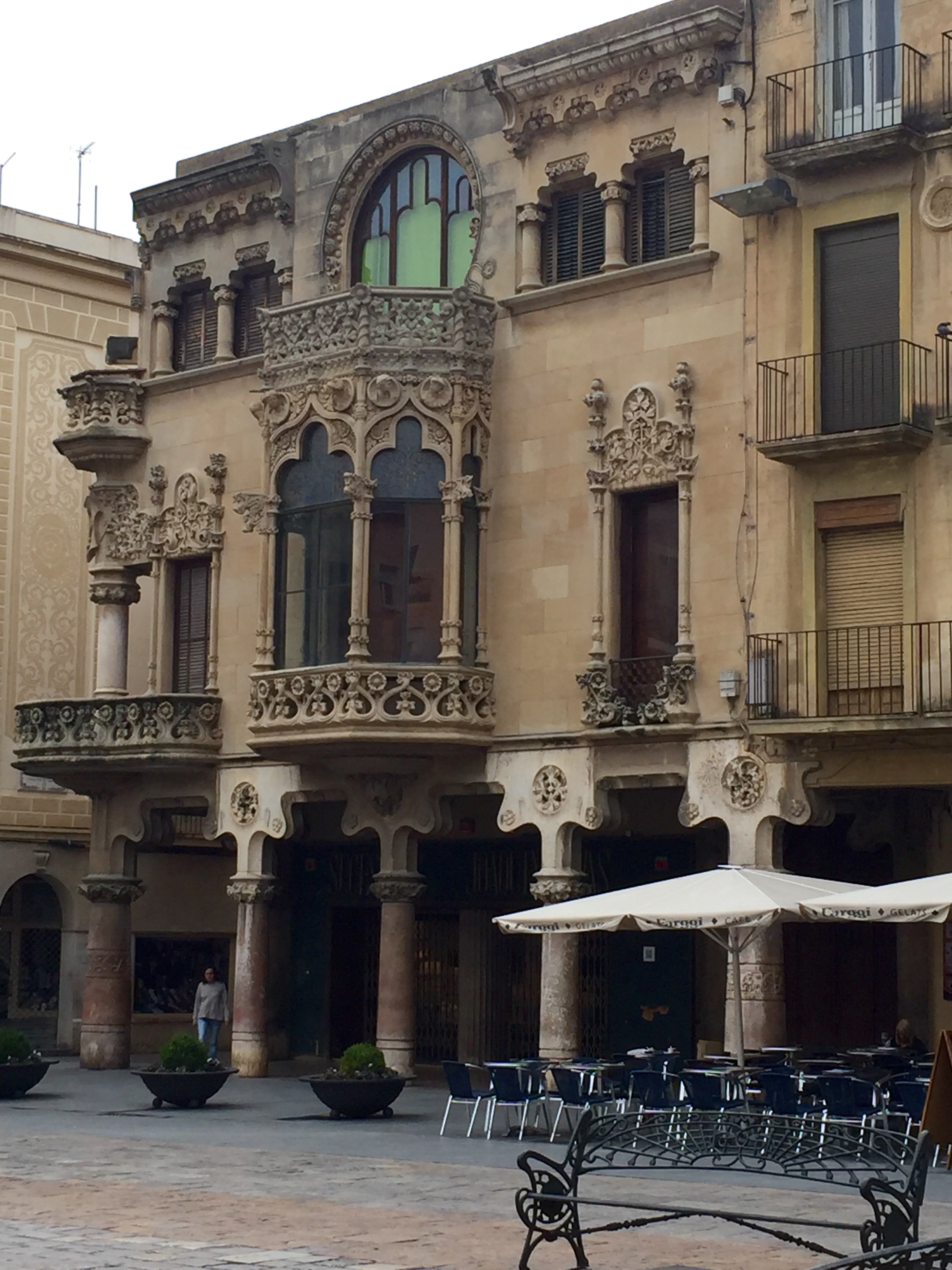
    We read about Gaudi Museum in Reus, a charming city of Art Deco and Nouveau architecture, located near Tarragona.

    Image

    Image

    The exhibit was a more in depth view of Gaudi's work and life. I was right, C enjoyed it, his comment summed it up "I thought Gaudi was some crackpot designer and now I know, he was a genius."

    When Gaudi was a child his report card rated him low in intelligence and he grew up to be a brilliant architect. Unfortunately, while exiting the Sagrada Familia one day after work when he was in his 70's in the 1920's, he was hit and killed by a street car. In reality he wouldn't have lived to see his finished cathedral as it is so huge it is not yet complete.

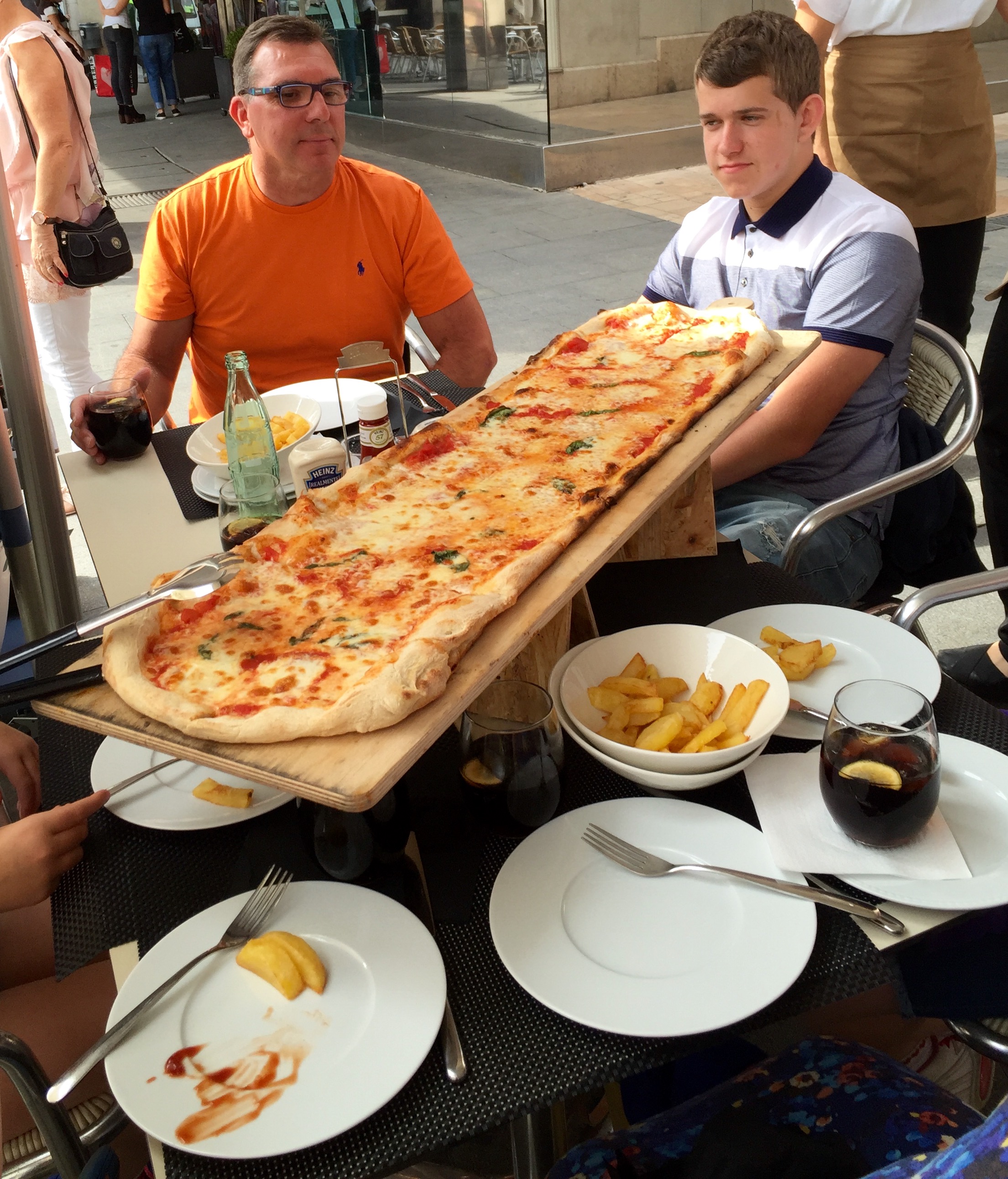
    We stopped for lunch and met a family of six from Scotland. We were all shocked at the size of the pizza they ordered. 

    Image

    Then they told us a second one was ordered as well! They offered to share, but we had already had a three course lunch. When the time came for them to refuse having it boxed up to take back to their all inclusive resort I took them up on their offer to share by asking for a slice to be boxed. Turns out the server boxed all the leftovers, enough for two meals. Luckily our AirB&B apartment has a kitchen.

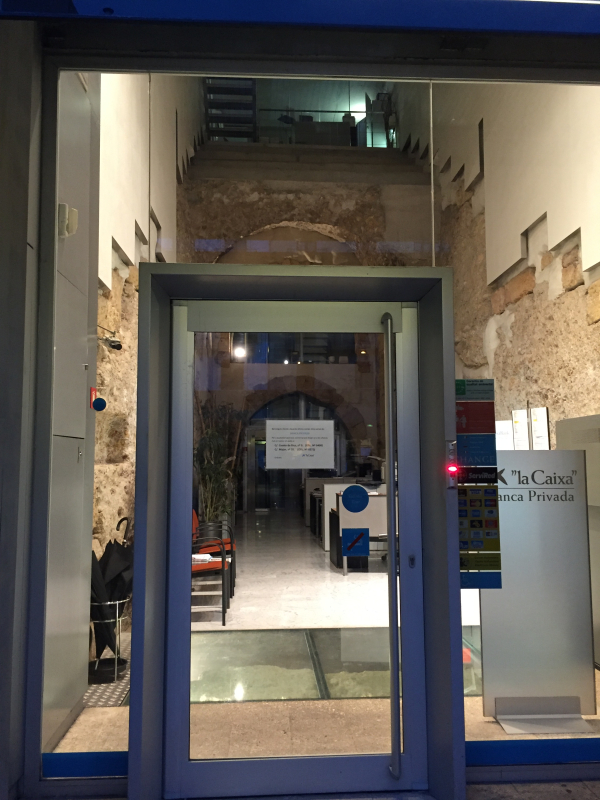
    On to Tarragona, with extensive examples of Roman ruins throughout the town, integrated with the modern city. Here are a bank built right into the ruins of the Roman circus and modern buildings utilizing Roman foundations, some originally built in 150 BC.

    Image

    Image

    Tomorrow: Tarragona

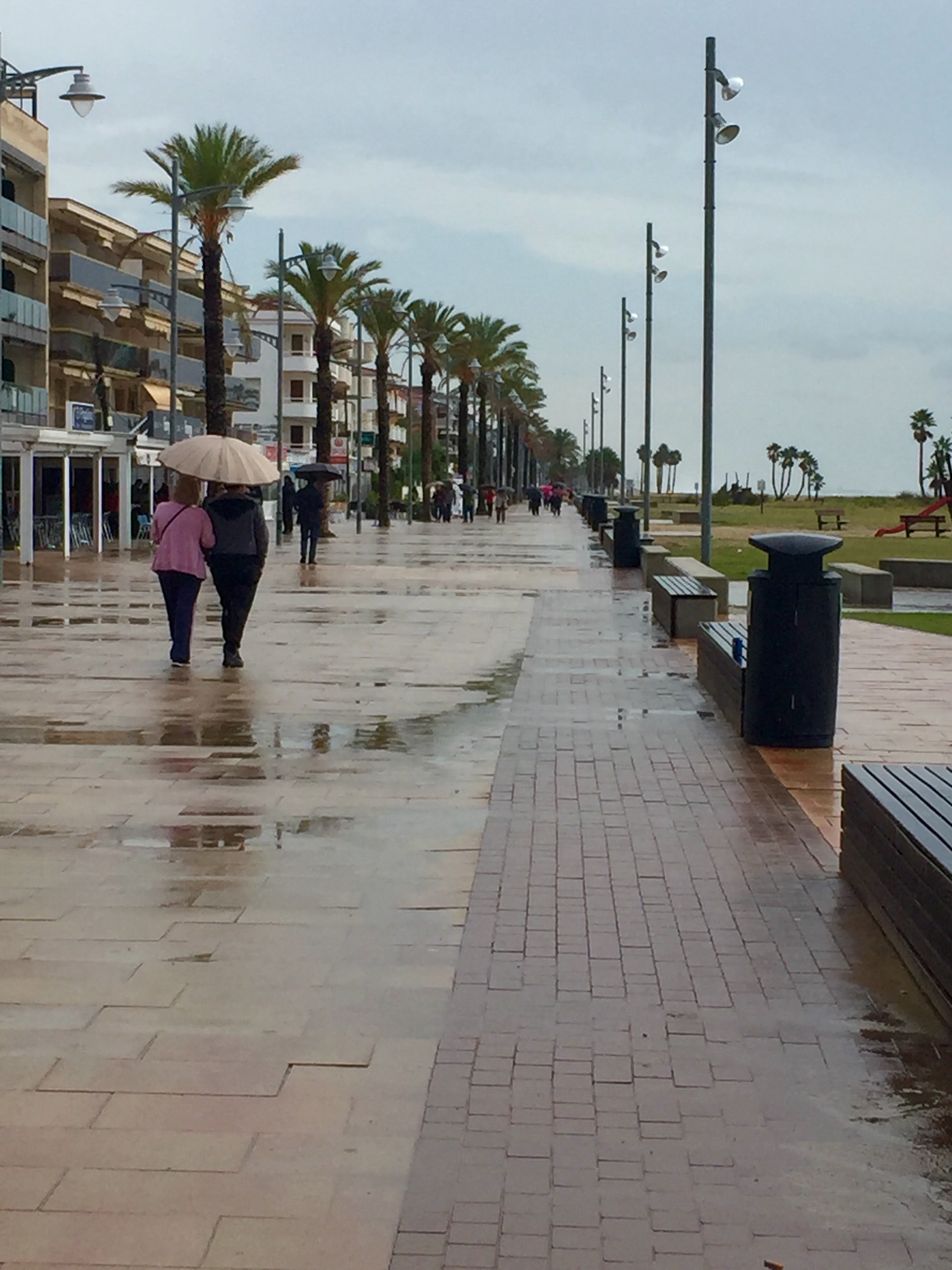
  • Going through Camino walking withdrawal I convinced C to walk an hour on the town's "cholesterol trail" to the beach and agreed to take the train home. Turns out we walked farther and did the return path as well, for a total of three hours. Needed to burn off the delicious burgers at lunch. 

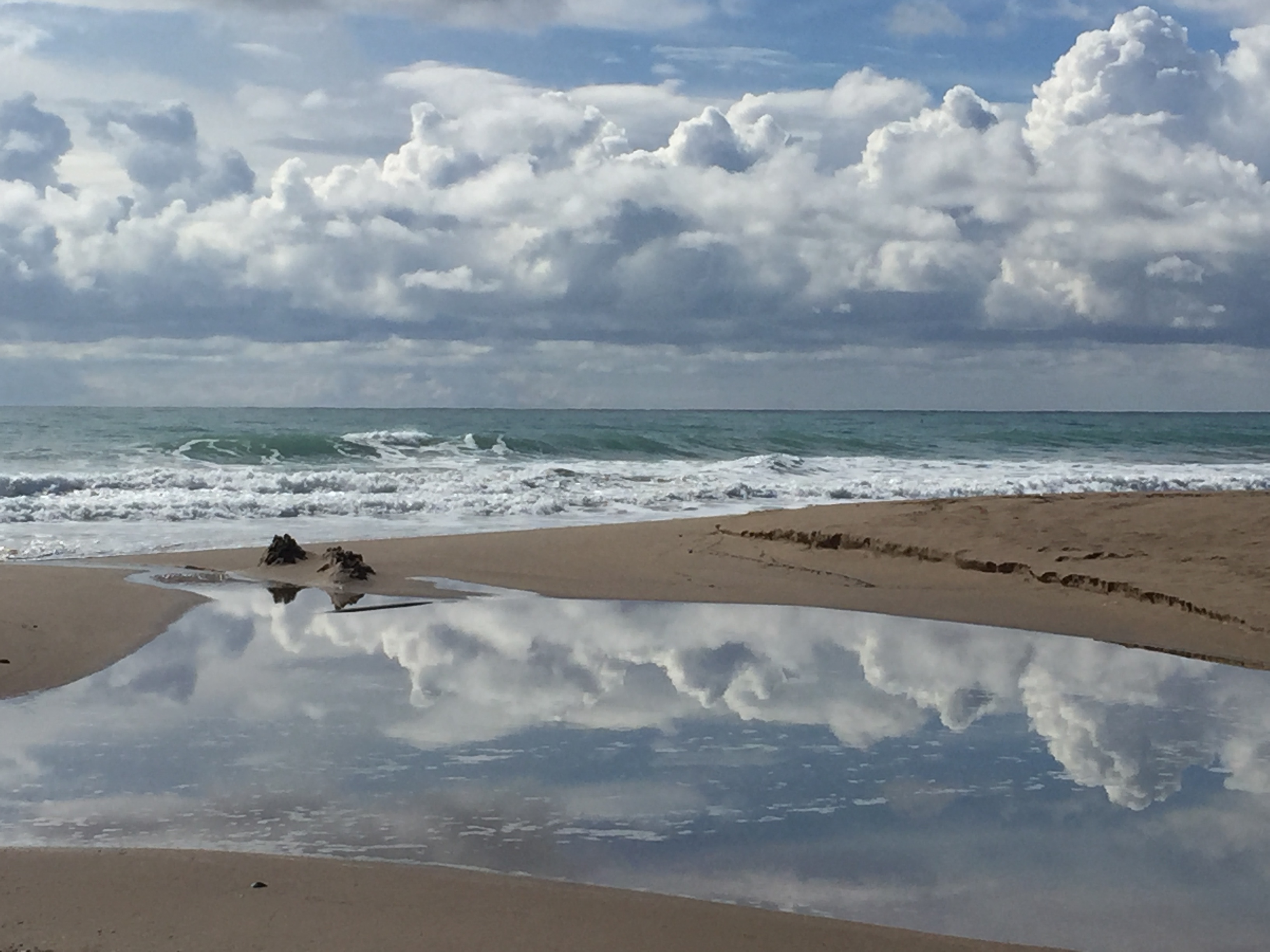
    We had a bit of rain, but it made for nice photos.

      Image

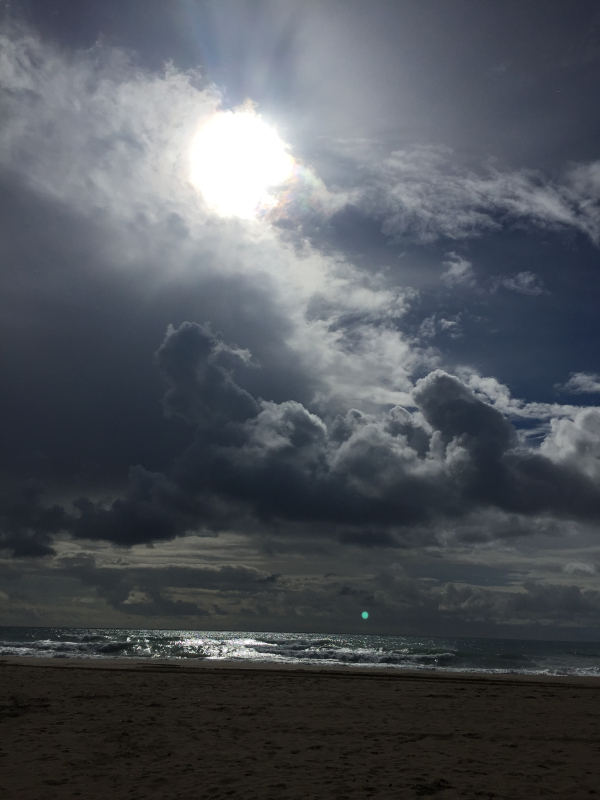
    One of my favourite subjects, clouds, which changed by the hour:

    Image

    This was about the same place an hour later:

    Image

    On the way back it looked threatening, but we remained dry;

    Image

    Tomorrow we work our way down the coast to Reus and Tarragona.

  • There was a noticeable security presence at the airport in Bordeaux reminding me of post 911 military presence in the US. 

    Back to Catalonia, but this time extending our reach to Tarragona and further. We've decided to visit Morocco, a place a bit beyond our usual comfort zone. 

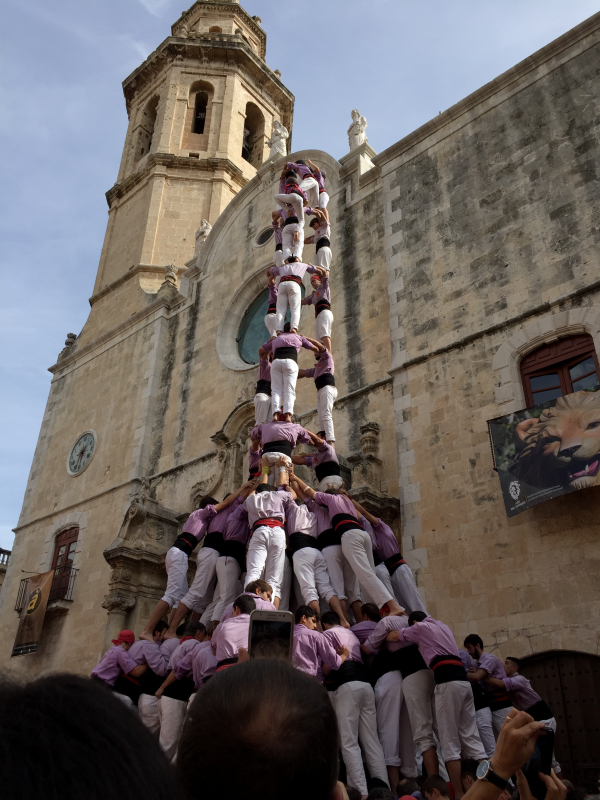
    In the meantime, our timing was right for the Fira Santa Teresa, a large festival featuring a Castell competition. These are the traditional human towers of the Catalan region. The winning team reached ten high. 

    Image

    The bottom layer are made up of the burliest strongest castelleros, while the top couple are small children. Look on the right side of the tower in this video and notice the tiny munchkin in a helmet climbing up the side. It was hard for me to watch, but can you imagine the parents or grandparents? A contingent of ambulances is at the ready:

    Image

    It's pretty impressive but like bullfighting, one of those Spanish sports that I find a bit difficult to comprehend.

    There were parades and traditional folk dances to break the tension.

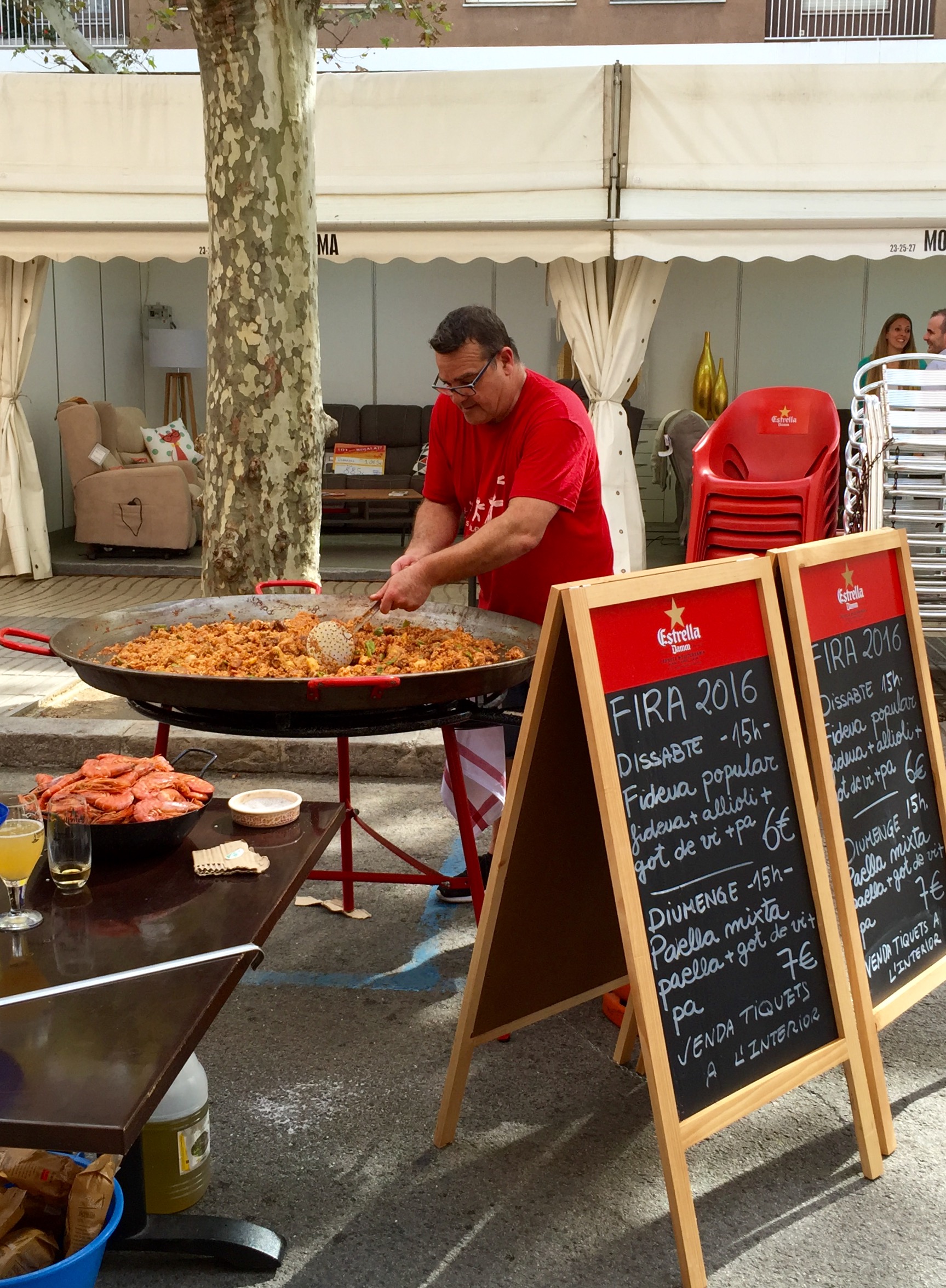
     And of course, excellent festival food:

    Image

  • After a relaxing morning we took Bruce to noon Sunday dinner at a local restaurant. This is the busiest time in France for eating out. No wonder, you need the rest of the day to wear off the food coma. It was coincidentally Canadian Thanksgiving with the over indulgence of a holiday meal. 

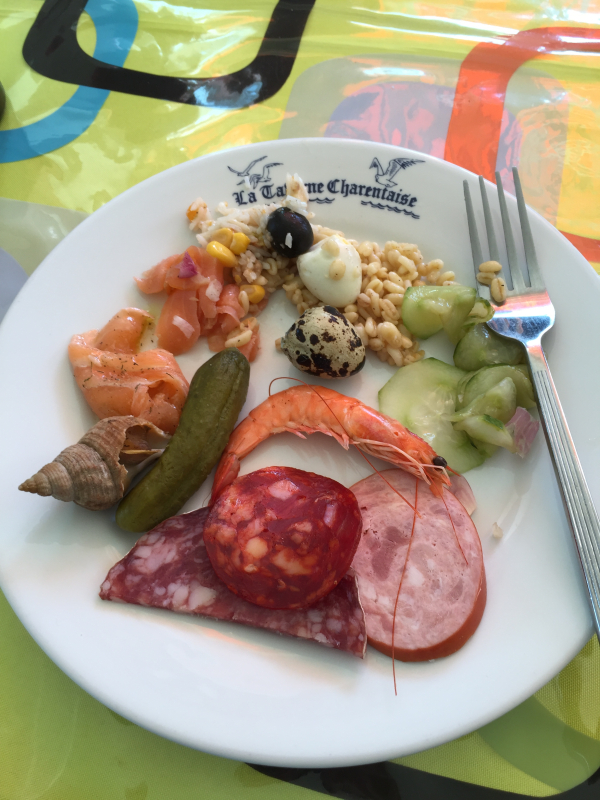
    It started with an horsdeuvre buffet. 

    Image

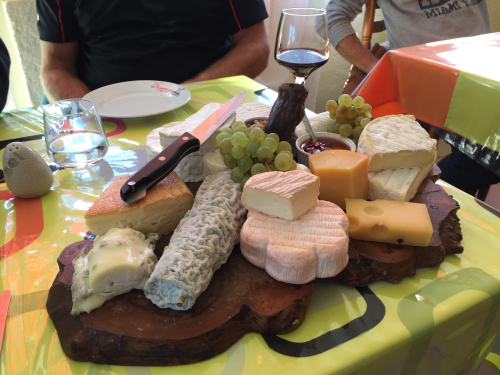
    The main course followed and both C & I chose duck. Hey, when in Rome (or France)…The next course was a tray of TEN cheeses, followed by dessert, Creme Brûlée. This seemed a bit ironic since Chuck and Jean used to work in the Heart Smart Program at the health department, and I was being accompanied by two men who have had three heart attacks between them. All three of us are on cholesterol drugs and hopefully we're well guarded from this dietary transgression.

    Image

    We rolled out of the restaurant and back to La Rit where we had an apres feast discussion about good books and movies, good for digestion. After a short while we got back to reality helping Bruce and sorting and packing our luggage.

    On the healthy side of eating, I vowed one more trip to Jean and Bruce's fig tree prior to our departure in the morning. What a treat, perfectly ripened sweet figs fresh from the tree, something we don't get at home.