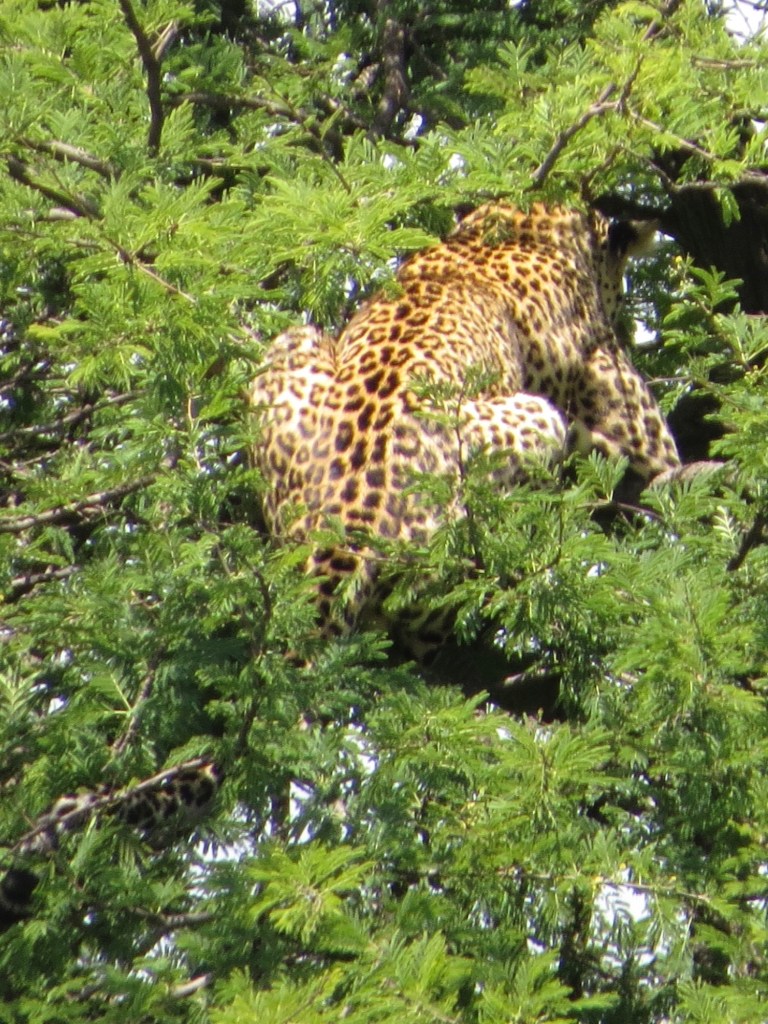
Steve caught a glimpse of a leopard sleeping in a tree.
That completed the big five for the three of us who went to Nairobi National Park on our first day. The rest haven’t seen a rhino yet, so with the leopard, they have four of the five, but there are two full days of game drives left.
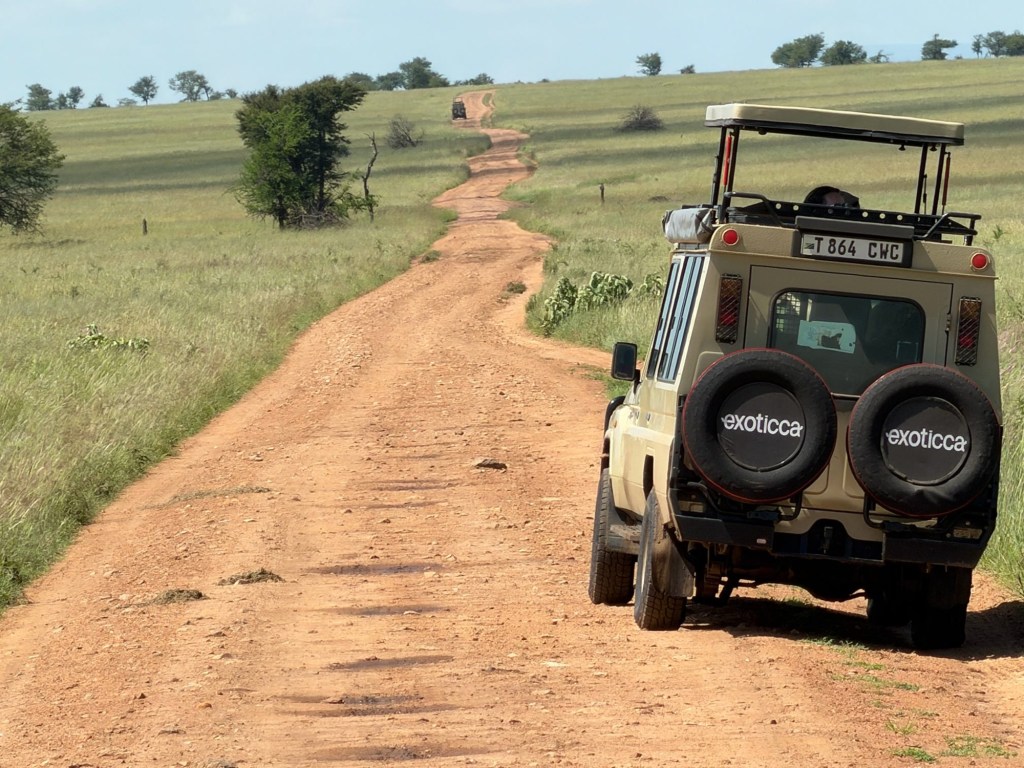
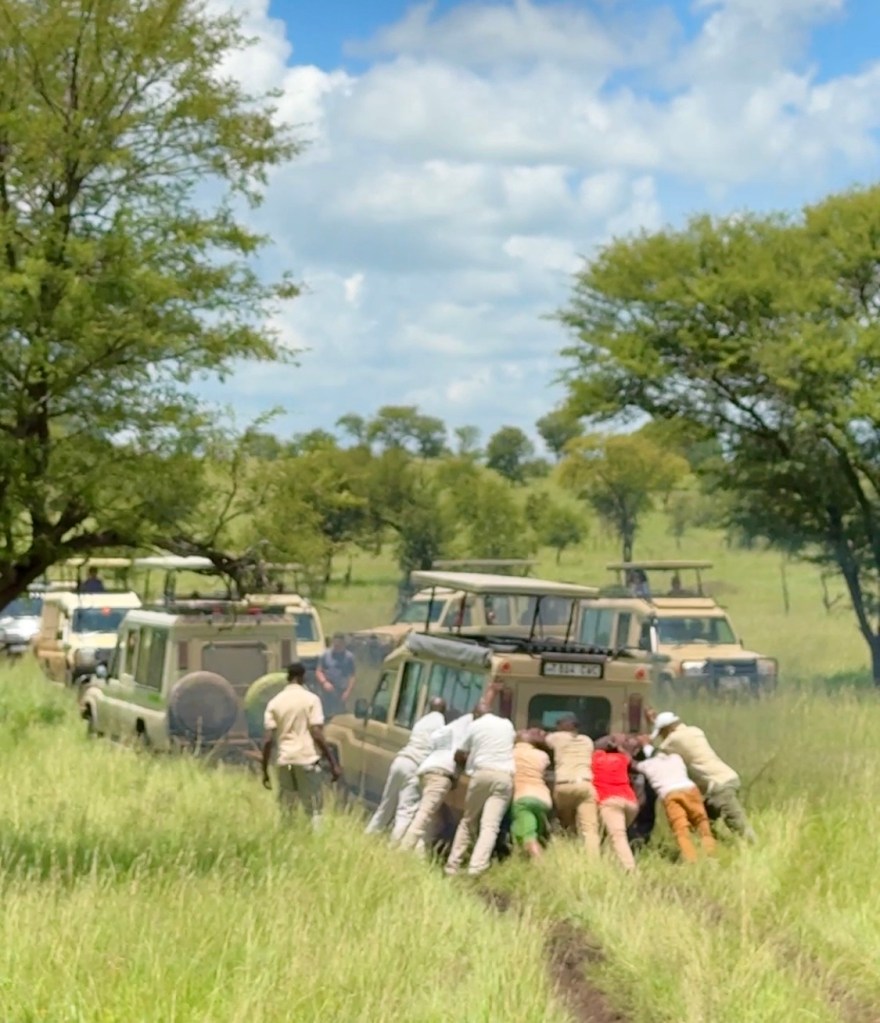
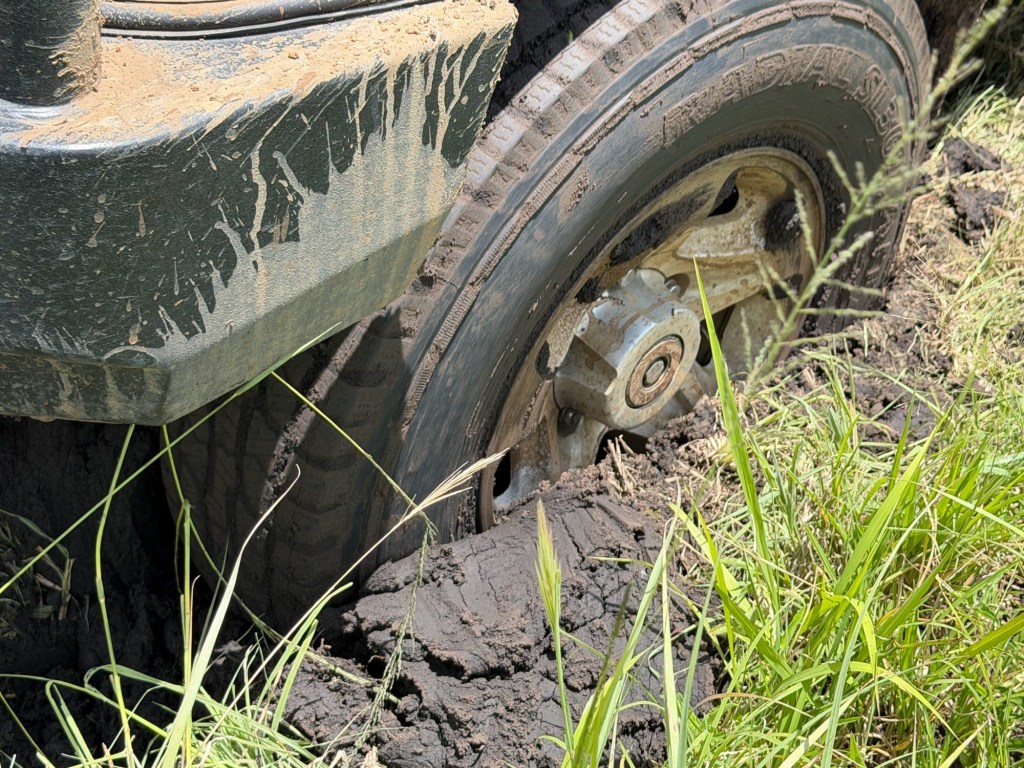
The drivers are in constant radio contact regarding sightings or calling for help. The Safari vehicles were tough modified Toyota trucks, but sometimes found themselves in need of help. Nearby guides will come to the rescue. We went to help this vehicle mired in the mud.
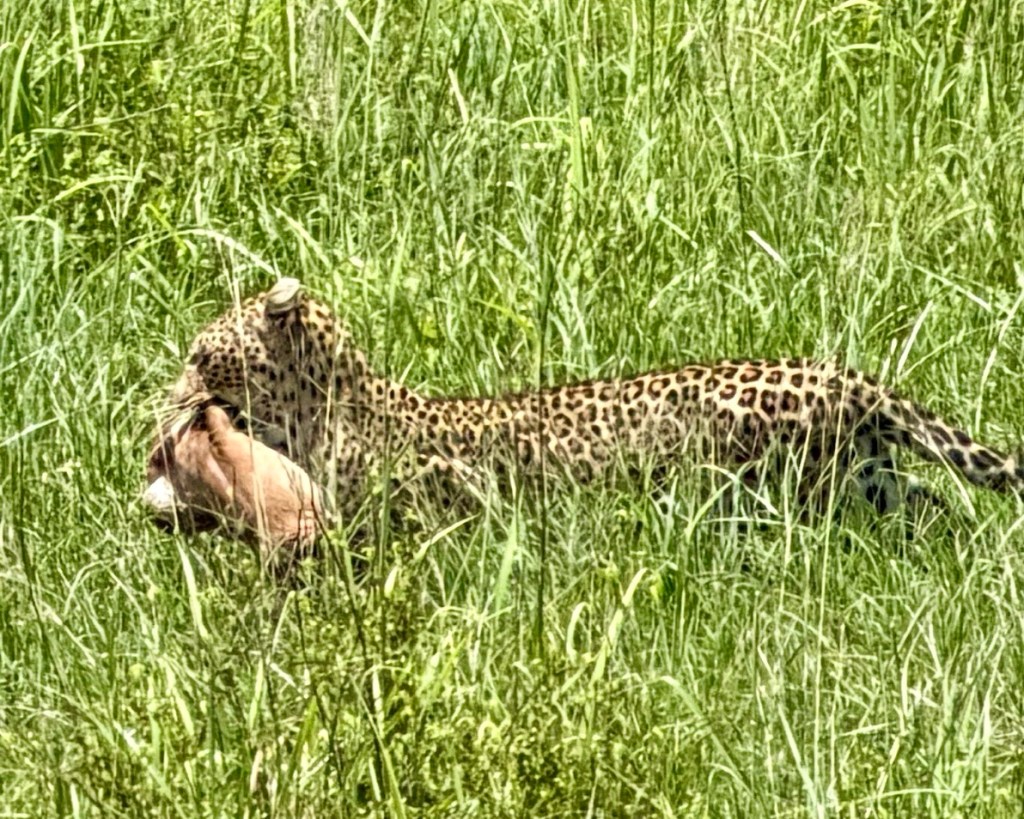
On our way again and there was another leopard carrying a significant chunk of gazelle.
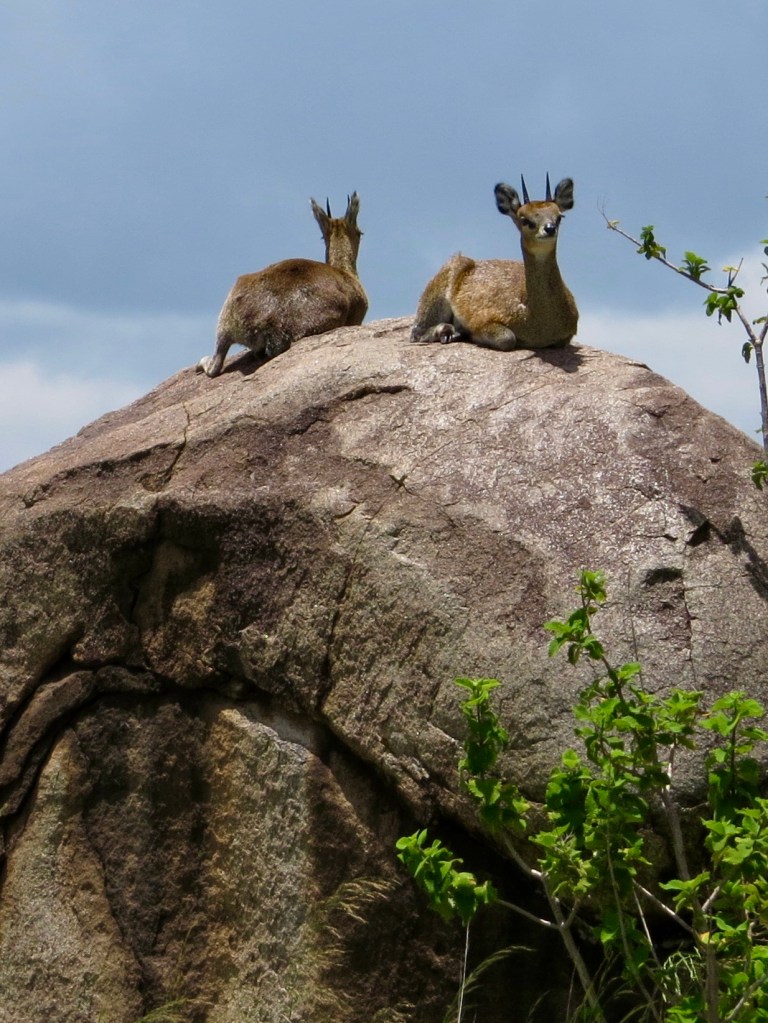
Klipspringers were perched high on the rocks.
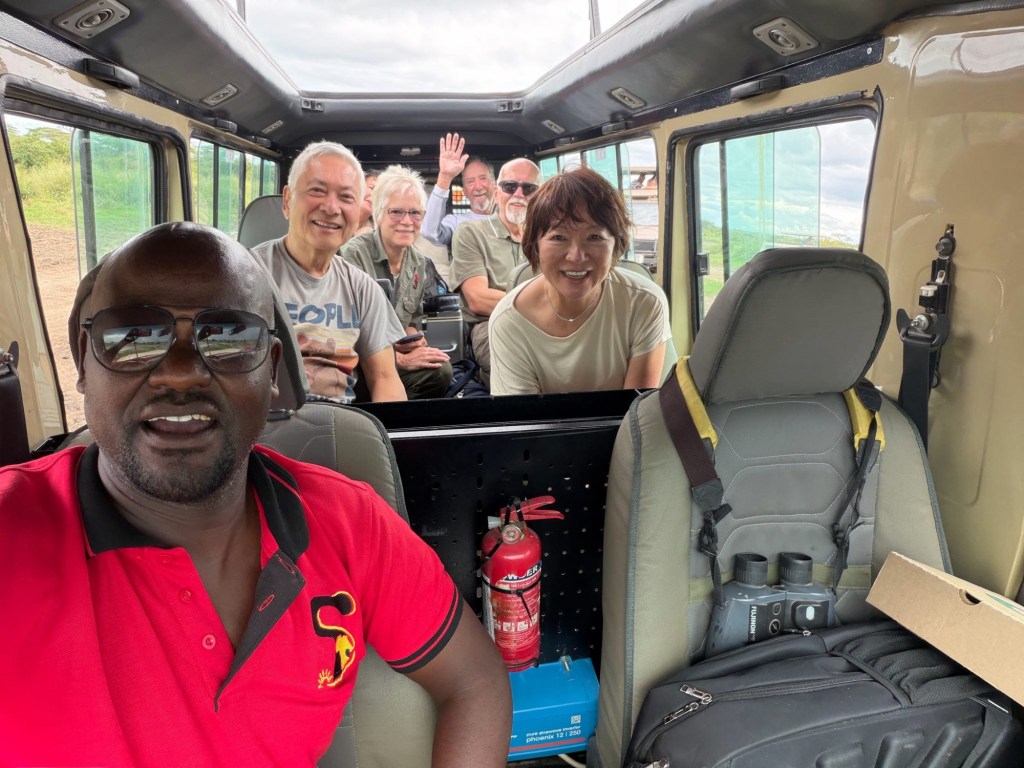
Then it was our turn for a callout to nearby drivers. Coincidentally there was another stuck vehicle close by. Steve helped them first as we chilled in the car, having our bag lunches.
Our rescue took two attempts.
We were happy to be going again.
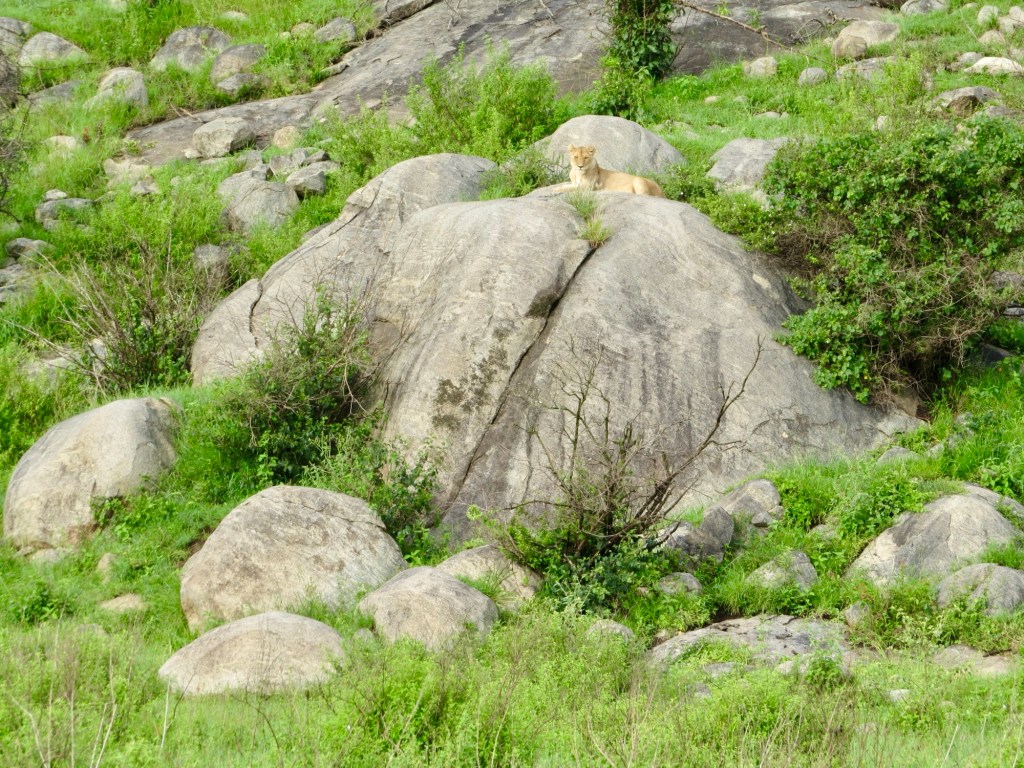
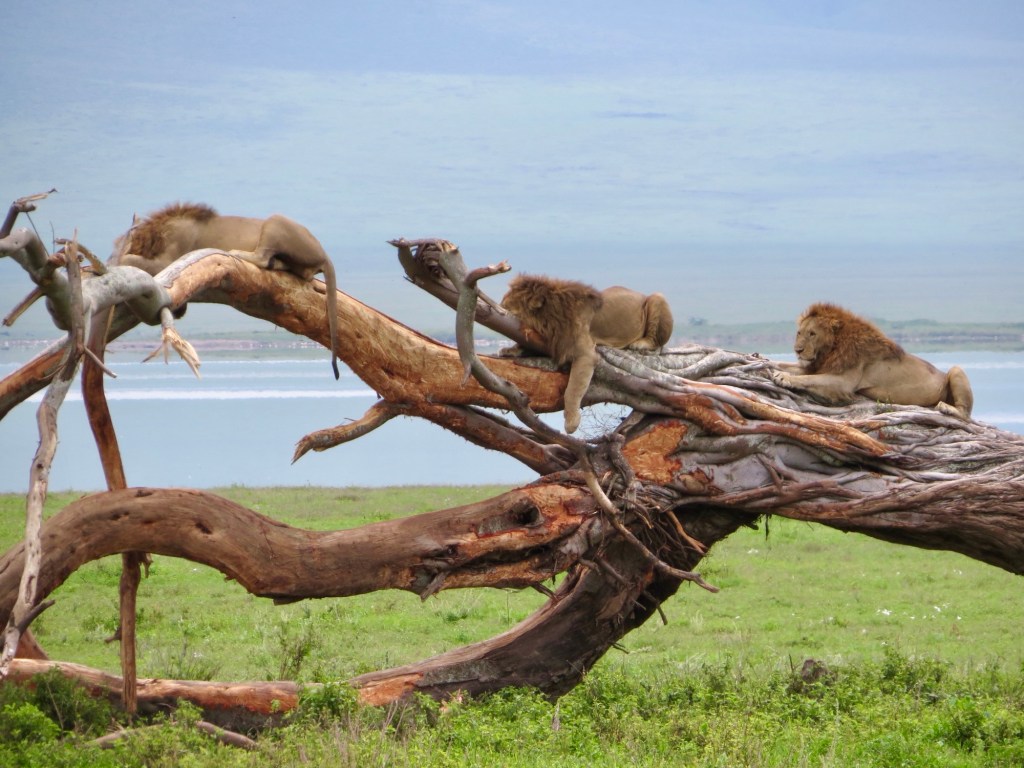
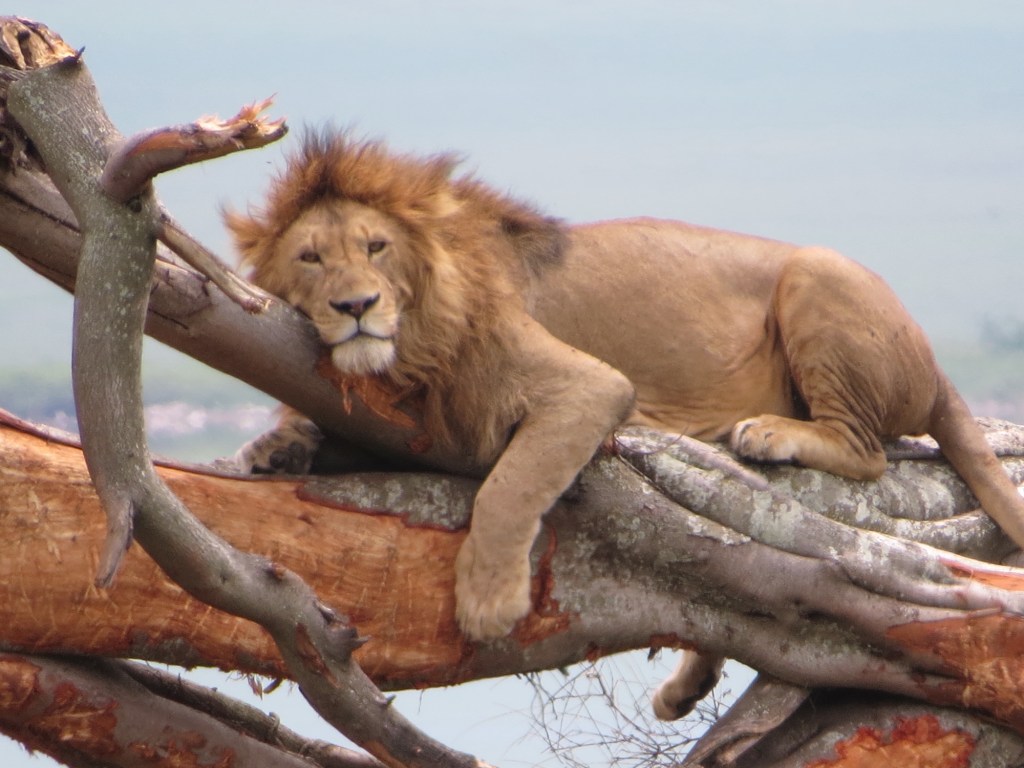
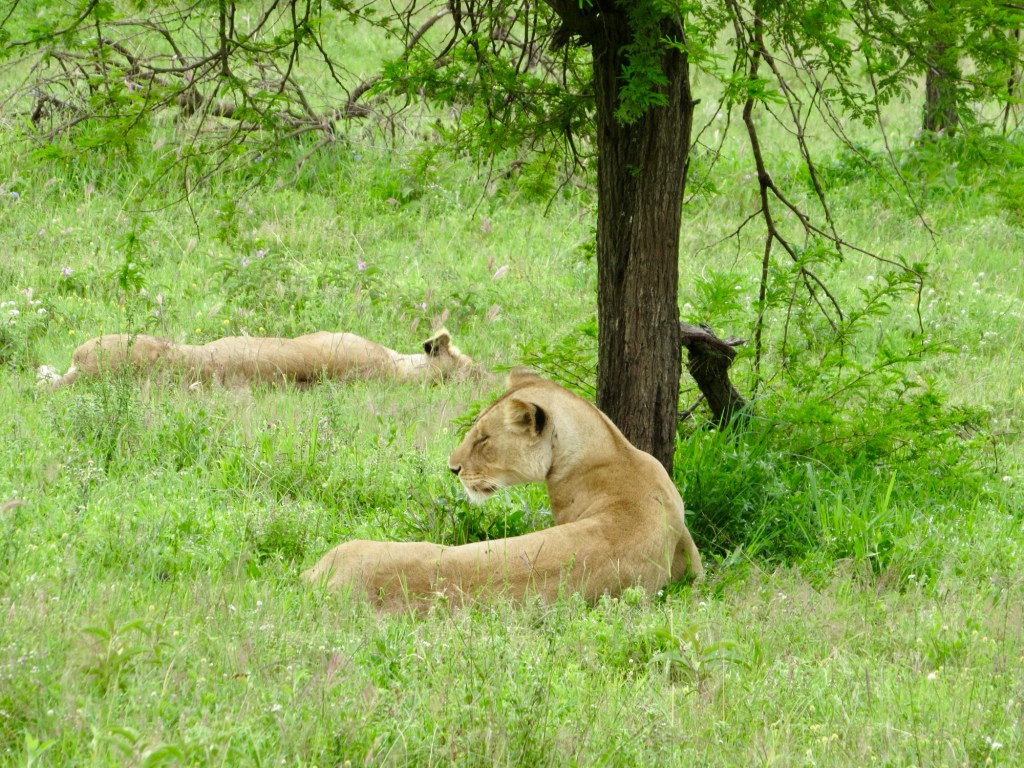
On our way back to the camp we saw lounging lions.
It was a peaceful night in the tent camp, full of savannah sounds. Turn up sound.
At 3:00a.m. we heard a hyena, but that was about it in the wild animal department. We were at breakfast for sunrise.
On Safari trips there are frequent 5:00a.m. wakeups, as that’s when the animals are active. We saw them at all times of day probably because the weather wasn’t hot.
The morning brought us:
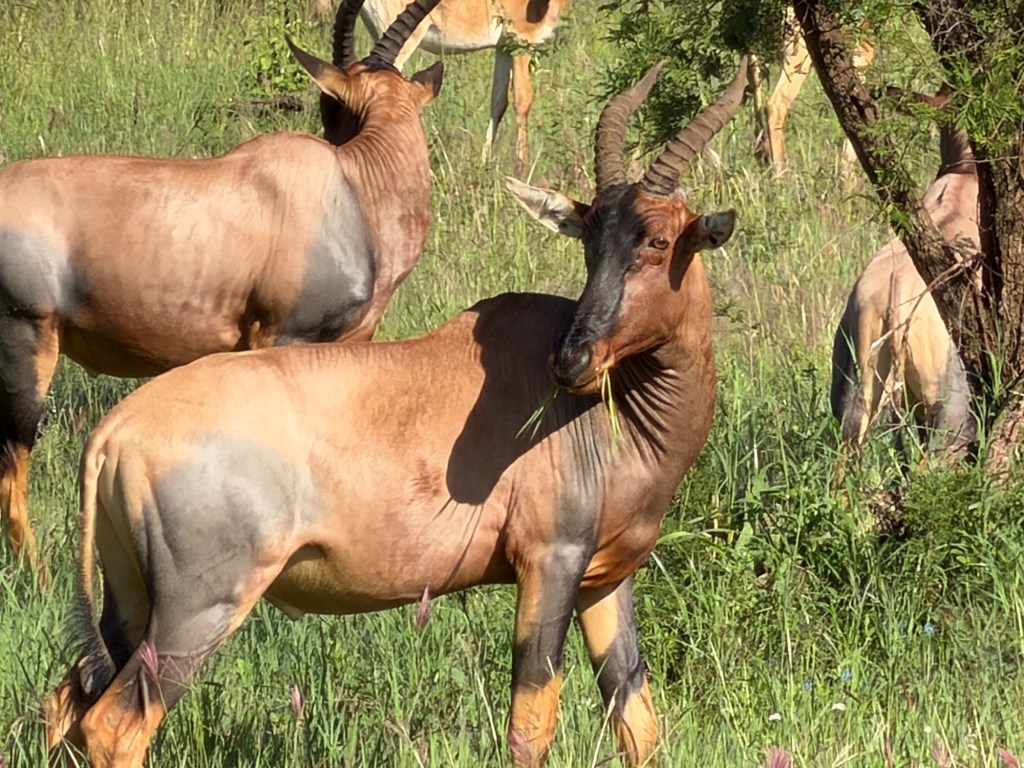
Topi
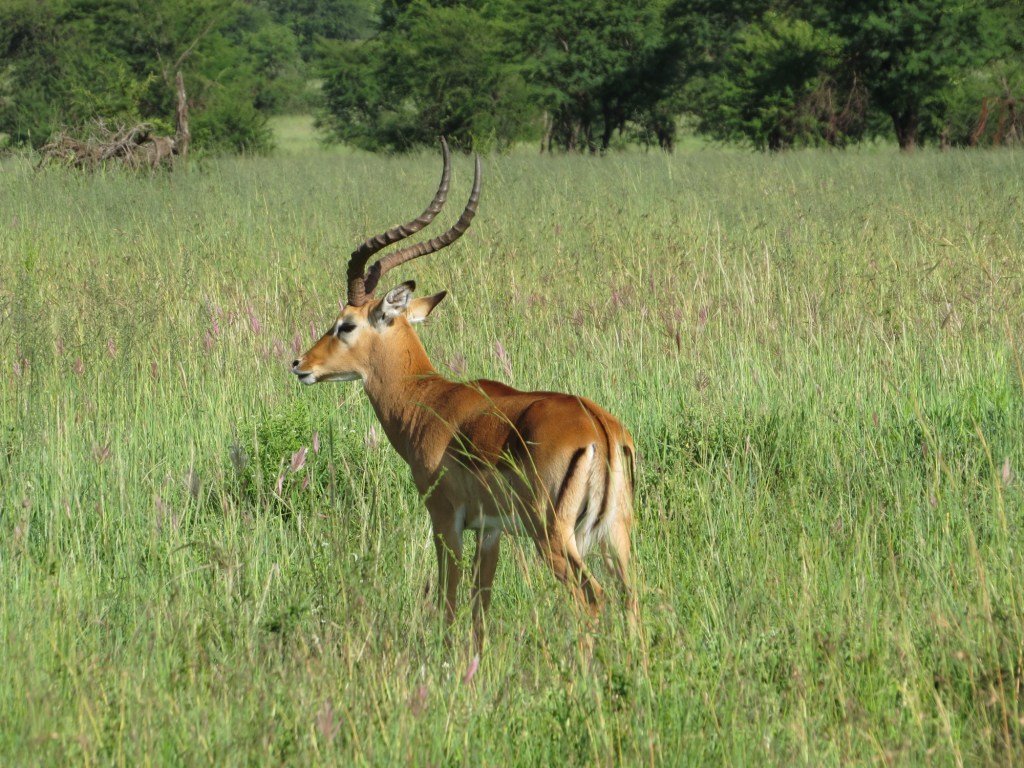
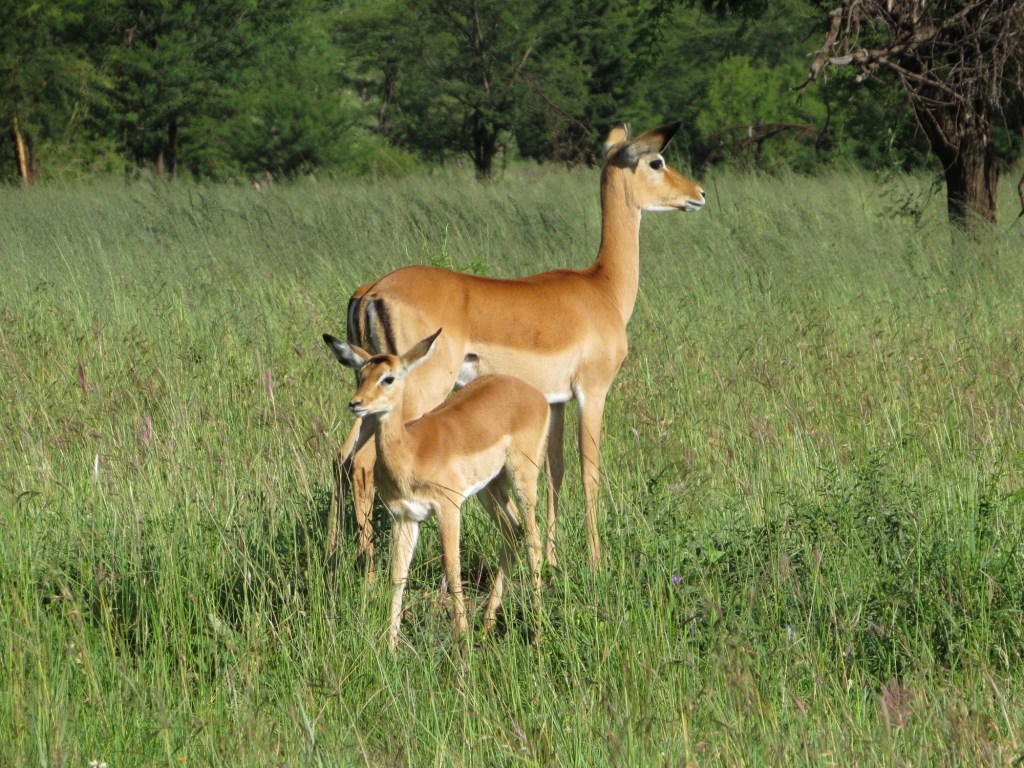
Male and female impala
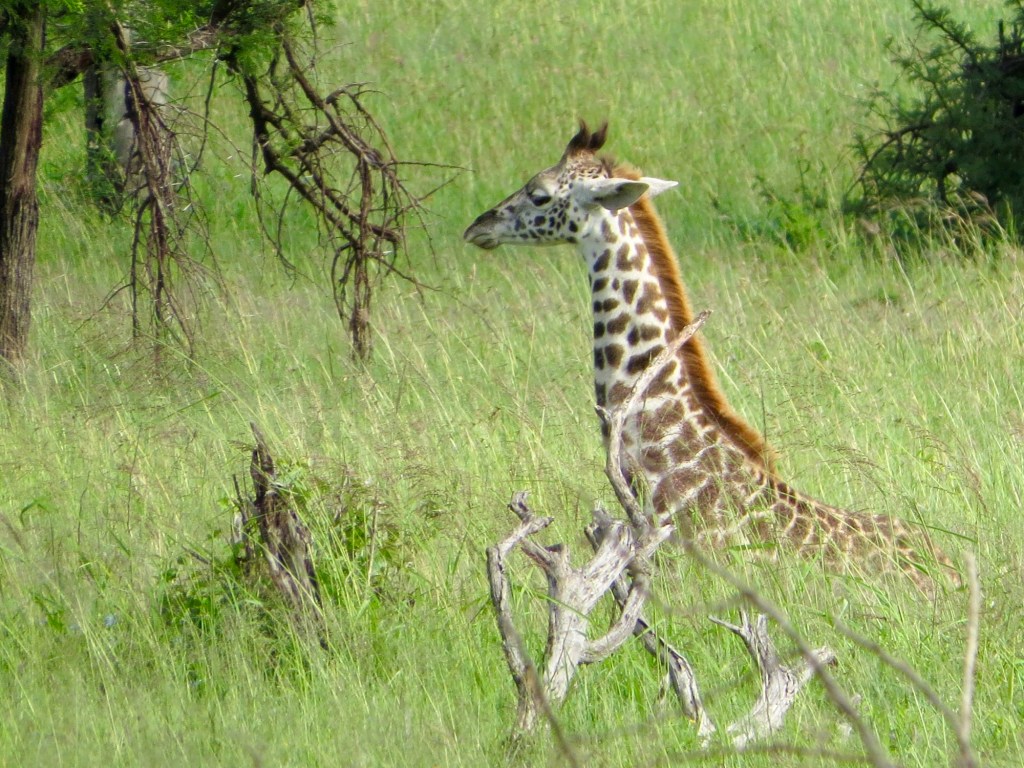
And a sitting giraffe, a more common position in captivity, as it leaves them prone to predators.
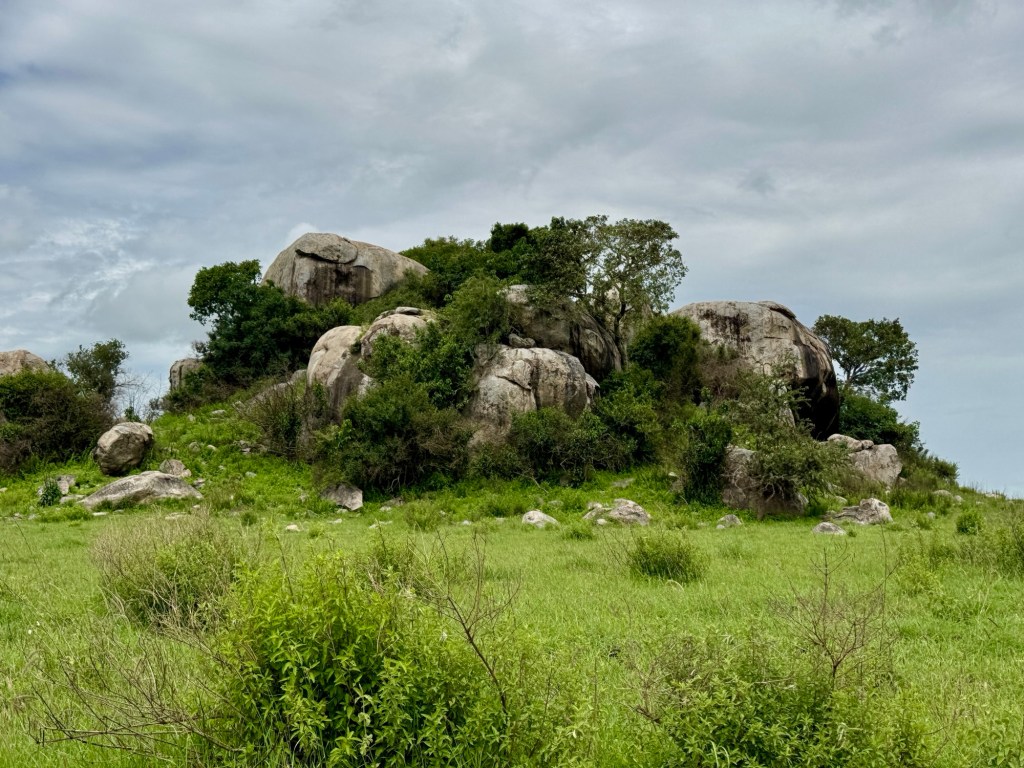
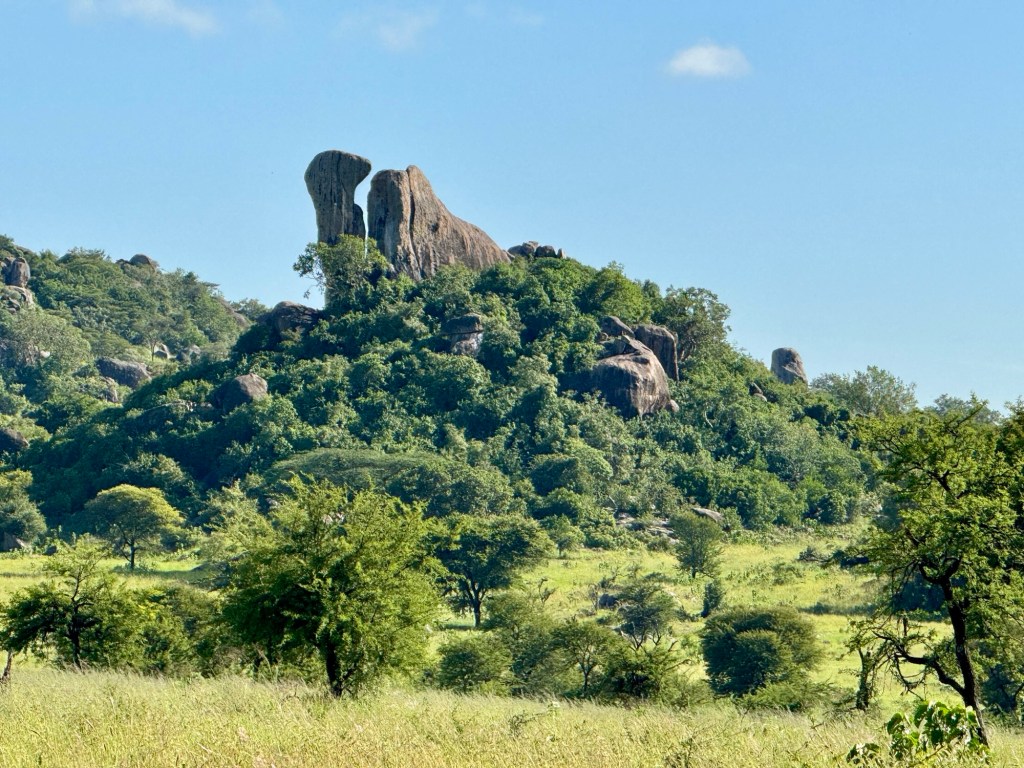
There were interesting large rock formations dotting the landscape
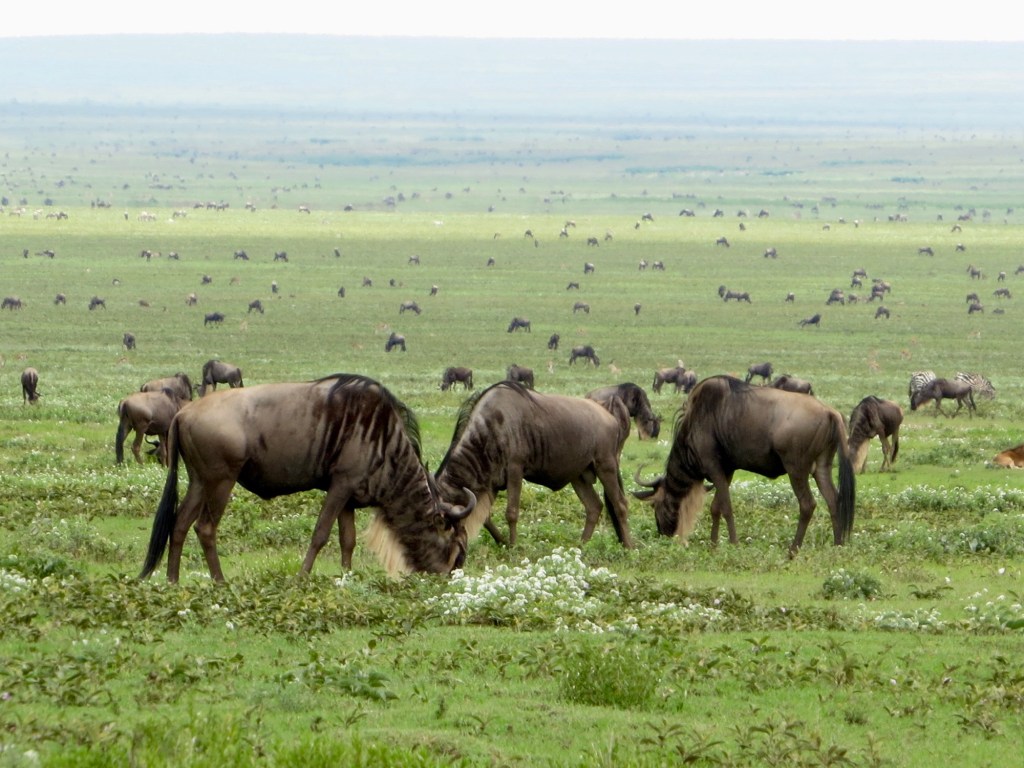
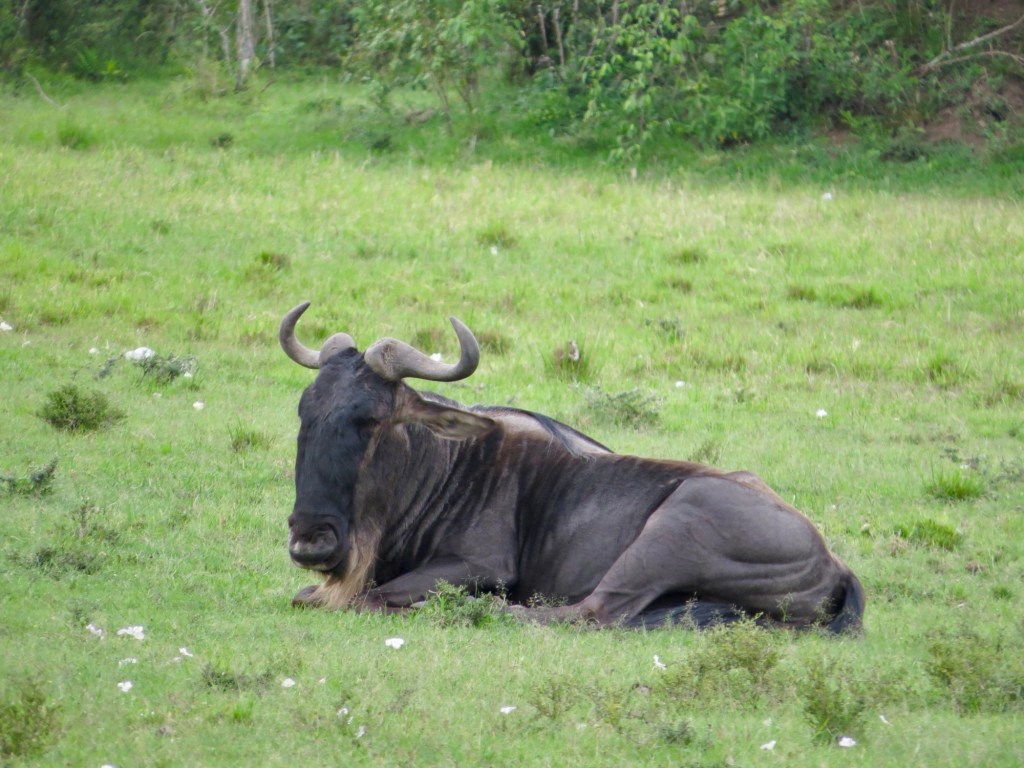
It was a big day for wildebeest, who decided to migrate en masse. We read that there are 1.5million of them in Serengeti National Park and it was easy to believe.
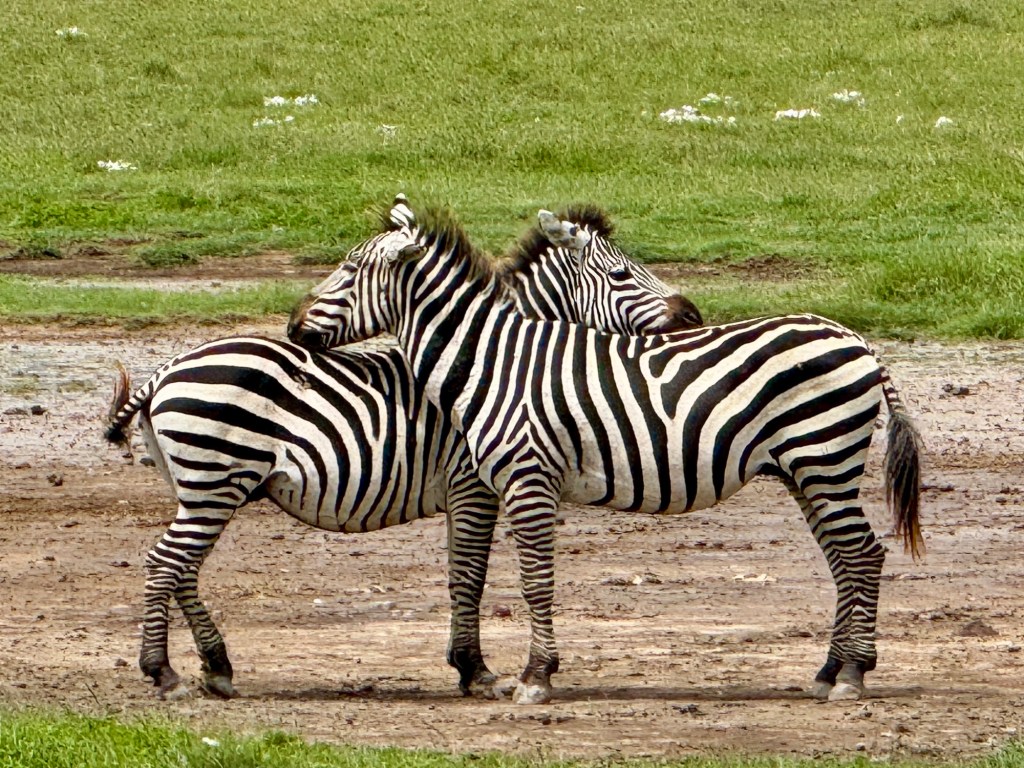
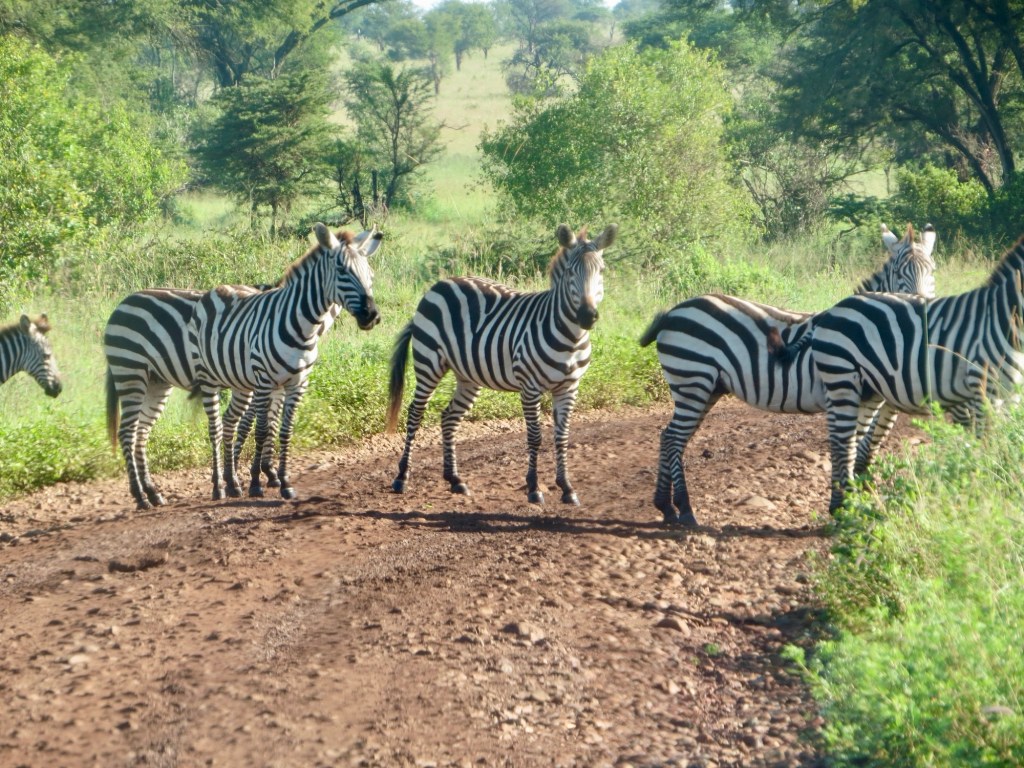
Zebras wanted to cross the road as well.
There were times we couldn’t see the end of either lines of zebras or wildebeests, they were visible for miles.
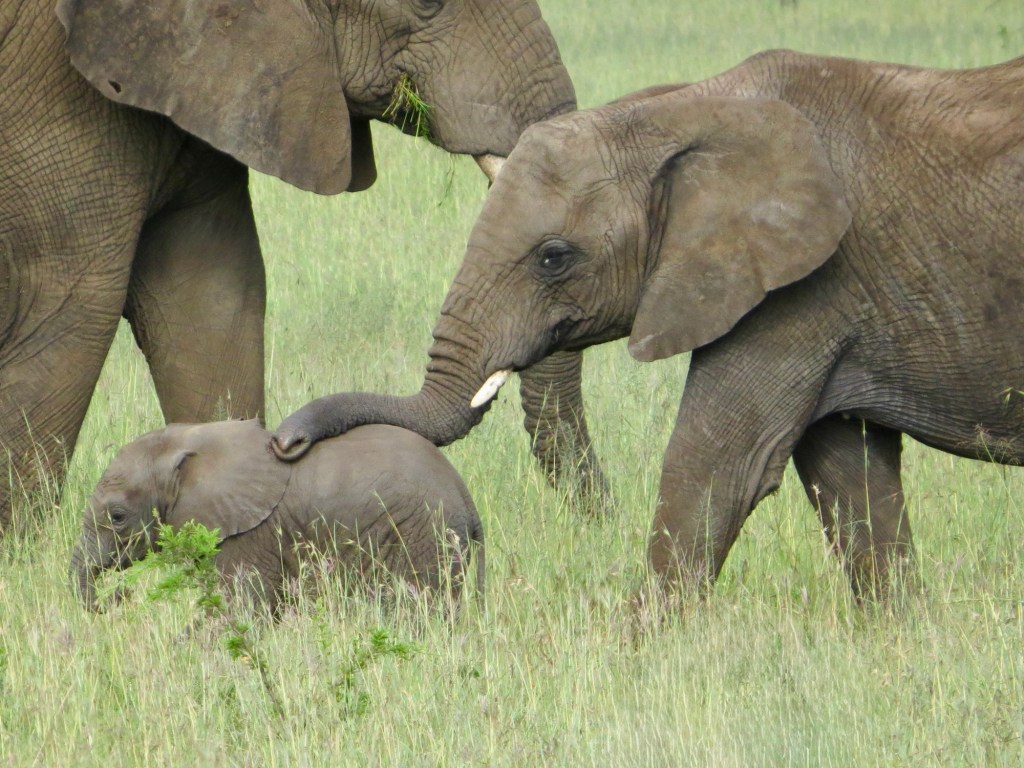
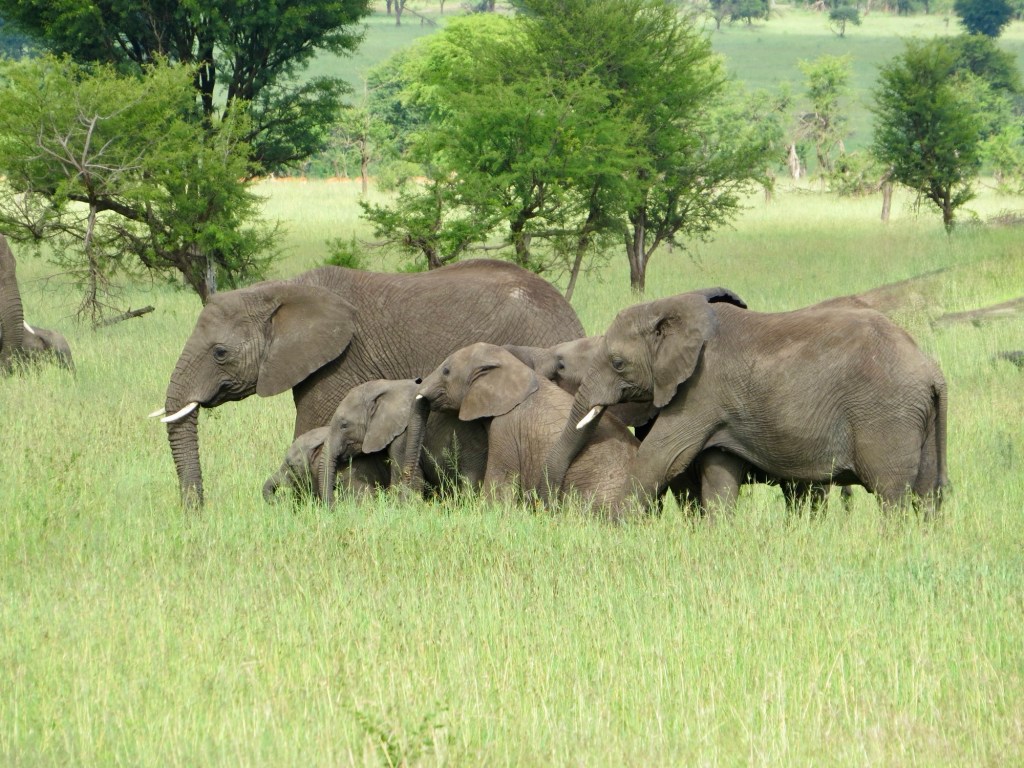
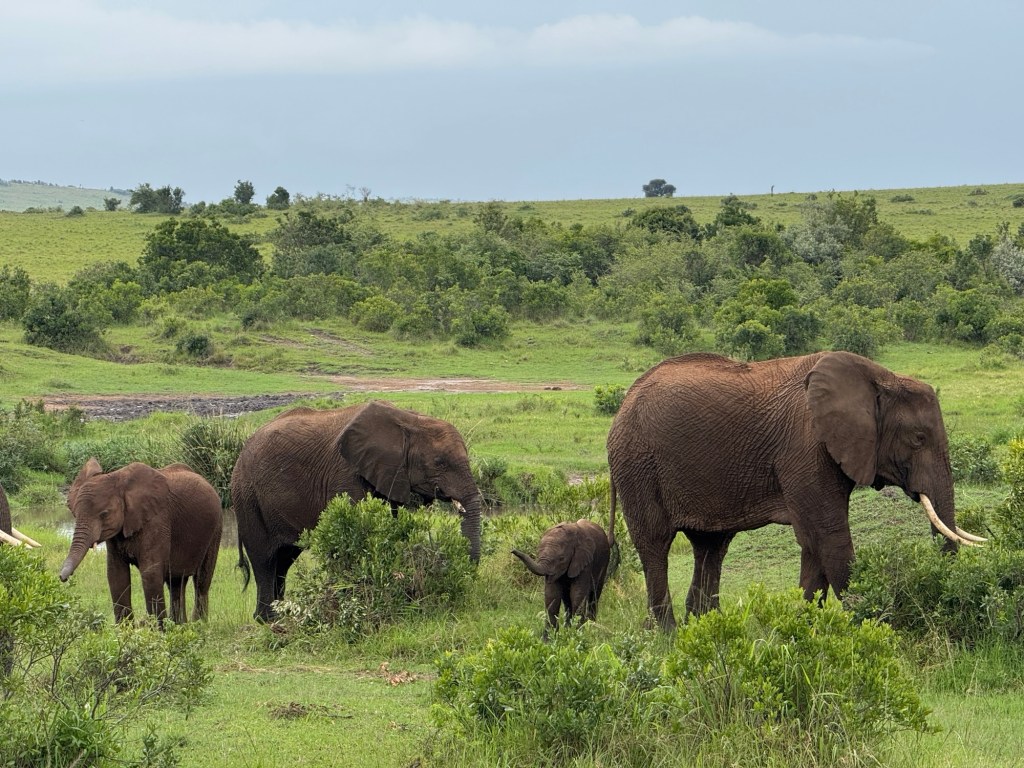
We were surrounded by over 100 elephants. Watching their behaviour was so interesting. We saw the “trunk hug” in action, where older elephants lay their trunks on the backs of younger ones as an expression of comfort or affection.
Looked like a family hug
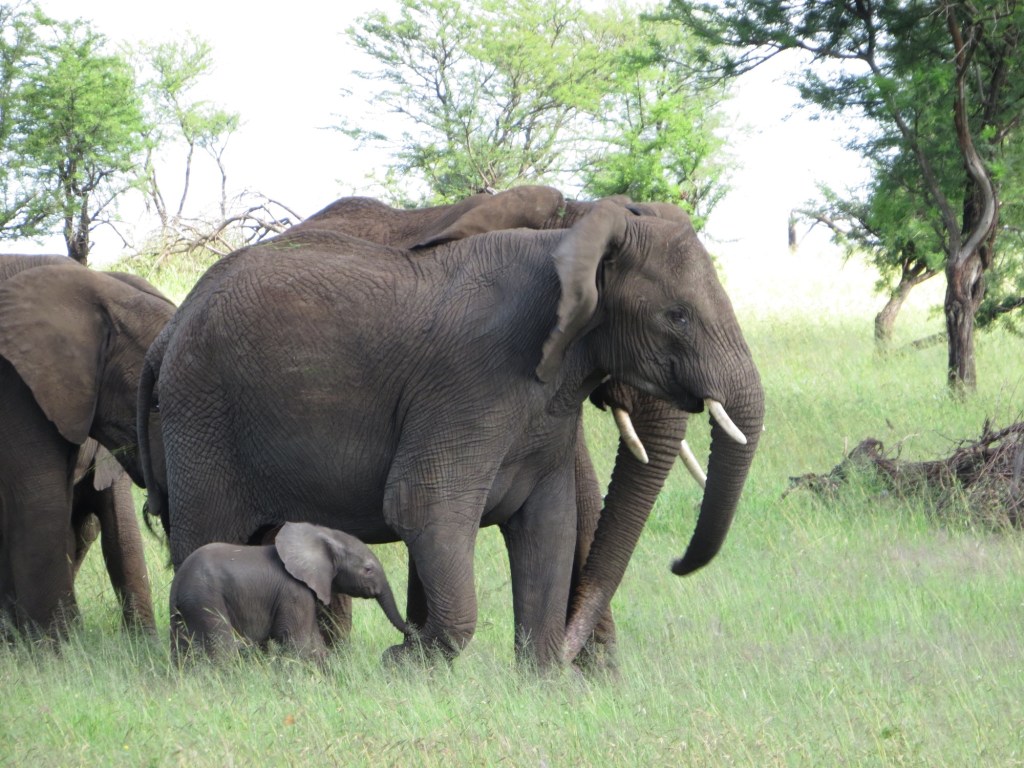
We were thrilled to see a two week old calf. Our timing was wonderful in terms of seeing young ones.
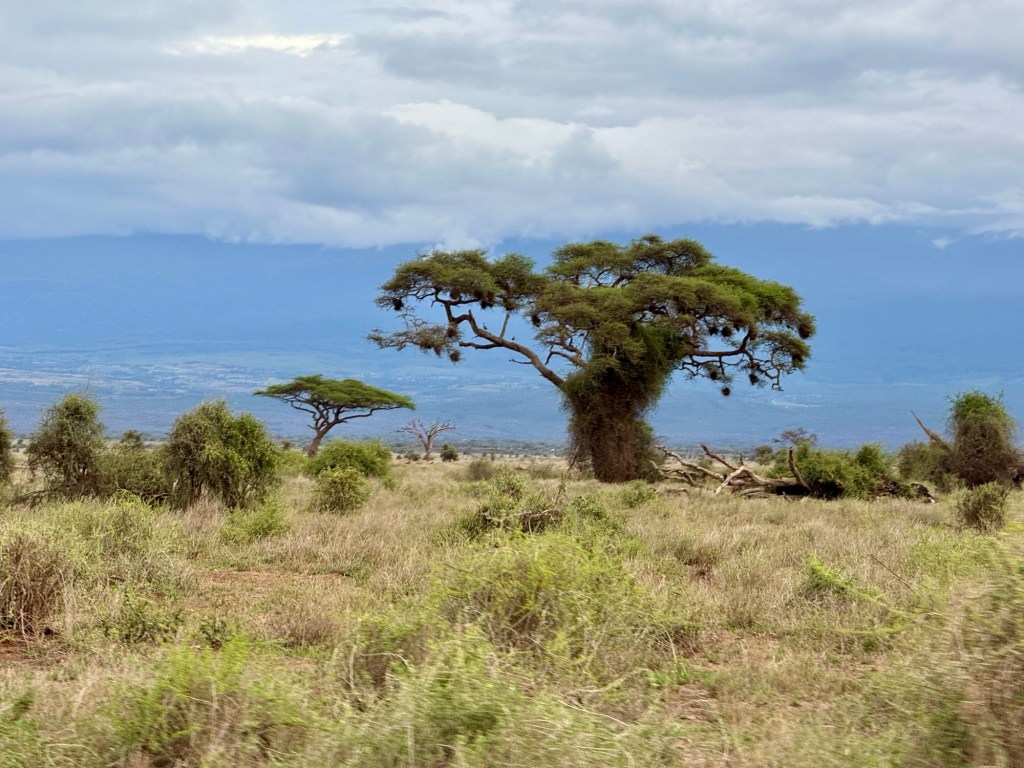
The elephants were responsible for all the knocked over trees on the savannah. Want to eat leaves that are too high up? No problem, the elephant stomps and pushes the trees down for easier access.
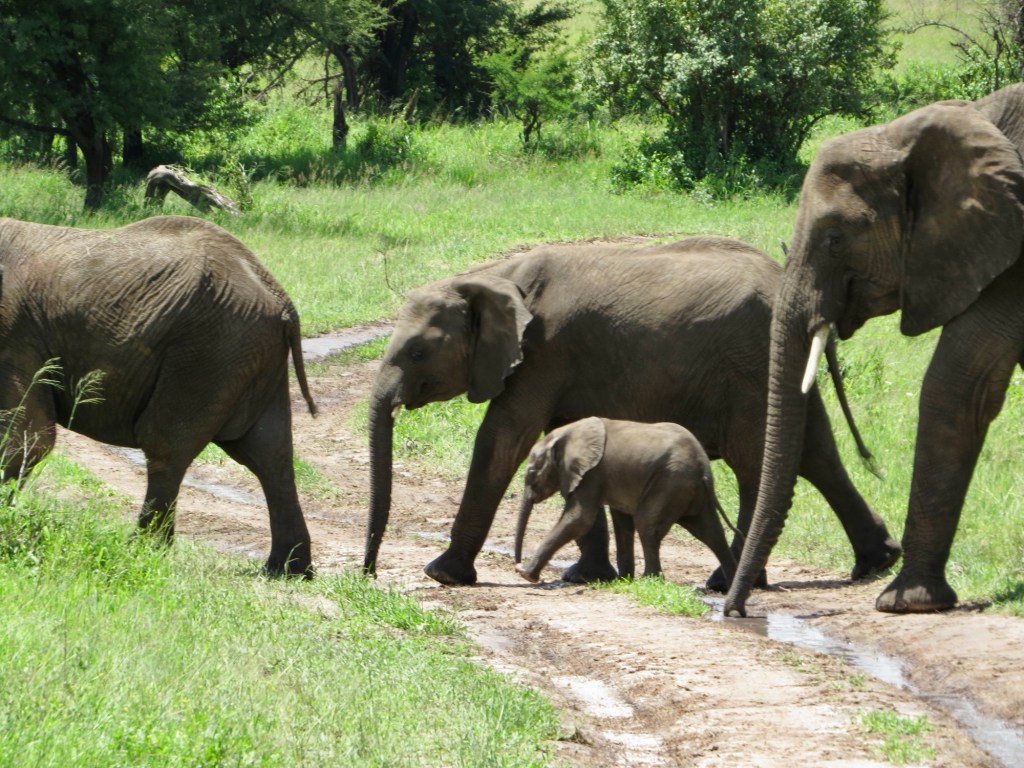
Now it was the elephant’s turn to cross the road:
I’ll save the afternoon excitement for the next post. Again all this was prior to noon! This was not what I was expecting for a safari trip. I thought there would be long periods of searching for animal sightings, but in reality, wildlife was a constant.
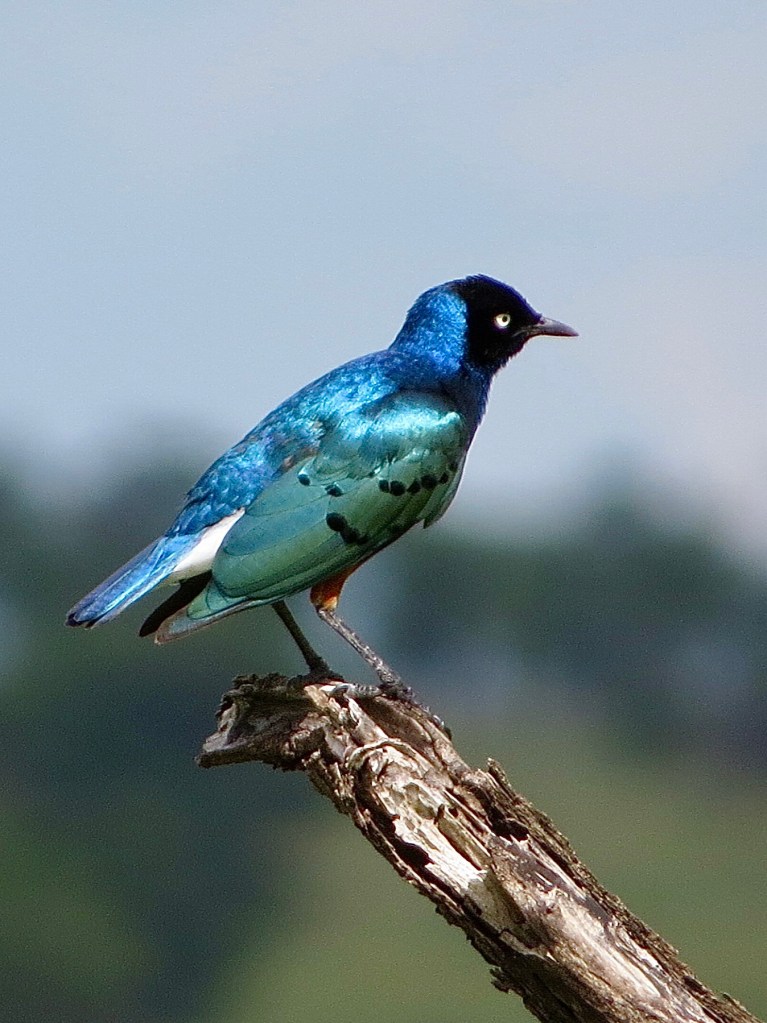
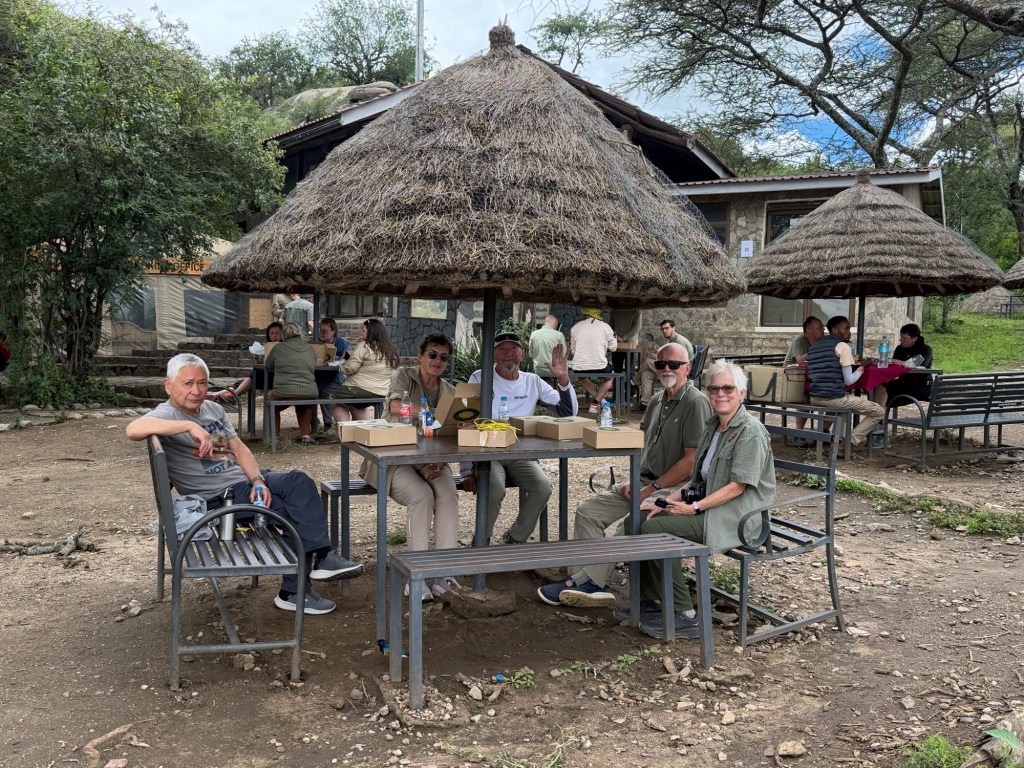
The Country Lodge in Keratu provided us with a buffet of items for us to make up our own lunch boxes. Great idea as a means to control food waste as you only take what you’ll eat. We had lunch at the park gate with beautiful blue Superb Starlings
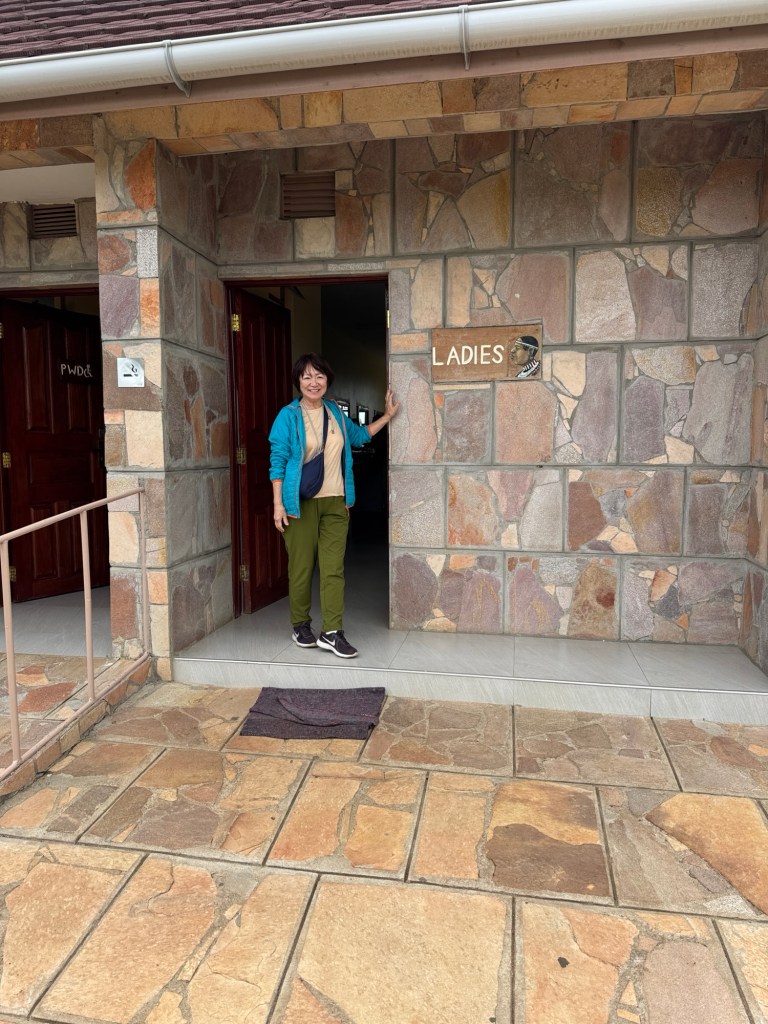
and mice at our feet. There were decent bathrooms as well.
Fed and refreshed we were on our way. Note: I’m wearing Bryant’s uniform Safari shirt from his three week gig filming a high end safari company seven years ago. The guide recognized it and asked where I found it. Our tour generally followed Bryant’s itinerary so I was hopeful we’d see some of the same animals. Good strategy.
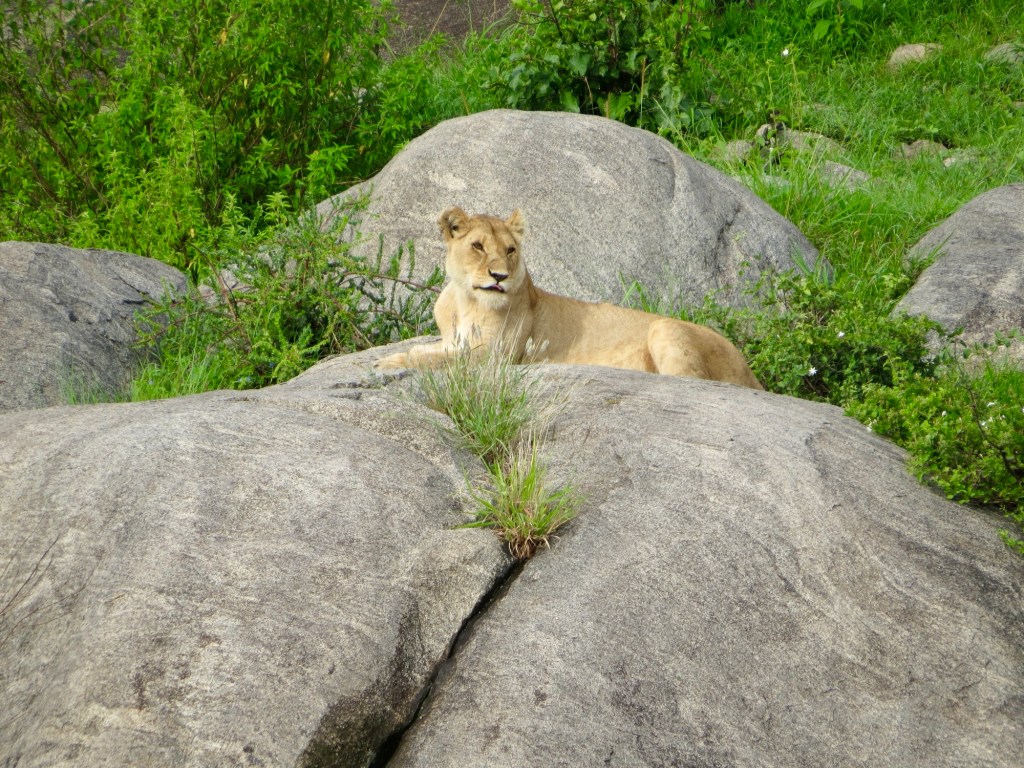
Off we went. There was a resting lioness.
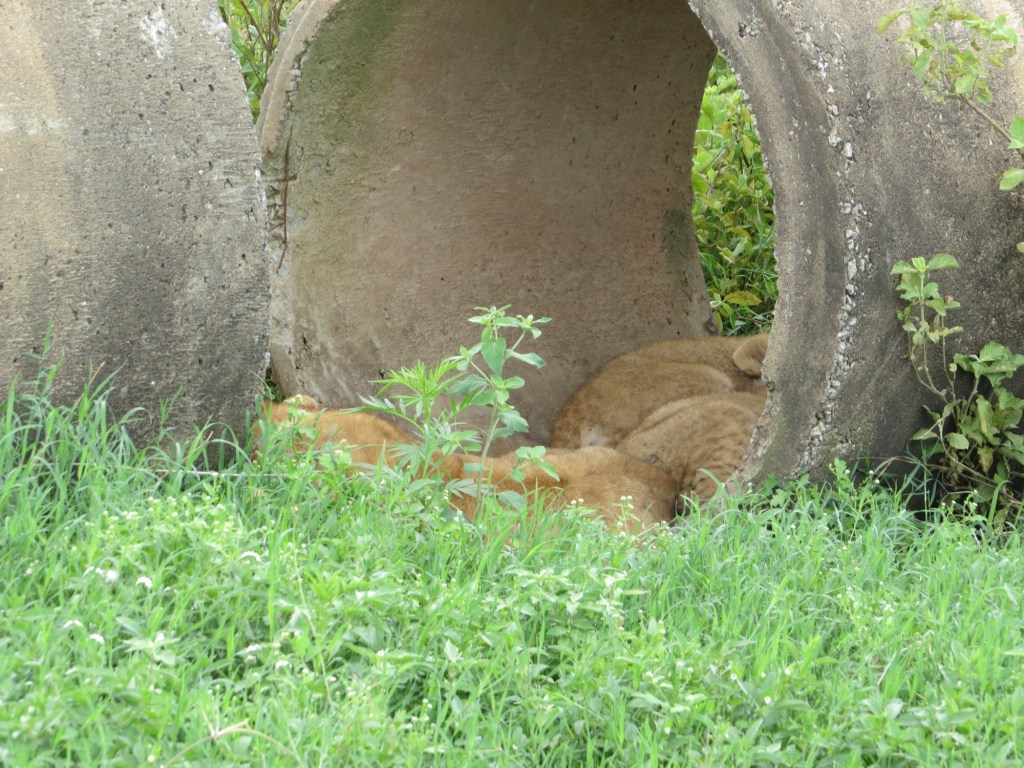
And Steve’s eagle eyes immediately spotted four cubs napping in a nearby culvert.
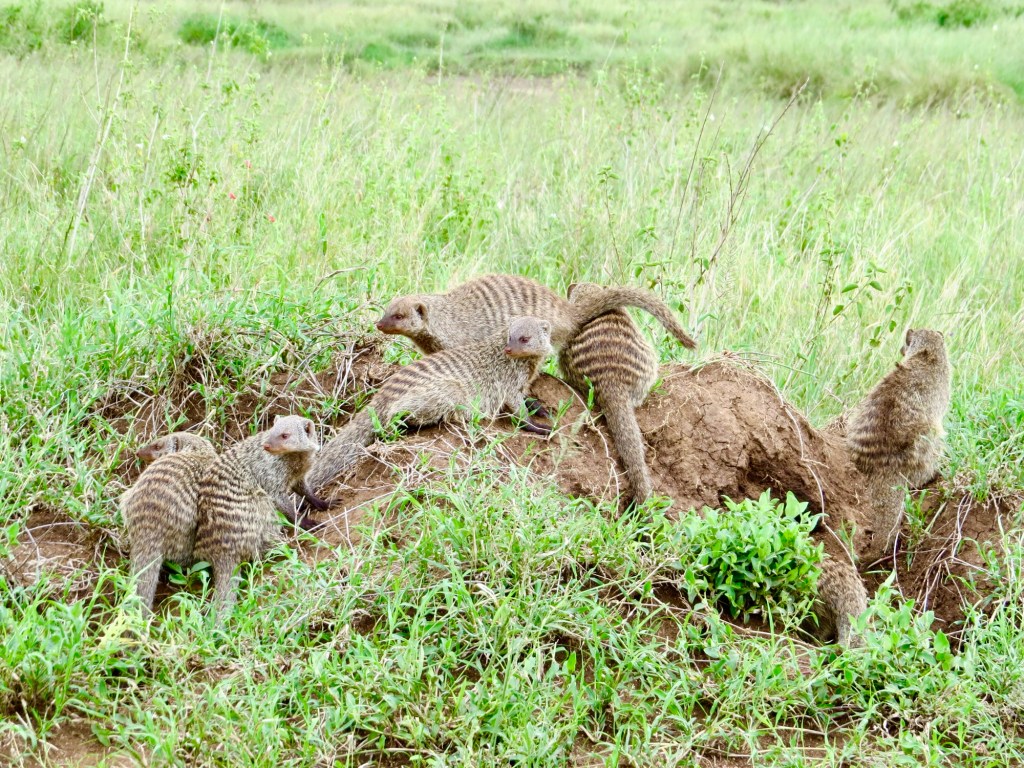
A “mob” of mongoose were checking out a termite hill.
They decided to make a quick exit.
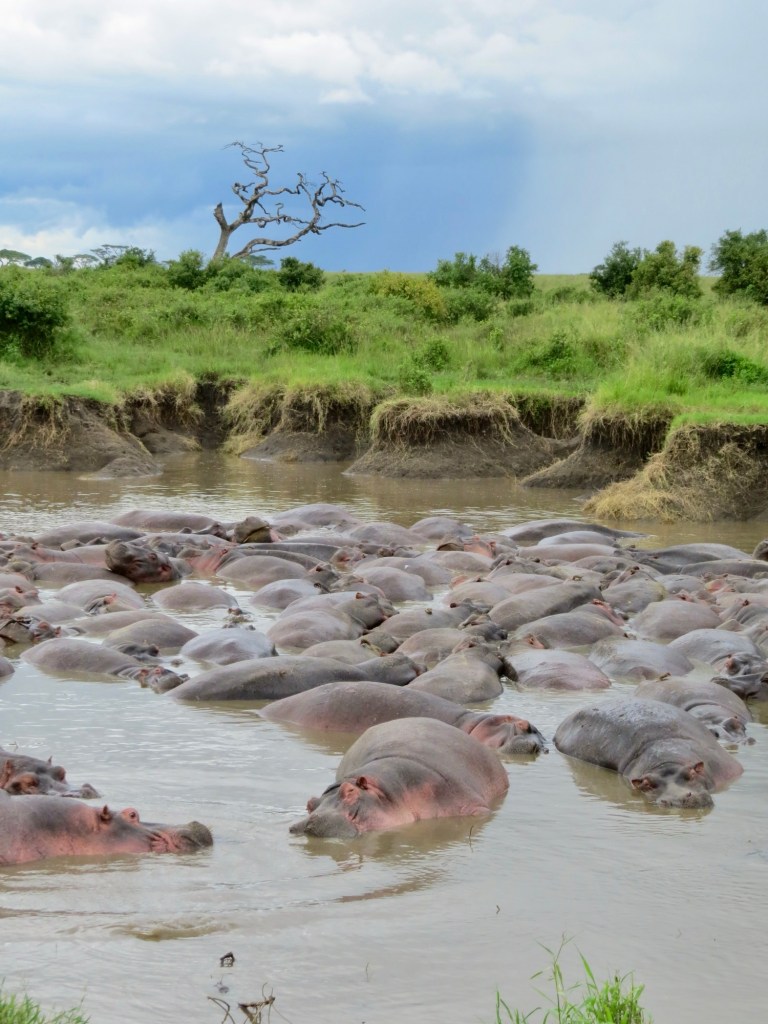
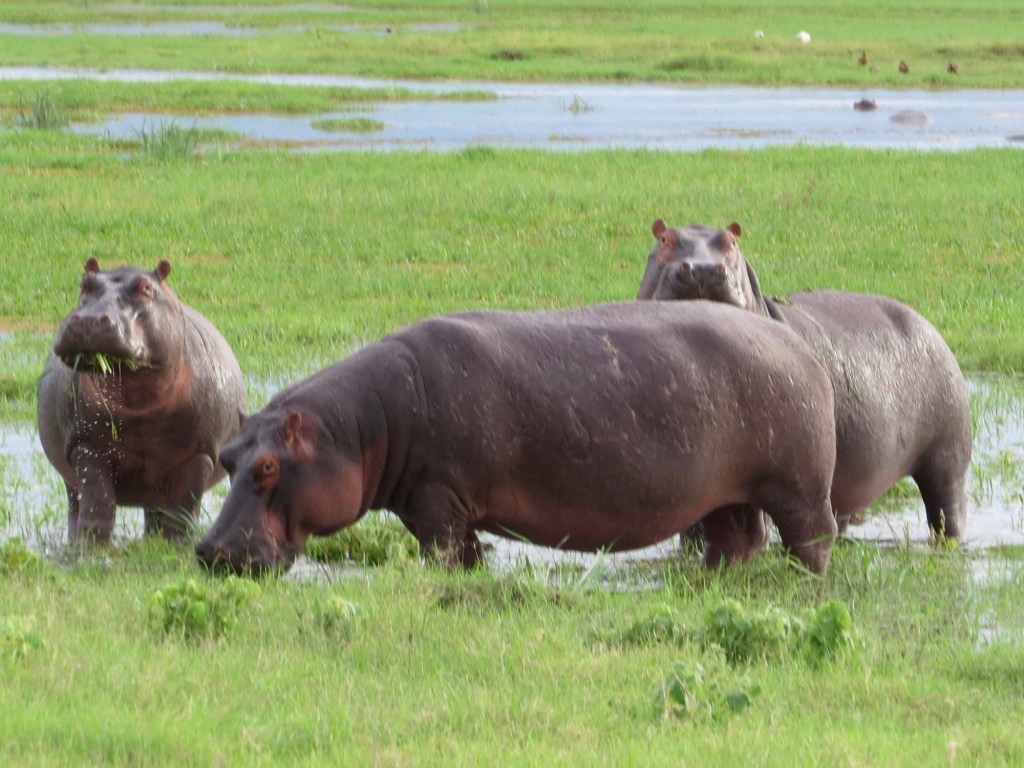
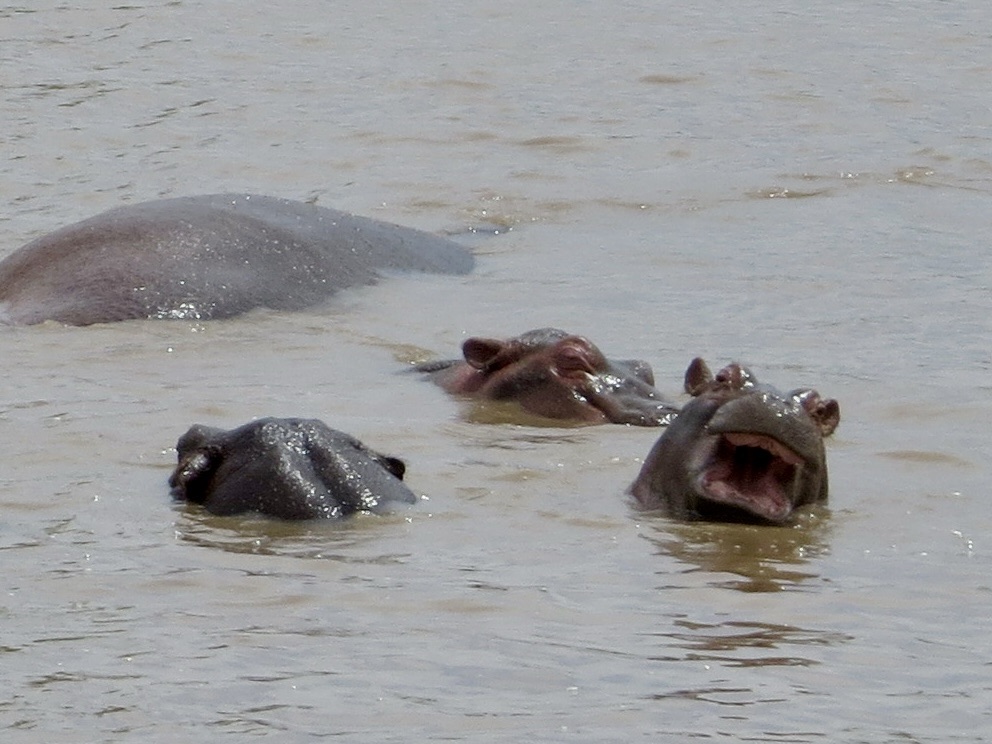
This pond was most memorable due to the quantity of hippos taking their afternoon nap.
Yawning
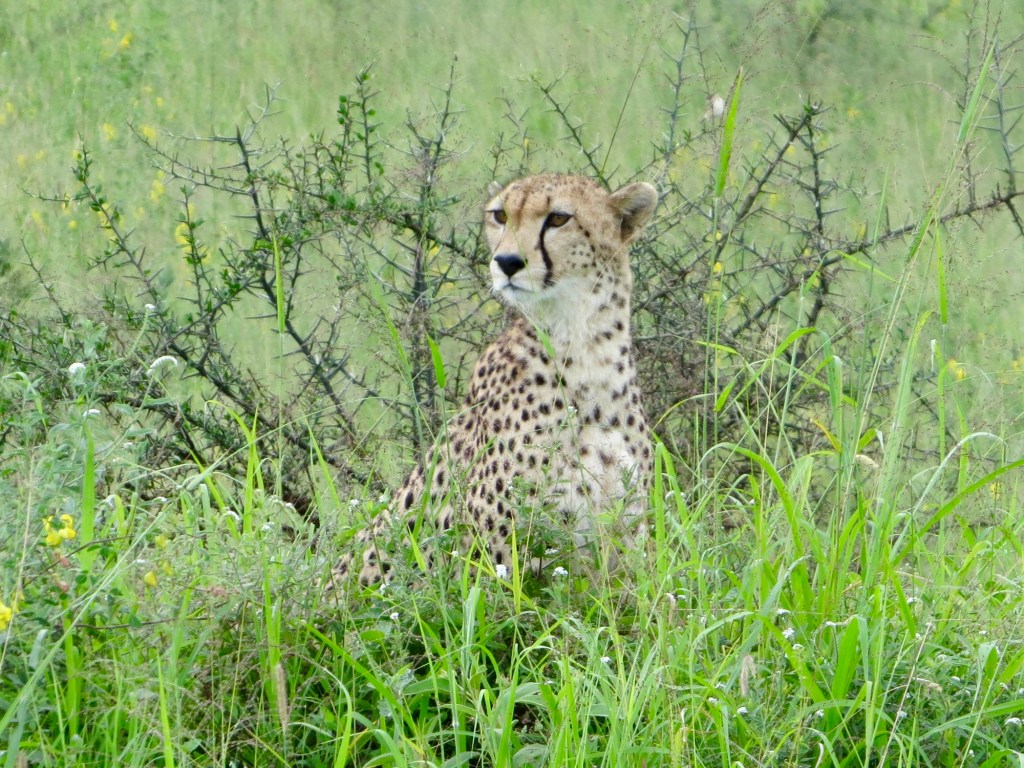
Making our way to the tent camp we spotted a cheetah in the grasses.
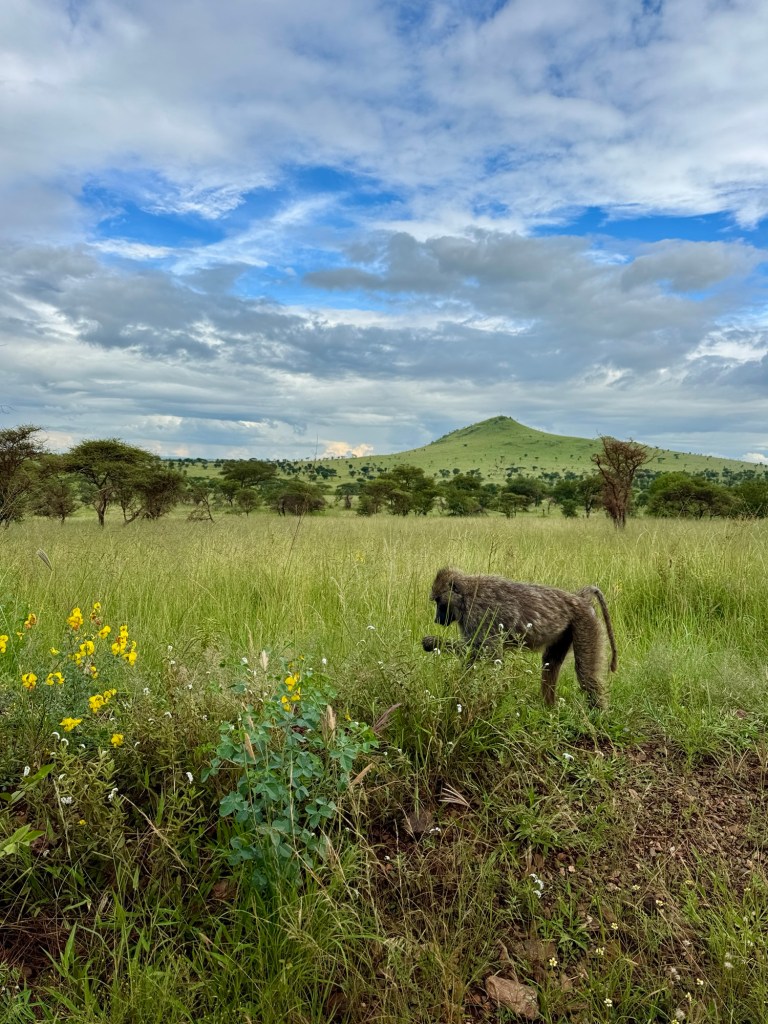
Baboons:
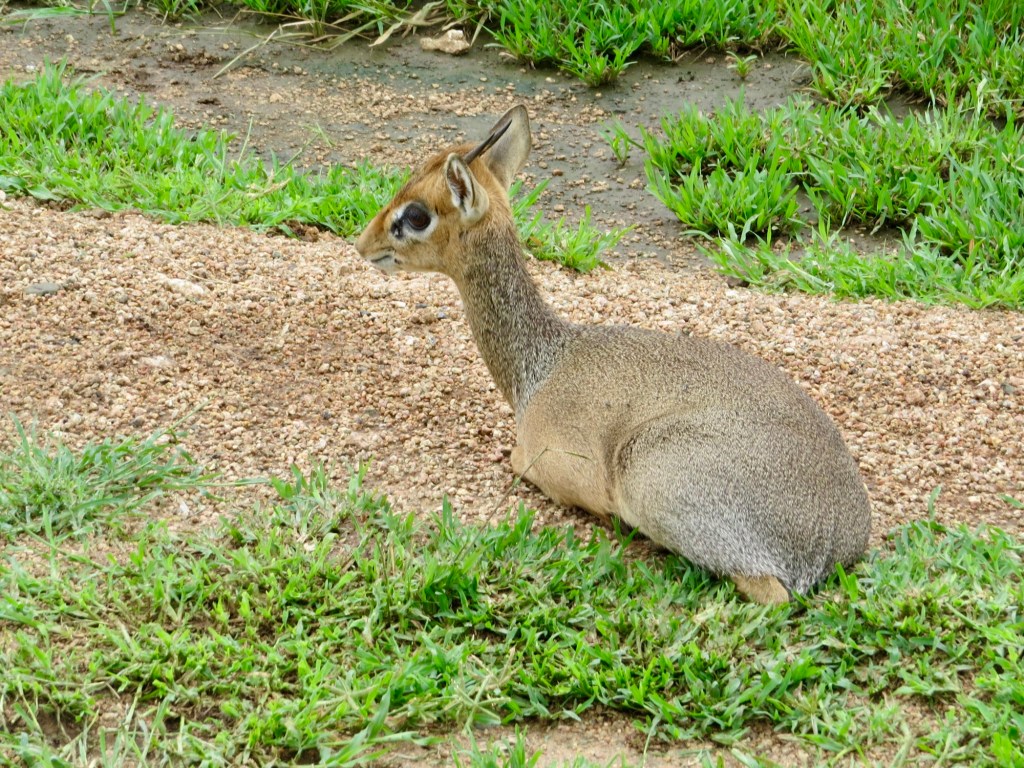
The Dikdik, a tiny antelope that stands 12-15” at the shoulder:
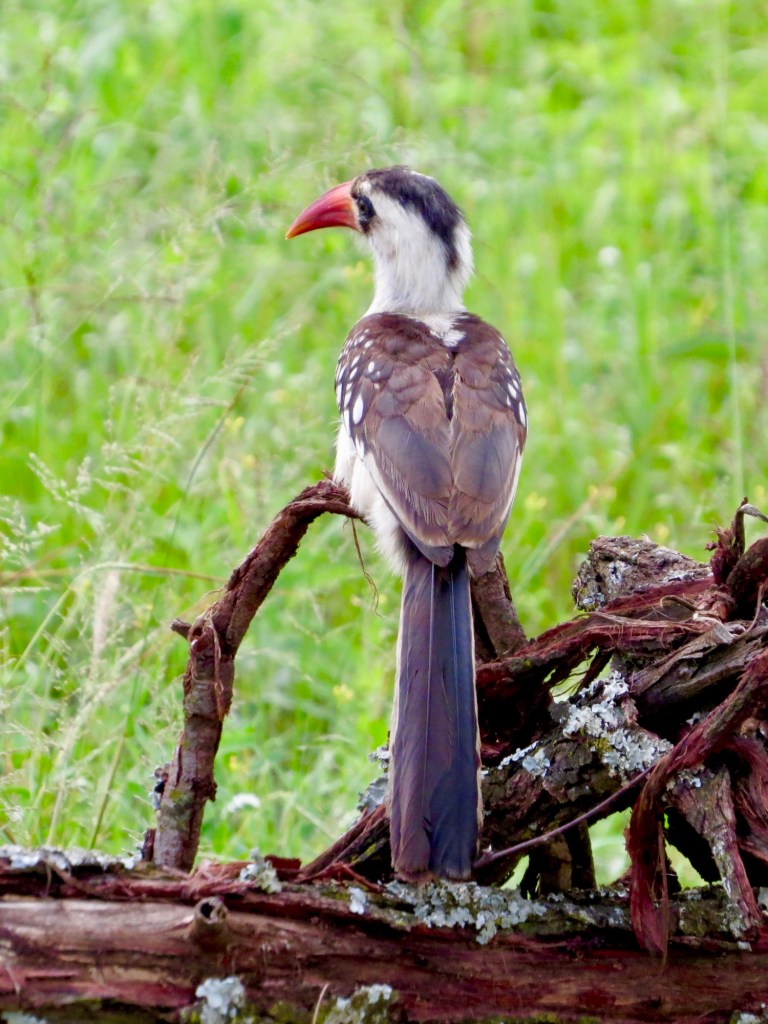
And more interesting birds.
The Red Bishop:
The Bare-Faced Go-Away bird. Seriously. Named for their call that sounds like “Go away!”
Arriving at Moyo Tented Camp reminded me of welcoming campers to summer camp.
This was glamping at its best:
It was good to know we’d be here for two nights in a row, not our routine of daily moving along.
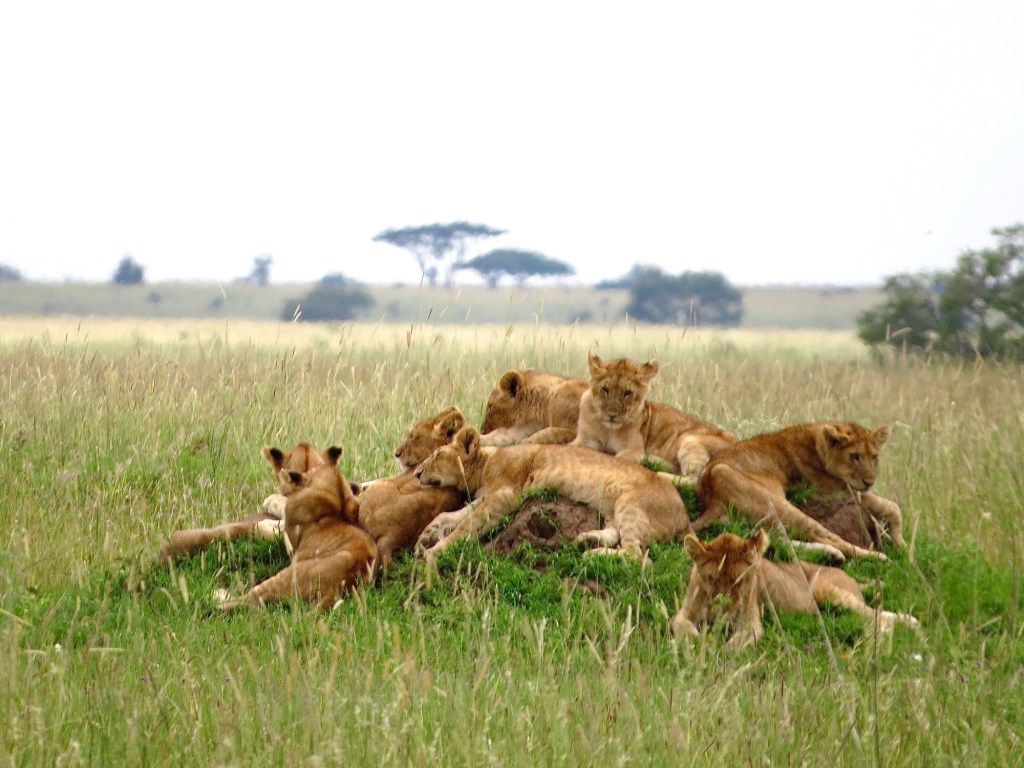
We spotted a pile of lion cubs on a termite mound:
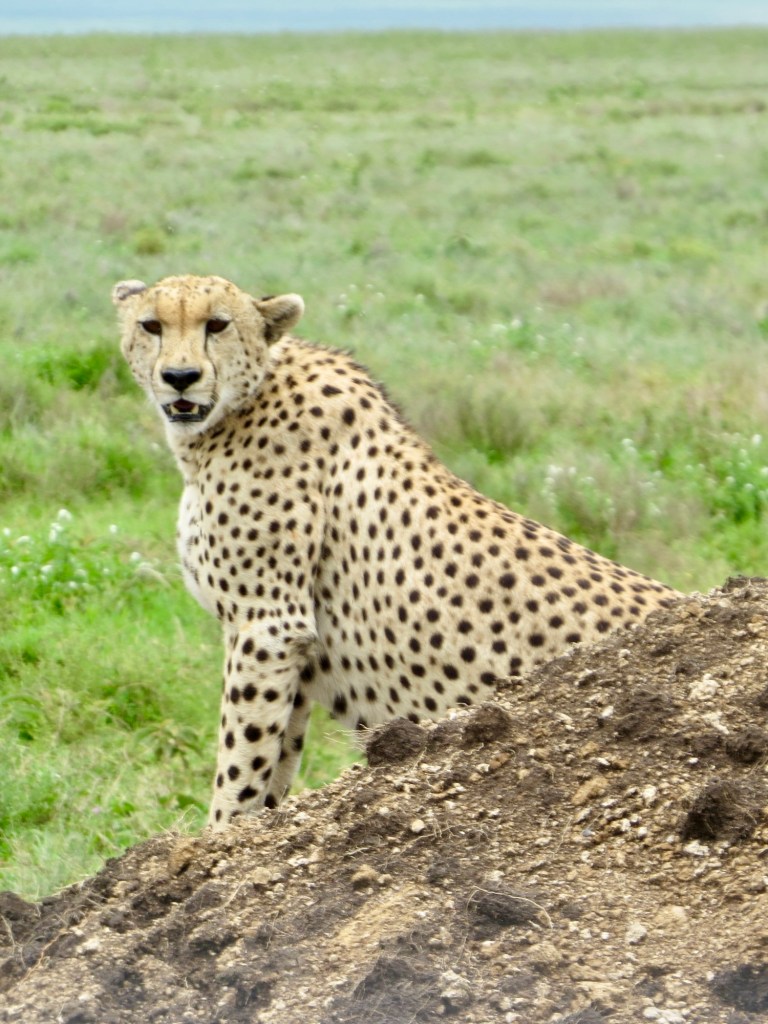
A cheetah:
Wildebeest as far as the eye can see:
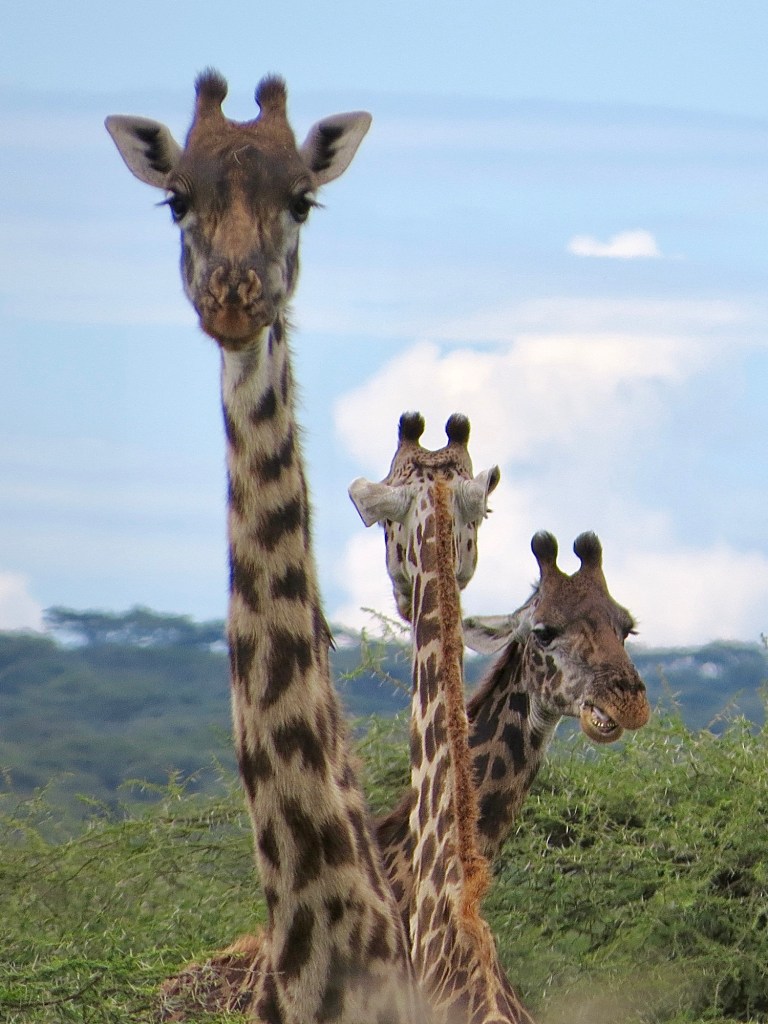
A “tower” of giraffes, pausing their munching to look at us, except for the middle one:
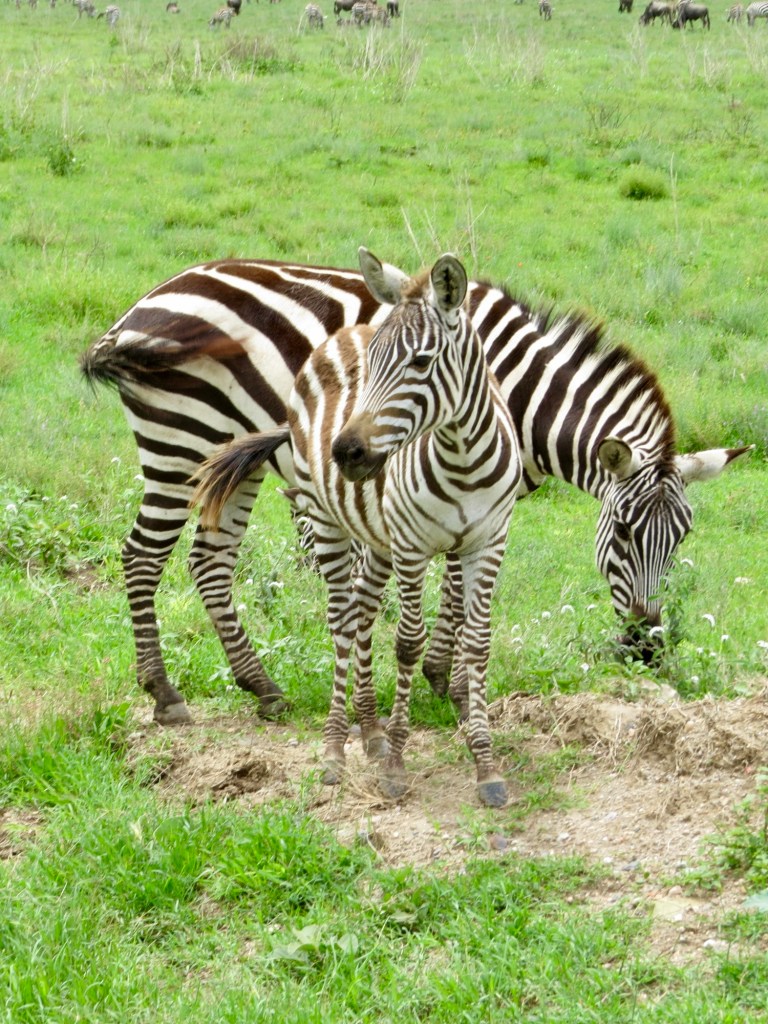
Mom and baby zebras:
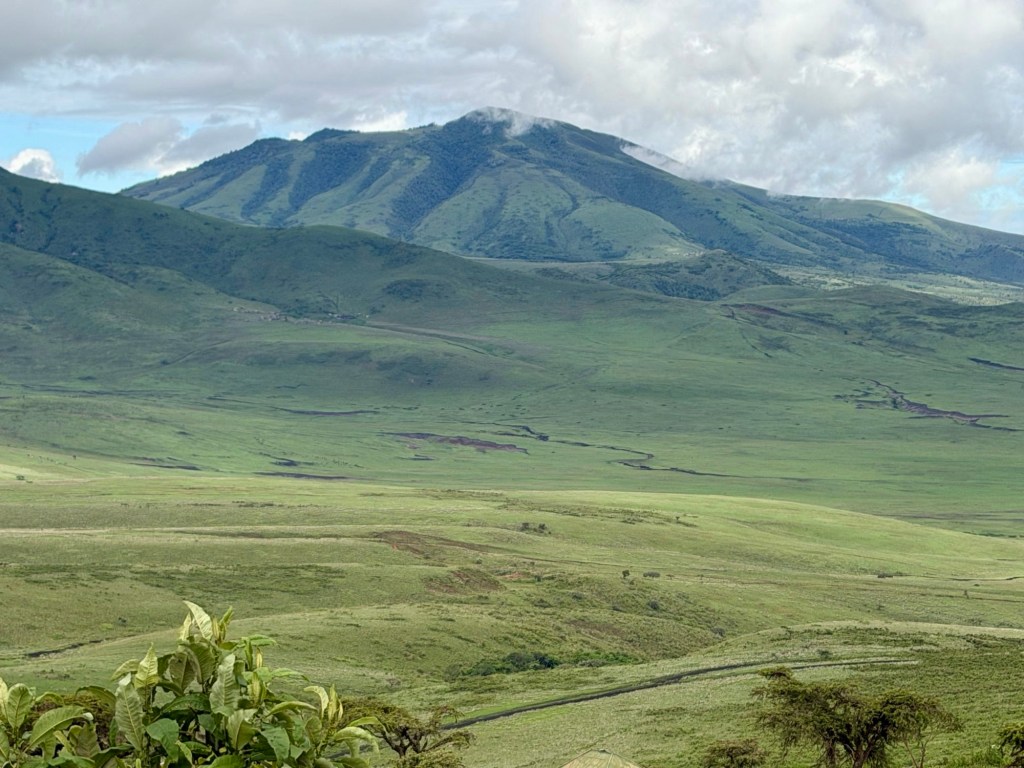
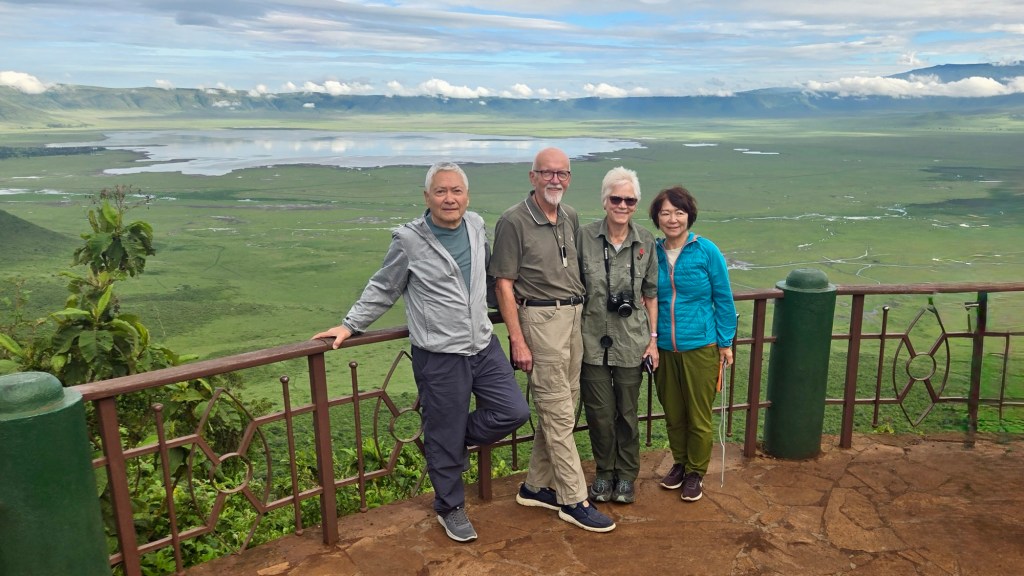
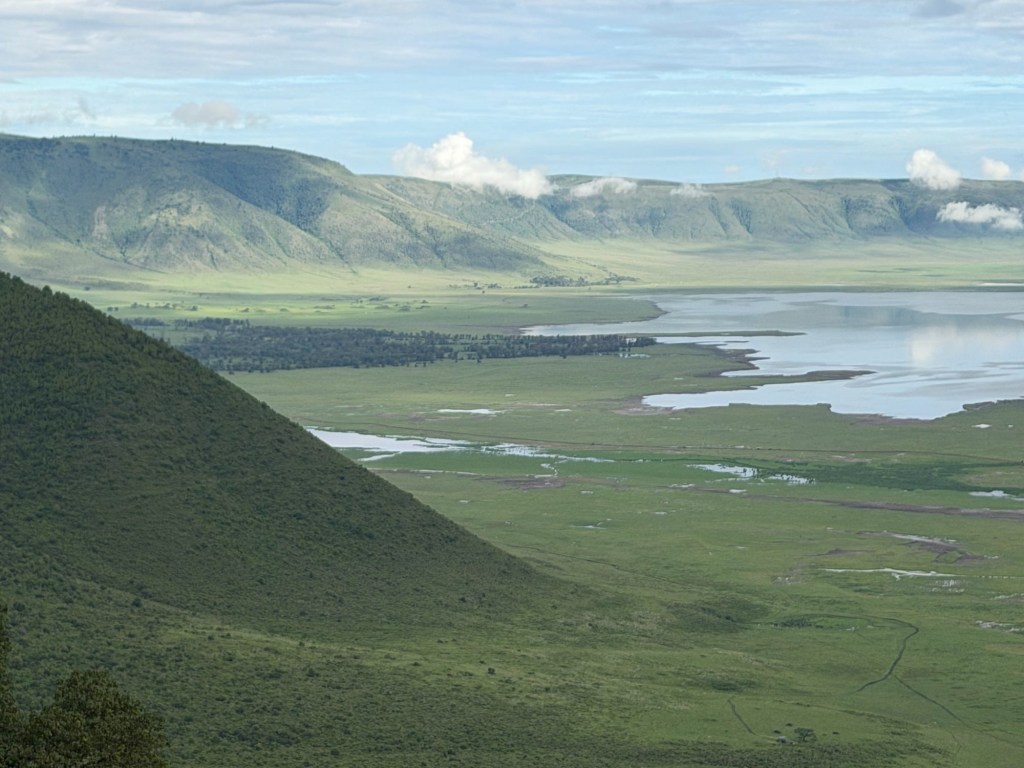
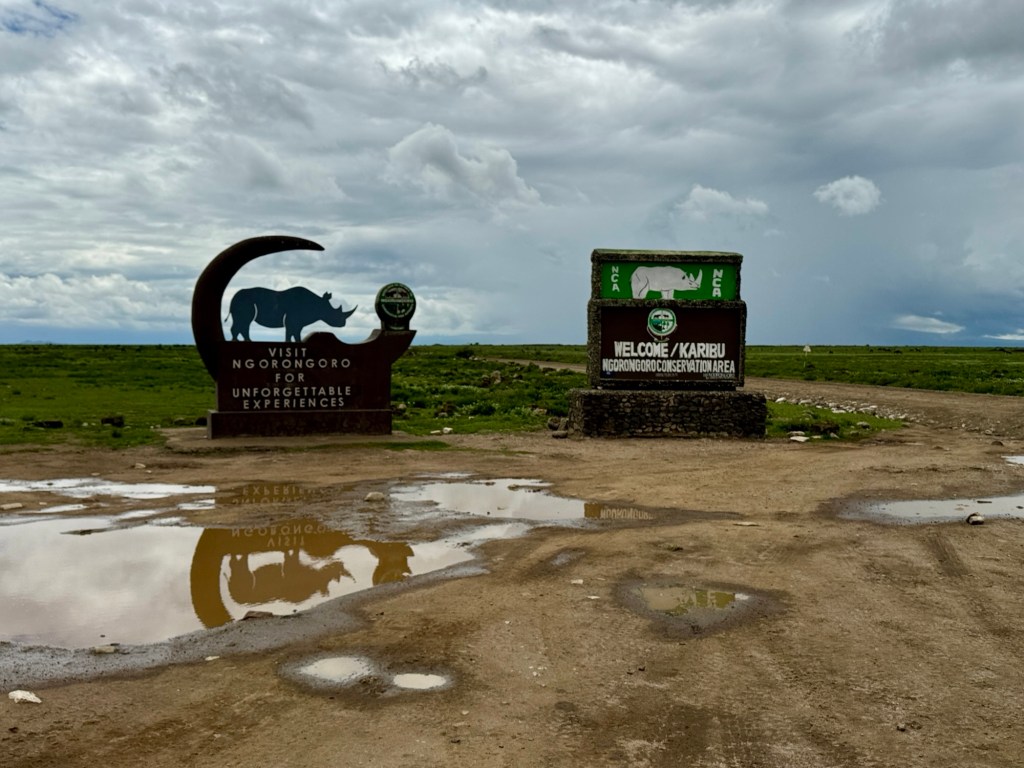
We stopped at the crater overlook at the Ngorogoro Crater. We’ll go into the crater for a game drive on our way back to Keratu. I was disappointed to have not gotten a geocache in Kenya but in Tanzania I was able to get three, one at this spot.
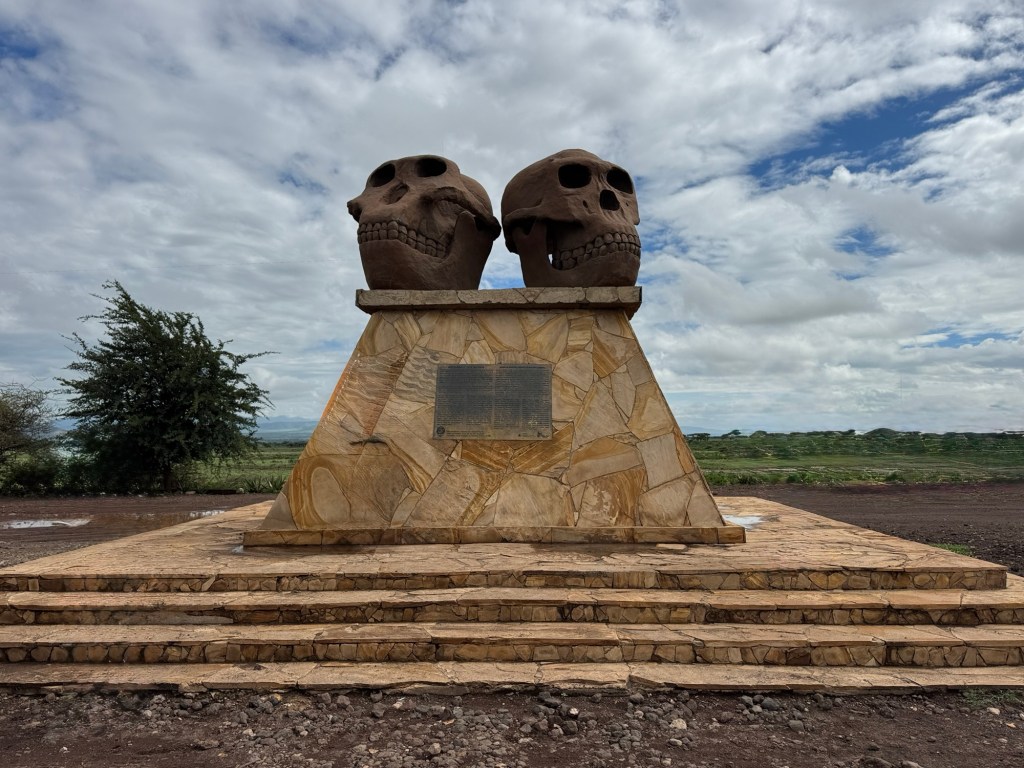
There was a stop at the Olduvai Gorge Monument that has giant versions of the two eras of human ancestors found in the area.
We received the news that due to a road washout from heavy rains we would need to cross at a different border adding three hours to the trip, and missing the morning game drive.
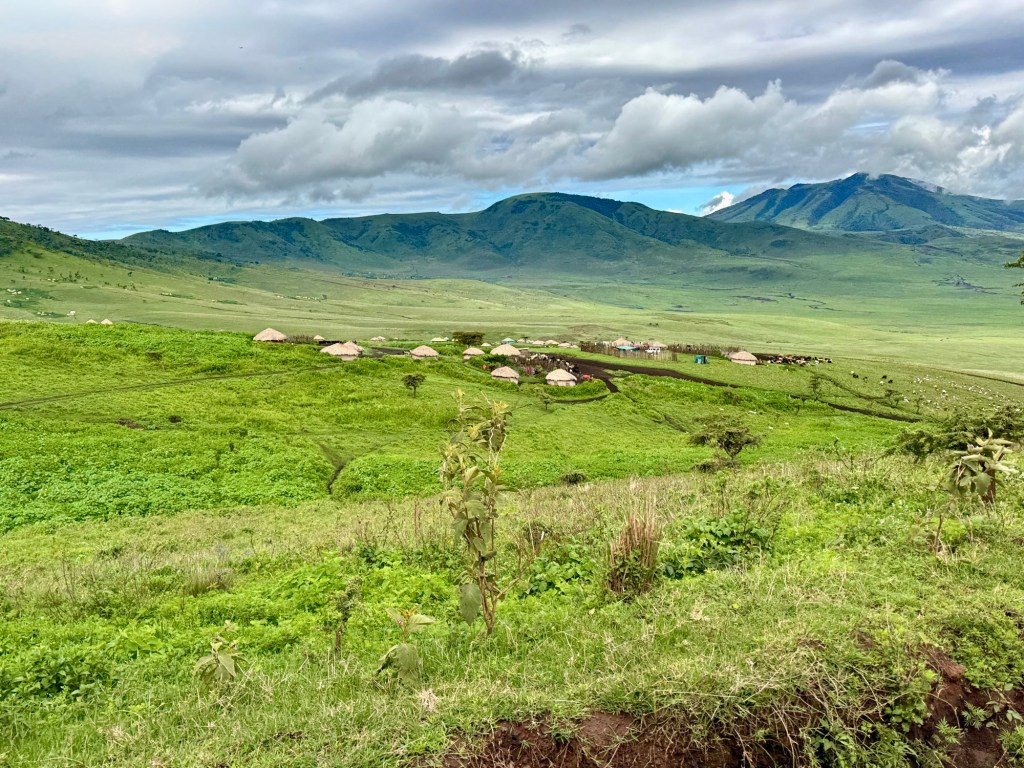
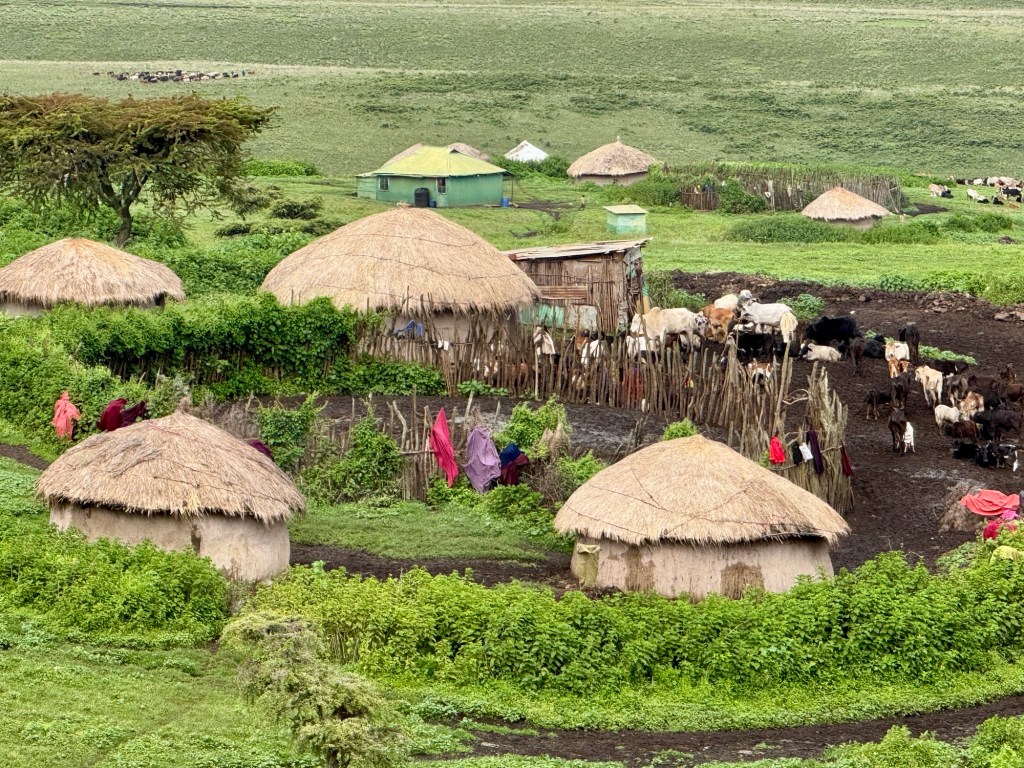
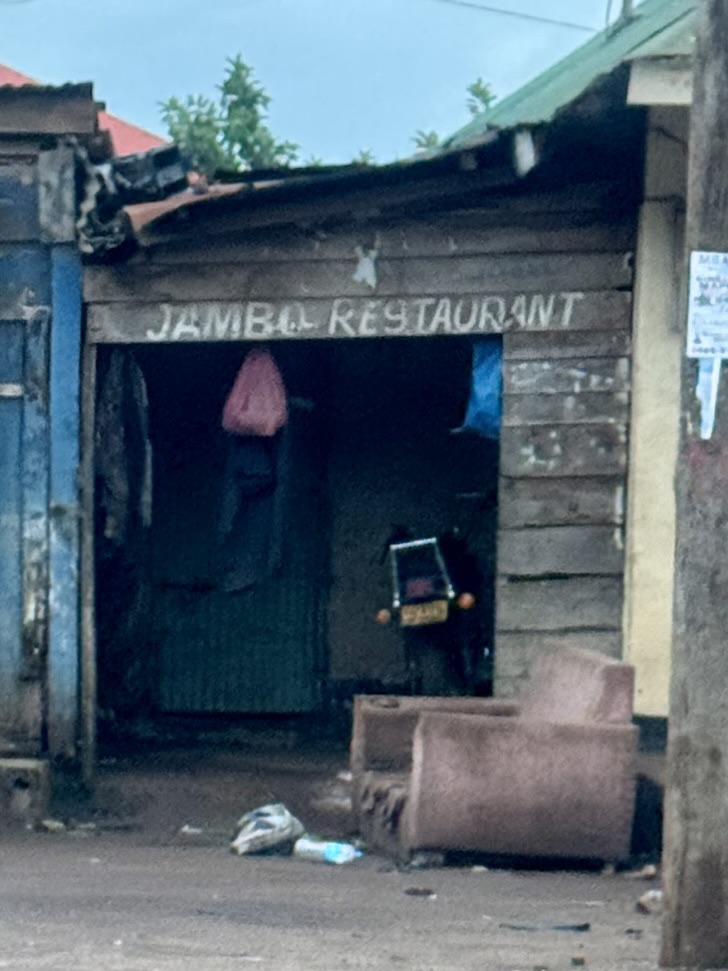
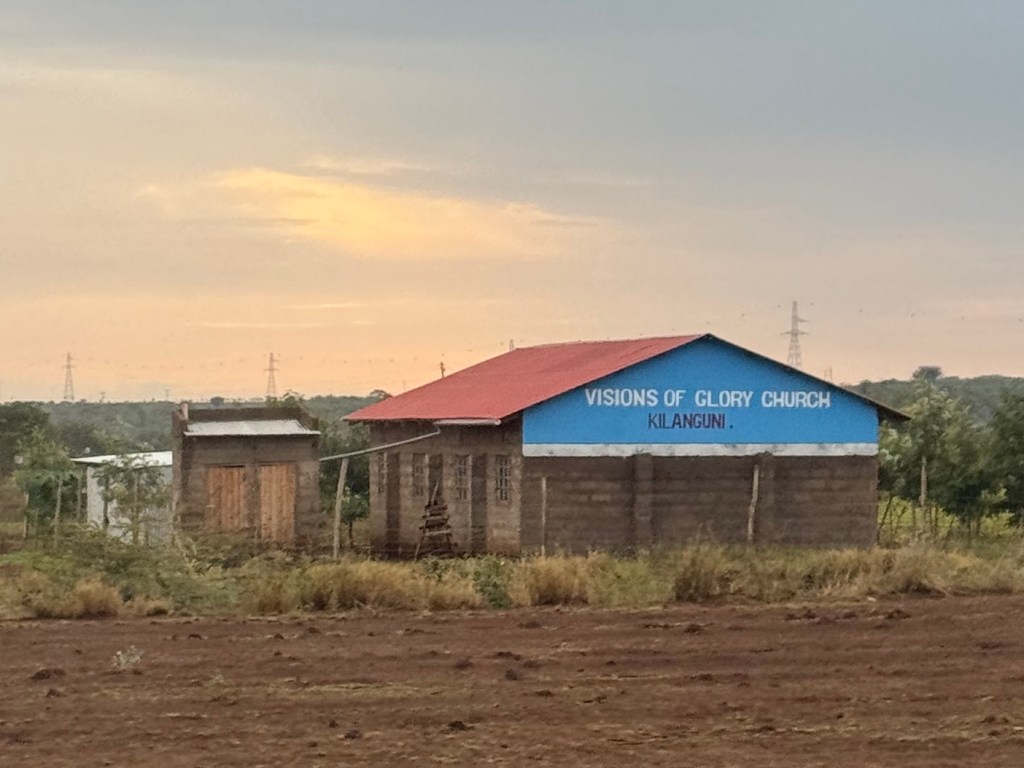
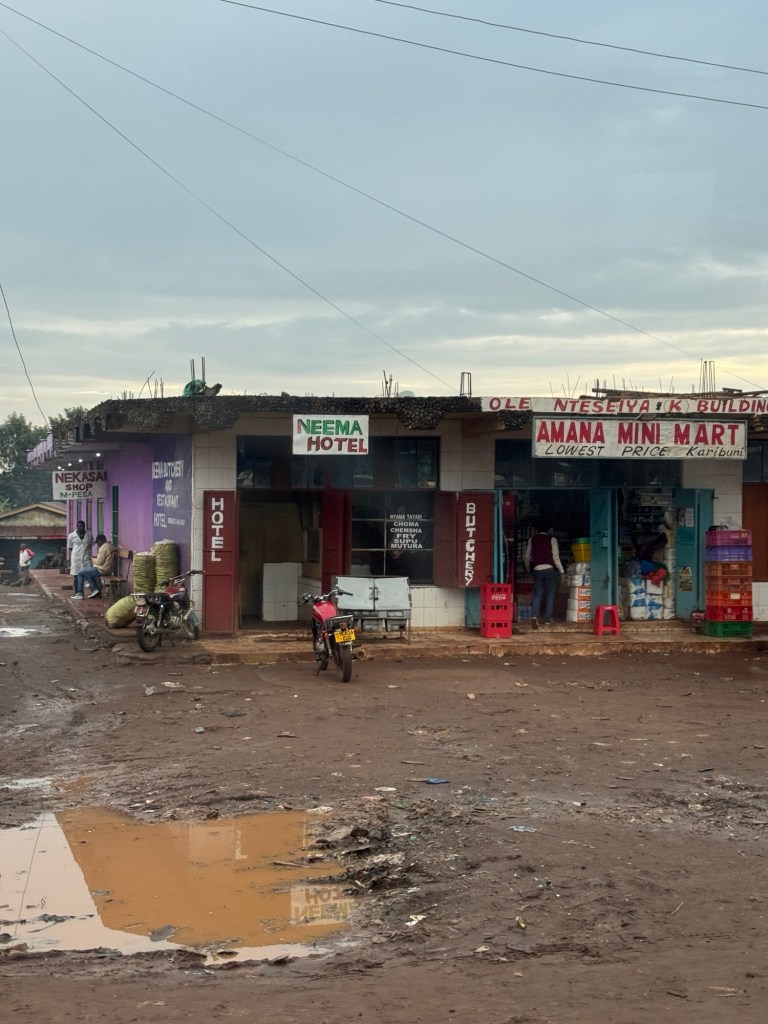
We rode through many small communities with the same types of businesses, schools and churches.
The one that intrigued me in most villages was the hotel, a tiny square building. This one is a hotel, restaurant and minimart.
We arrived at the border and cleared immigration at three different stations: the exit visa in Kenya, then a passport and vaccination check in Tanzania, followed by the issuing of a visitor’s visa. We were a bit anxious as we travelled with a certificate of medical contraindication for the yellow fever vaccine, meaning we didn’t have the required vaccine. It is not recommended for those over age 60 as the chances for serious side effects are higher than contracting yellow fever. Turns out it was no big deal.
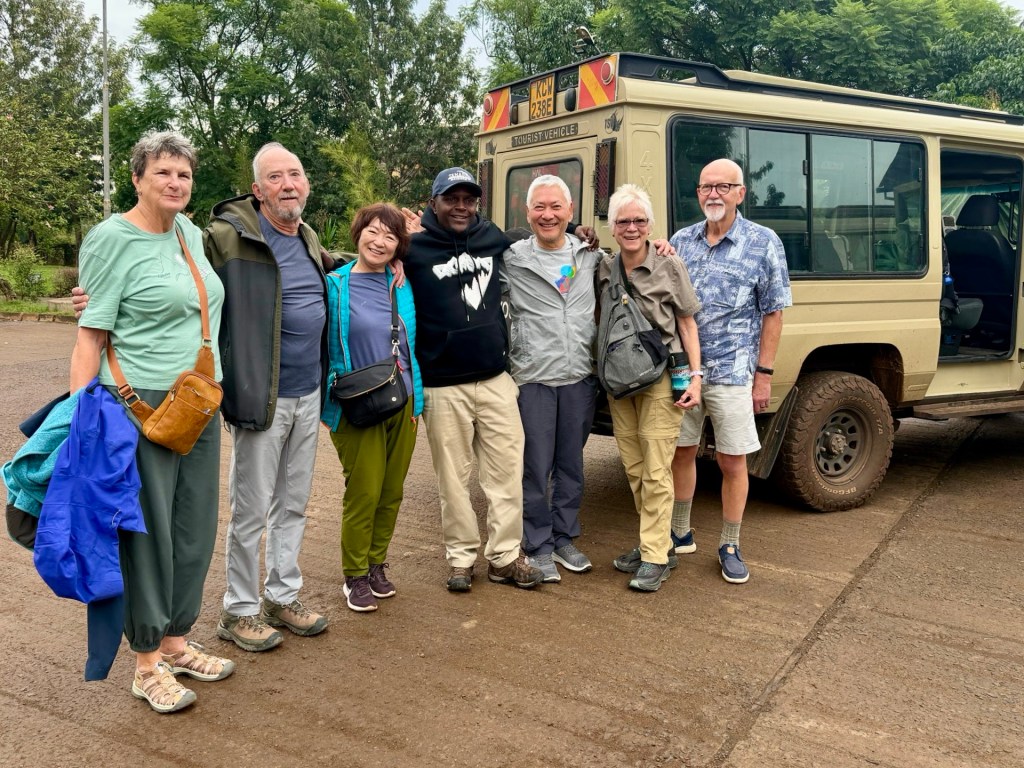
We said goodbye to our Kenyan guide, David:
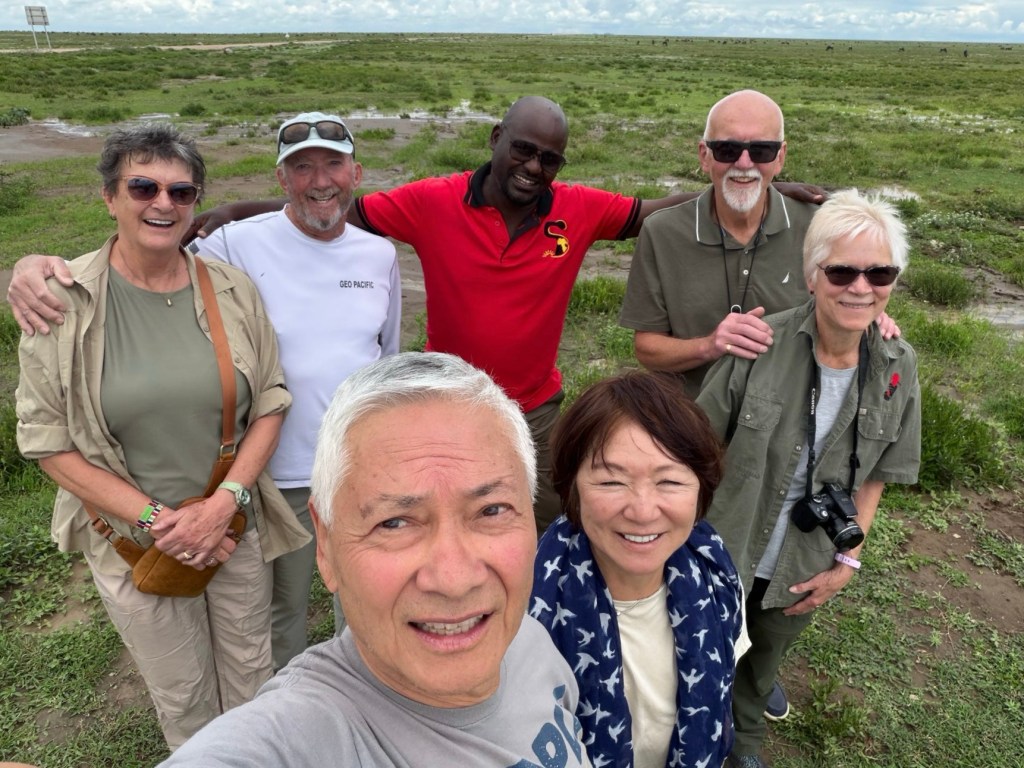
and were handed over to a bus driver who would take us to Arusha to meet up with our Tanzanian guide, Steve.
It was the bus ride from hell: a small old vehicle with little legroom combined with bumpy roads and no rest stop for three and a half hours.
One thing I’d recommend for a safari trip? A sturdy bra for the bumpy roads. We had a good laugh at my suggestion, and the two other women fessed up as having had the same thought.
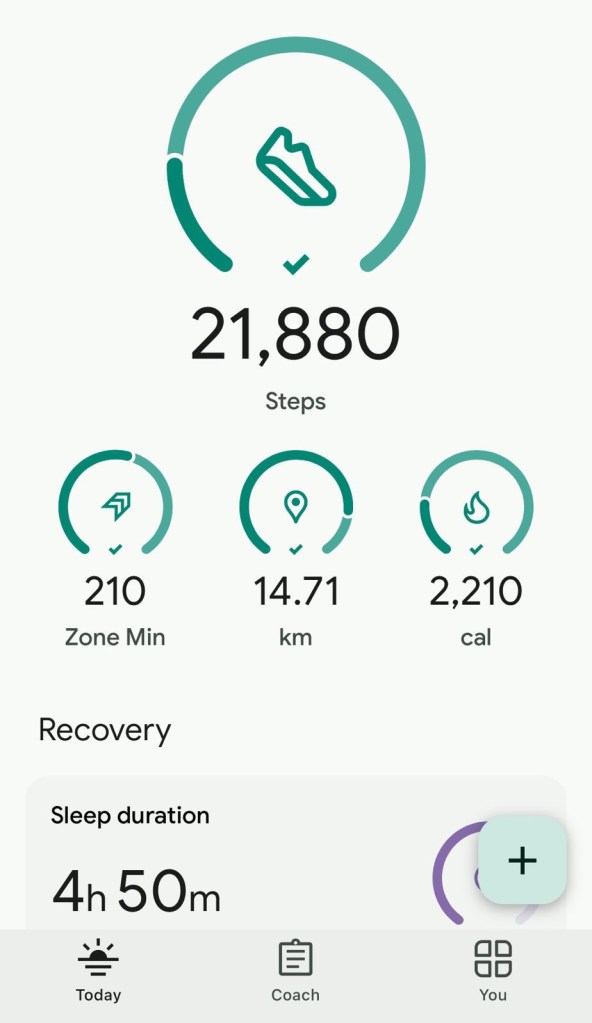
The other thing about bumpy roads? Fitbits interpret the motion incorrectly and we were exceeding 20,000 steps daily with hardly any walking.
Our destination was the Arusha Sheraton for a delicious buffet lunch. The curry was particularly good.
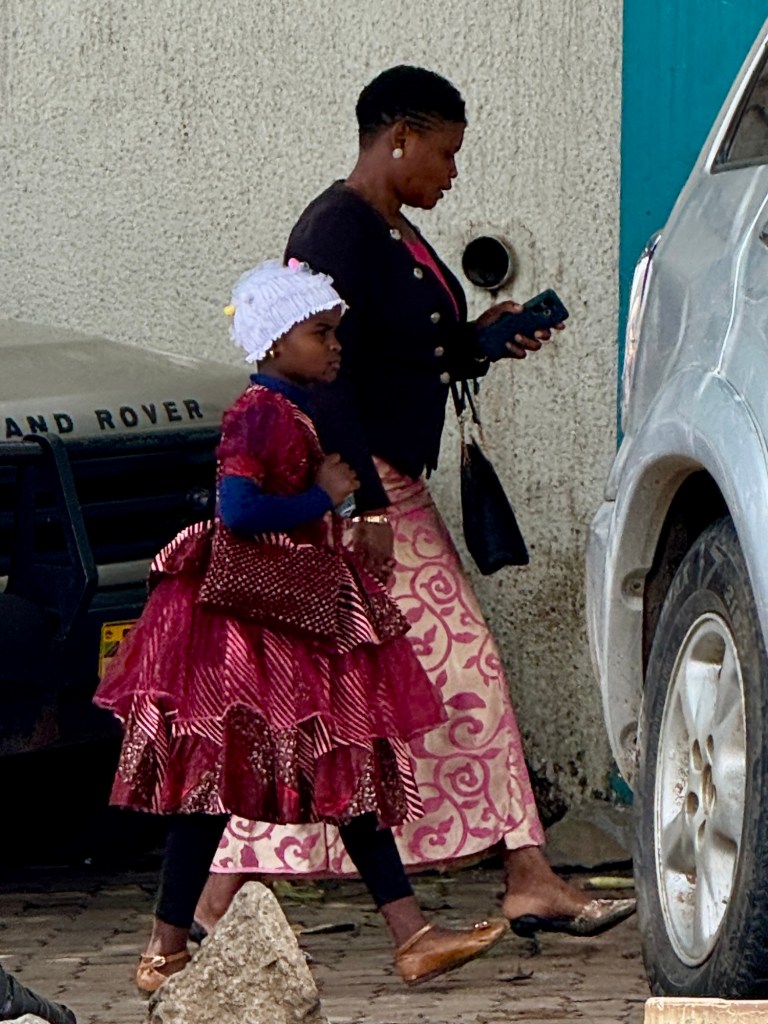
Being Sunday, the ride through Arusha was slow, due to a tent revival on the far side of town that impacted traffic everywhere. City photos were colourful, from Sunday outfits:
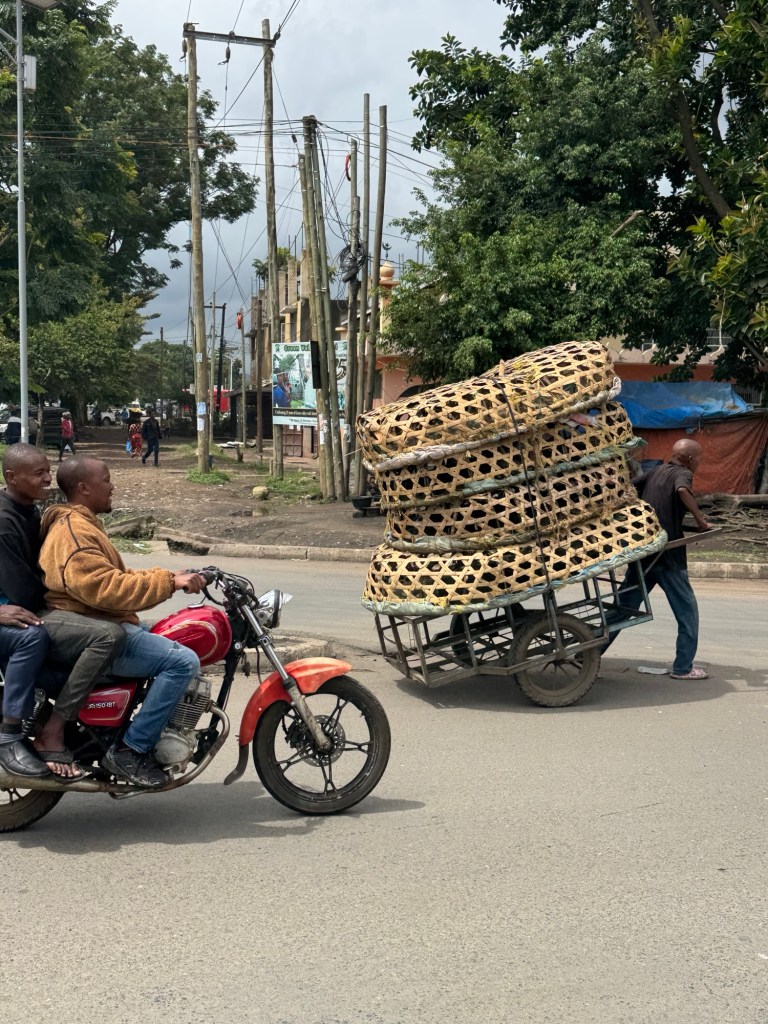
Woven cages with live animals, I think this one held chickens.
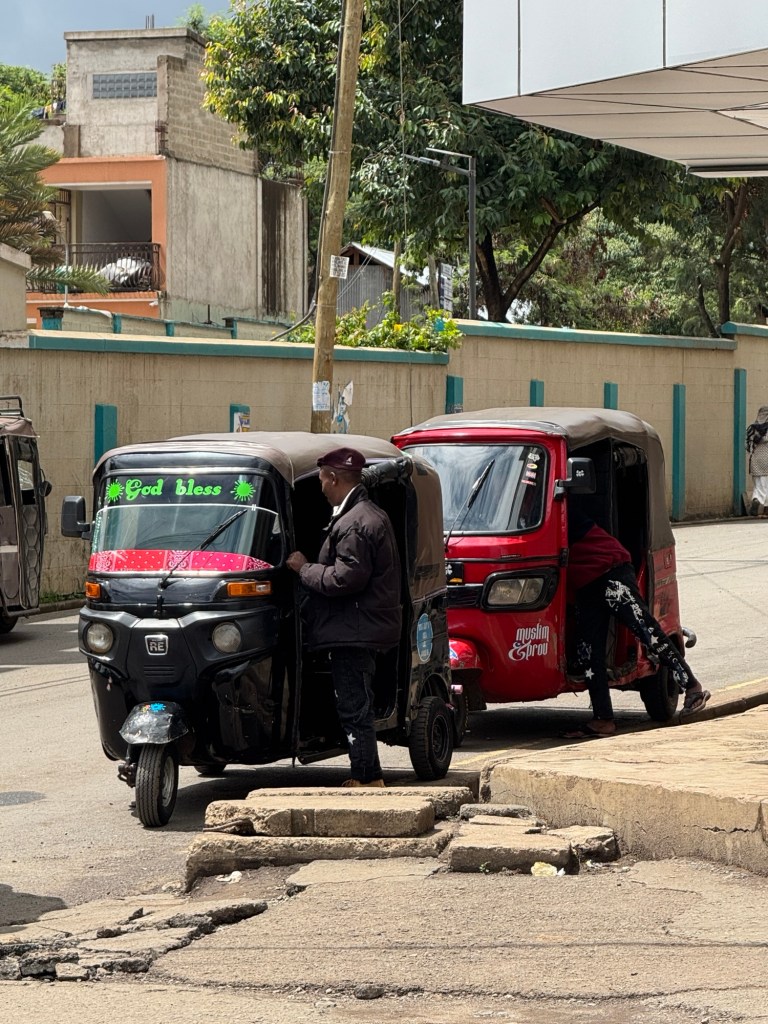
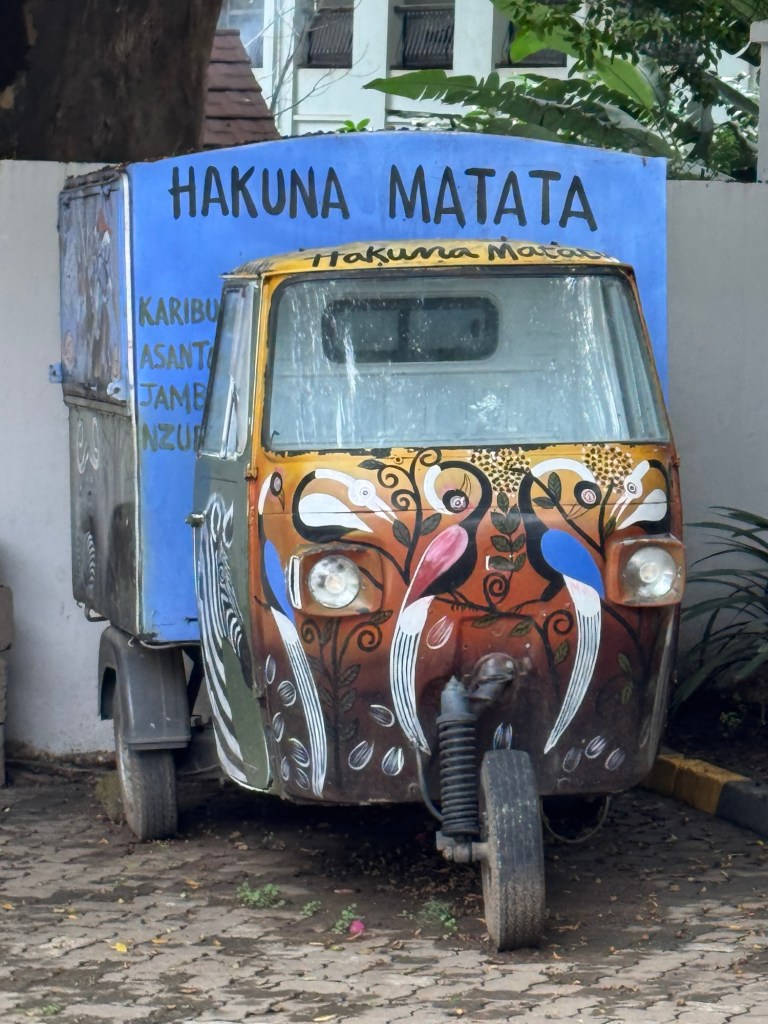
Tuk tuks, a popular means of transportation, designed to hold four passengers plus the driver, but we saw some packed tight.
All vehicles, vans, busses, seemed stuffed like circus clowns in a VW bus.
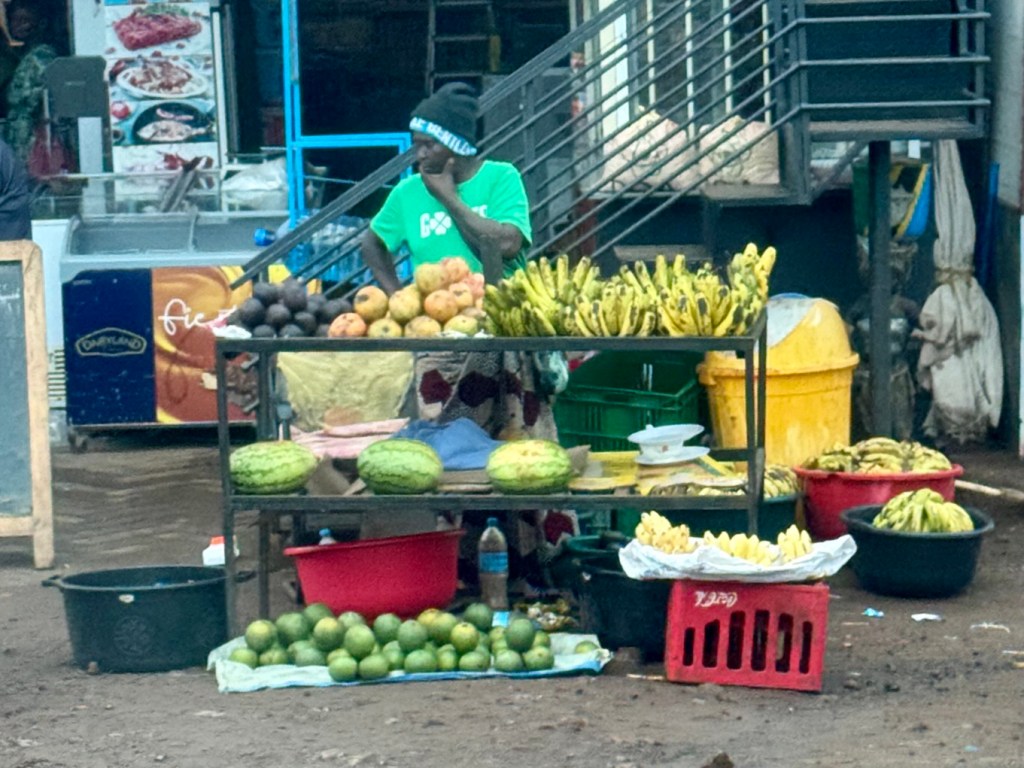
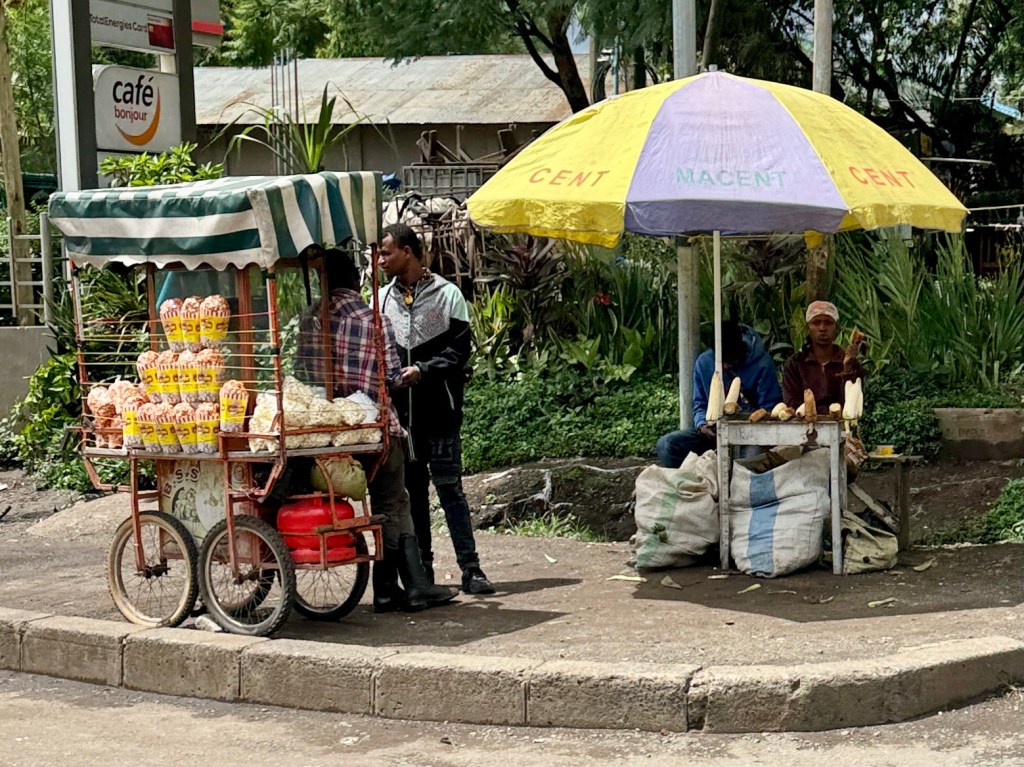
Roadside stands sold fruit and the popular snack: popcorn.
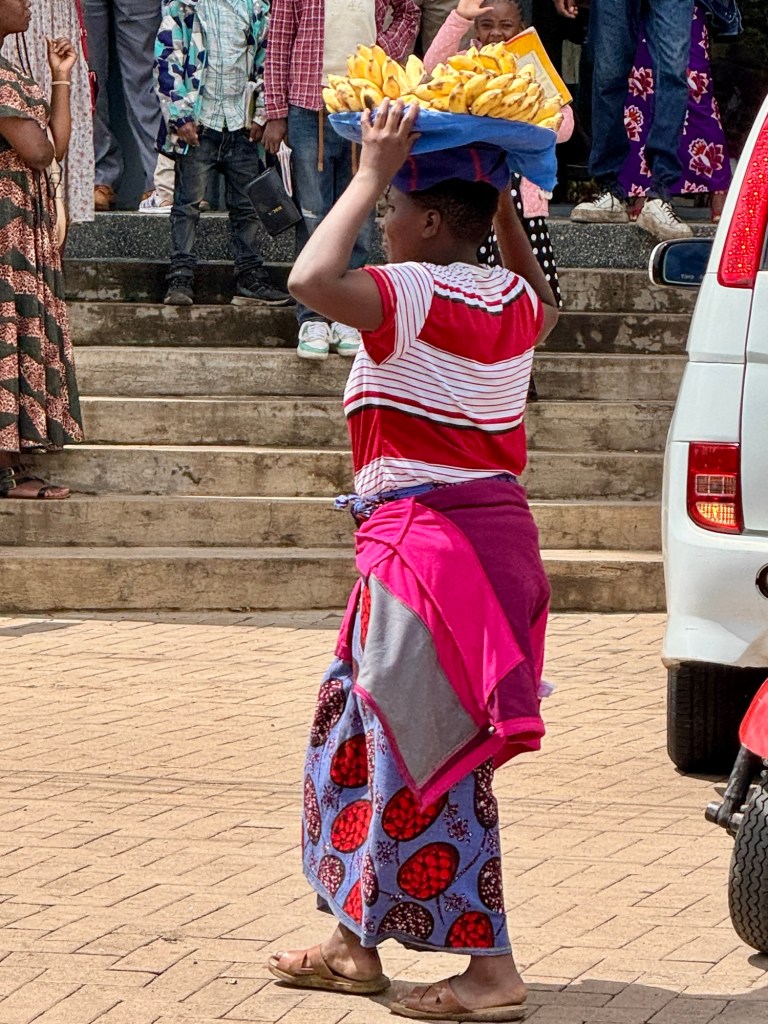
People did a good job carrying items on their heads.
It was also a popular way for porters to carry luggage to your lodge room.
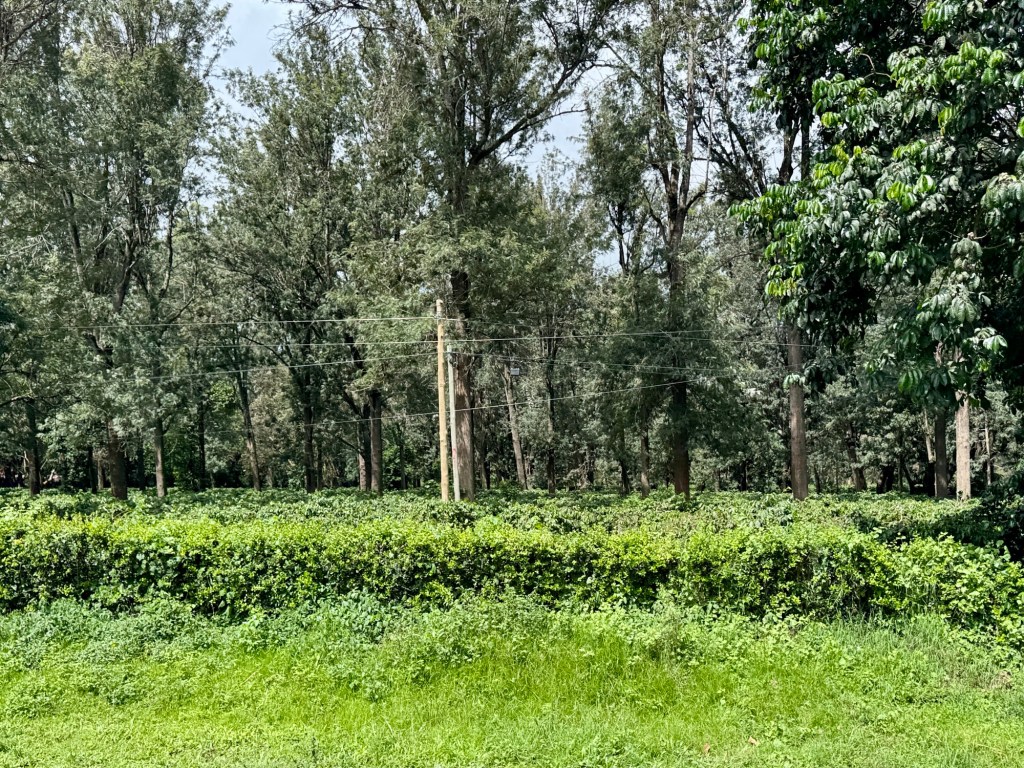
We passed a coffee plantation, the tall trees shading the coffee beans, different from what I was used to from my childhood family visits to Puerto Rico. There the coffee trees were planted on terraced hills, providing shade for each other.
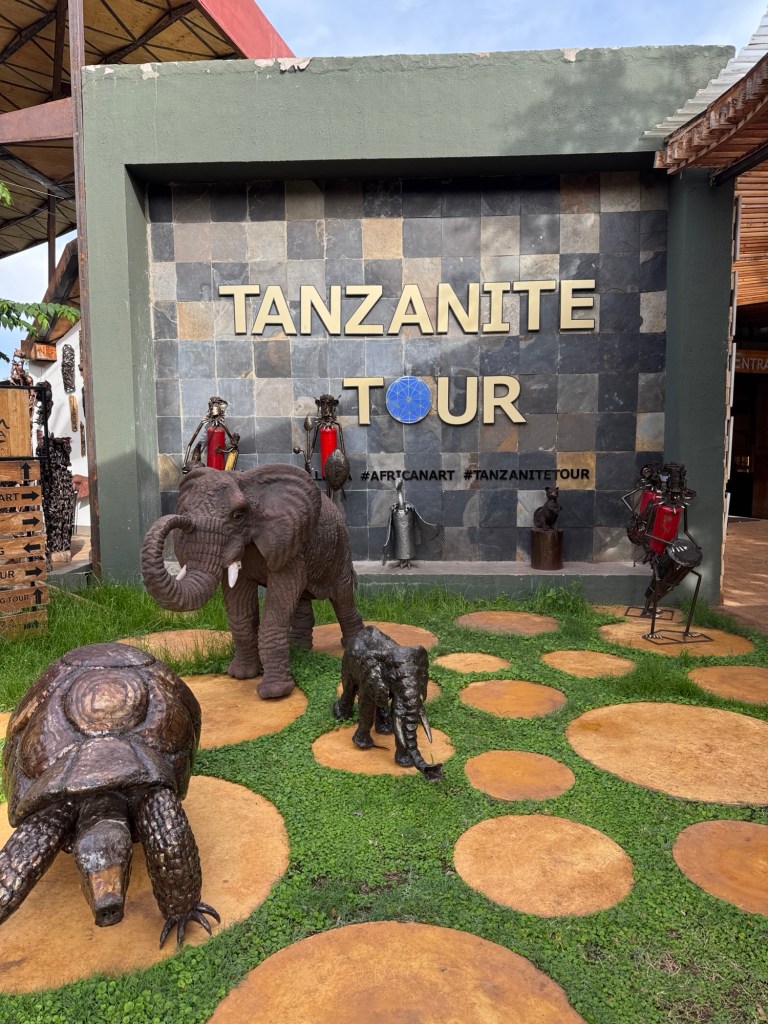
We had a brief stop at a large complex featuring the Tanzanite Experience complete with a mock mine and video explaining the process:
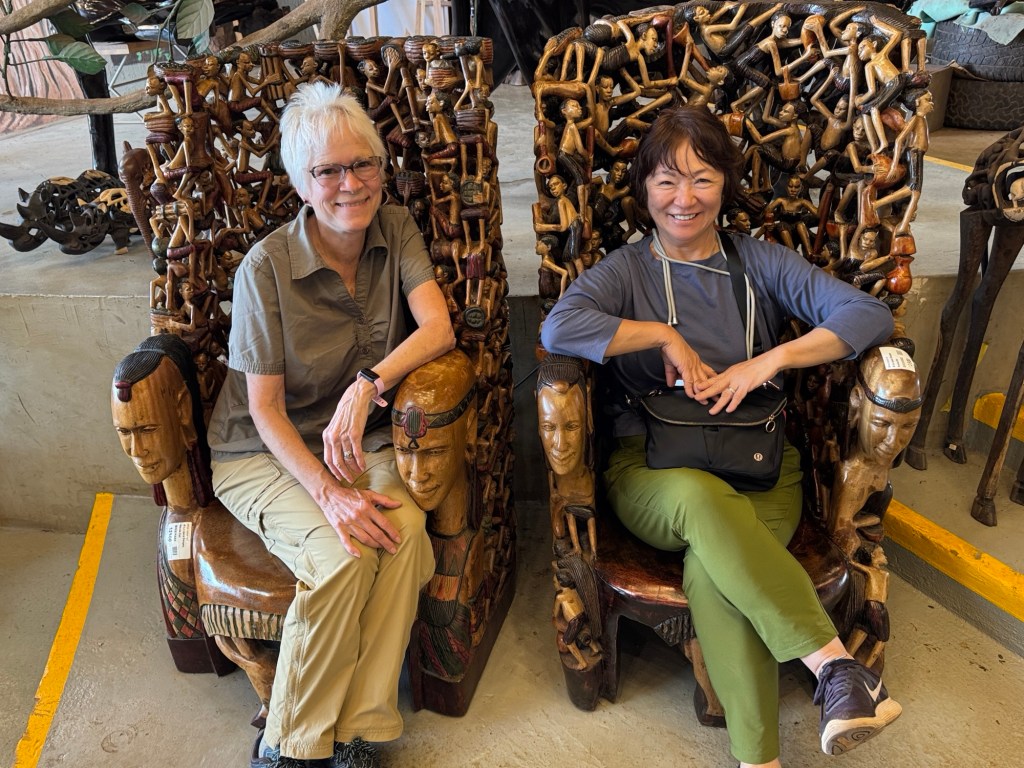
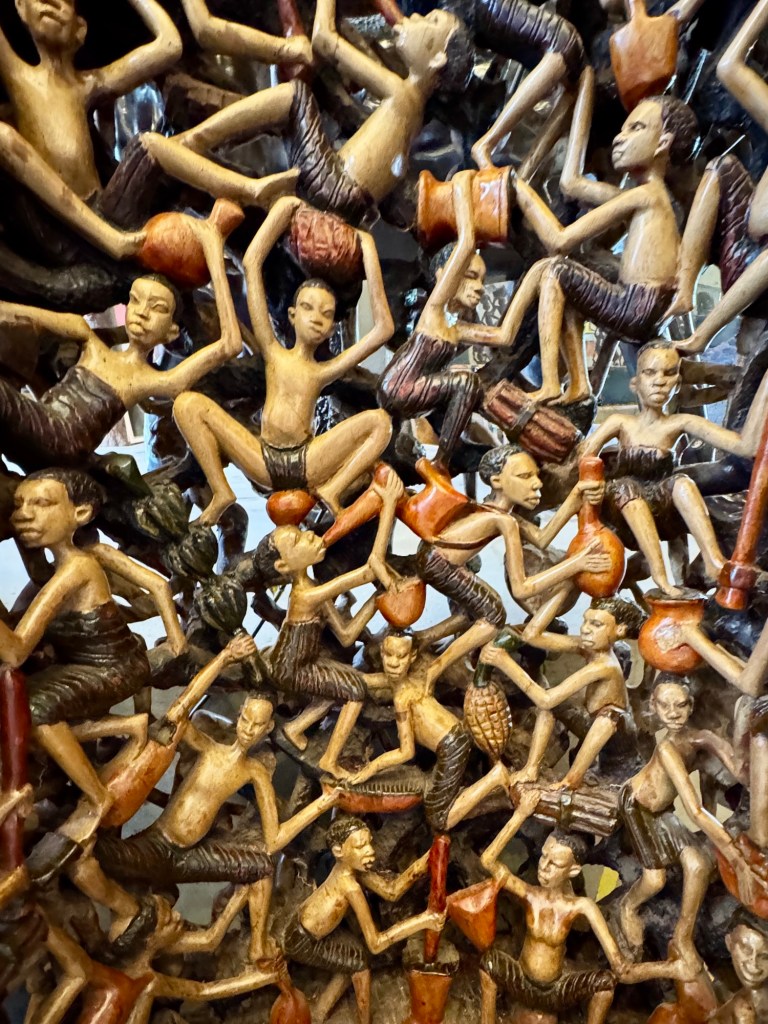
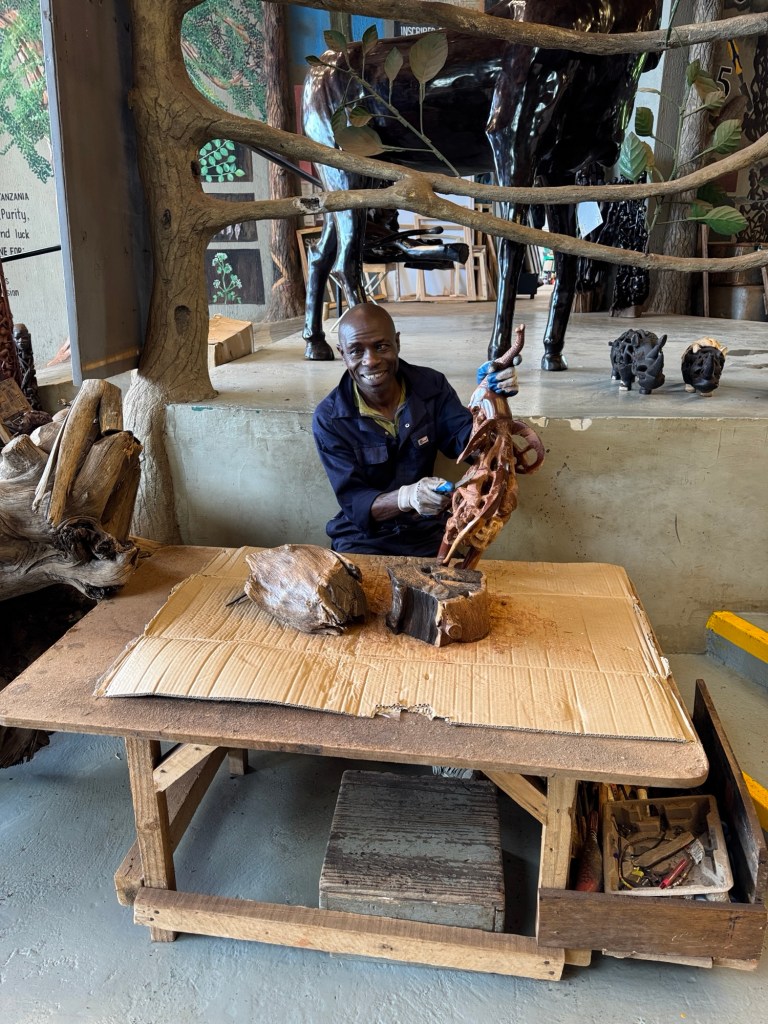
an ebony carving studio,
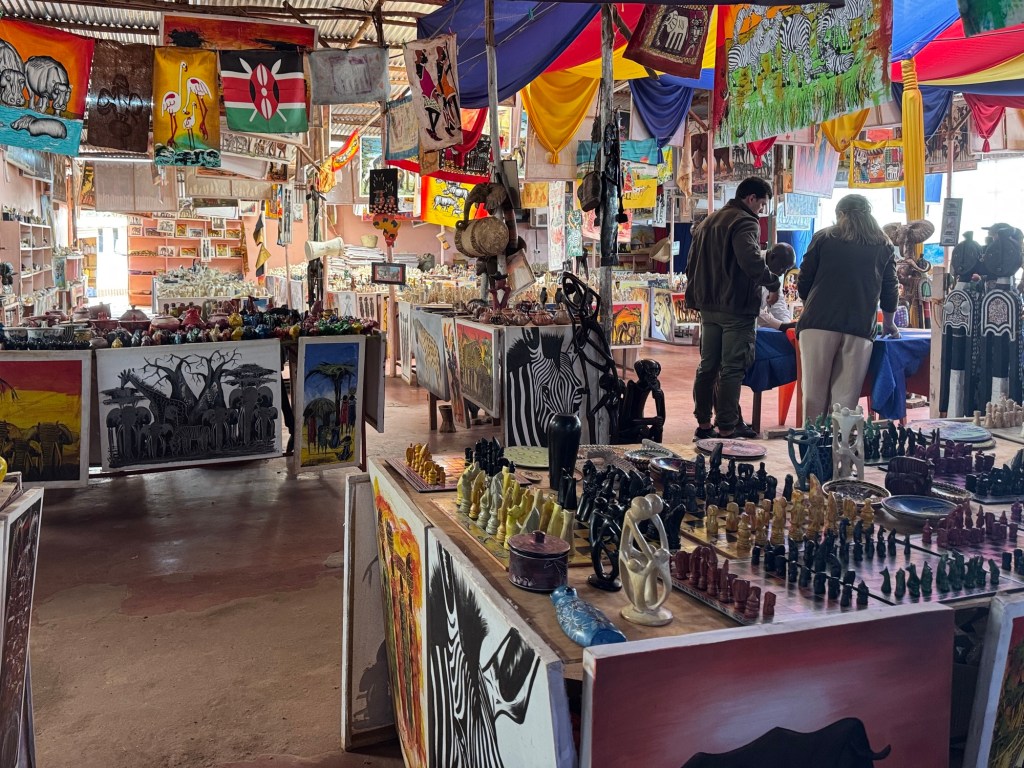
and a huge store featuring textiles, t-shirts, Maasai beaded crafts and all the usual suspects from the typical souvenir warehouses. As the items were priced, seemingly more reasonably than our previous experience, we requested a return visit on our way home. The only things I’ve bought on the trip is a tiny soapstone elephant for our crèche and a T shirt, both from the elephant orphanage in Nairobi. They were priced higher than usual, but I have a soft spot for non profit fund raising.
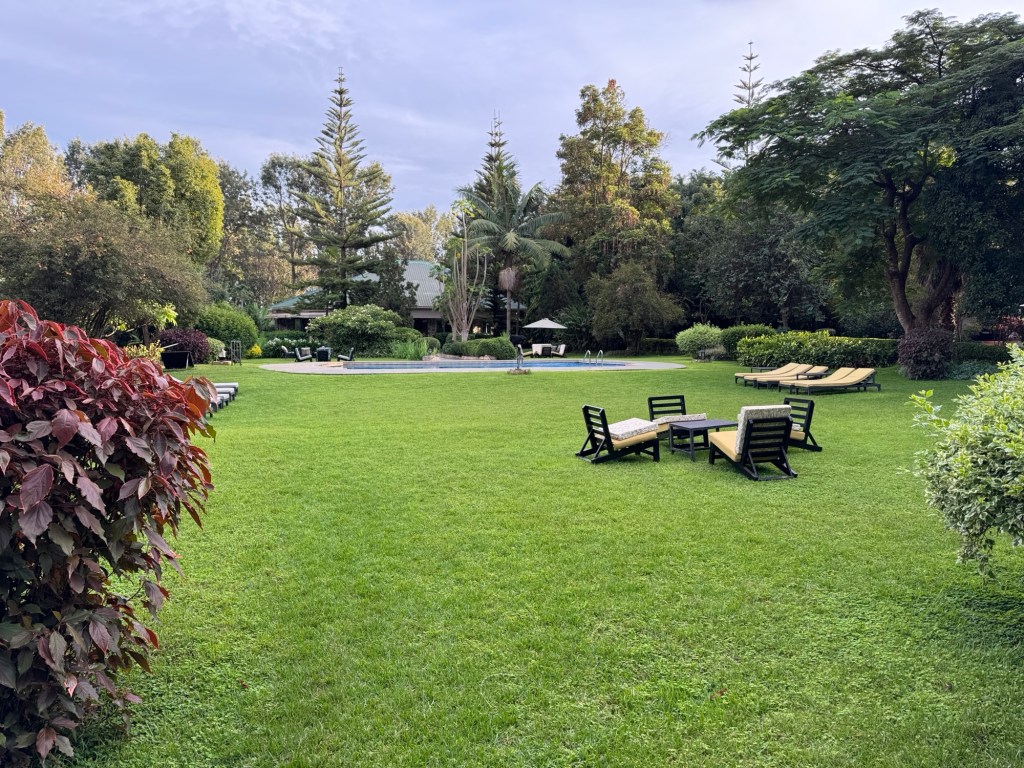
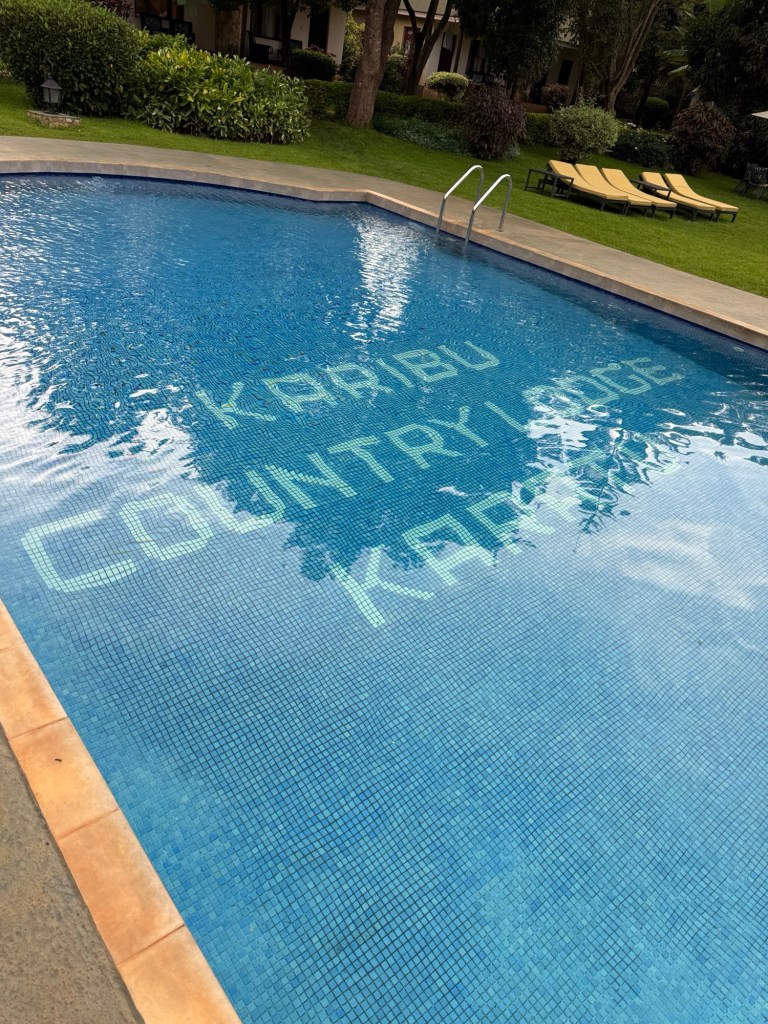
We finally arrived at the Country Lodge in Keratu after an 11 hour day of travel and enjoyed $4 glasses of acceptable South African wine by the pool.
This post is getting as long as our road trip. I think tomorrow, at Serengeti I will split it in two.
It was difficult to leave this beautiful resort after just one night. On our drive we passed through a busier town with two and three story buildings.
Then the typical market/souvenir warehouse with high pressure sales tactics.
Amboseli Sopa Lodge is made up of cute little cottages and scampering monkeys.
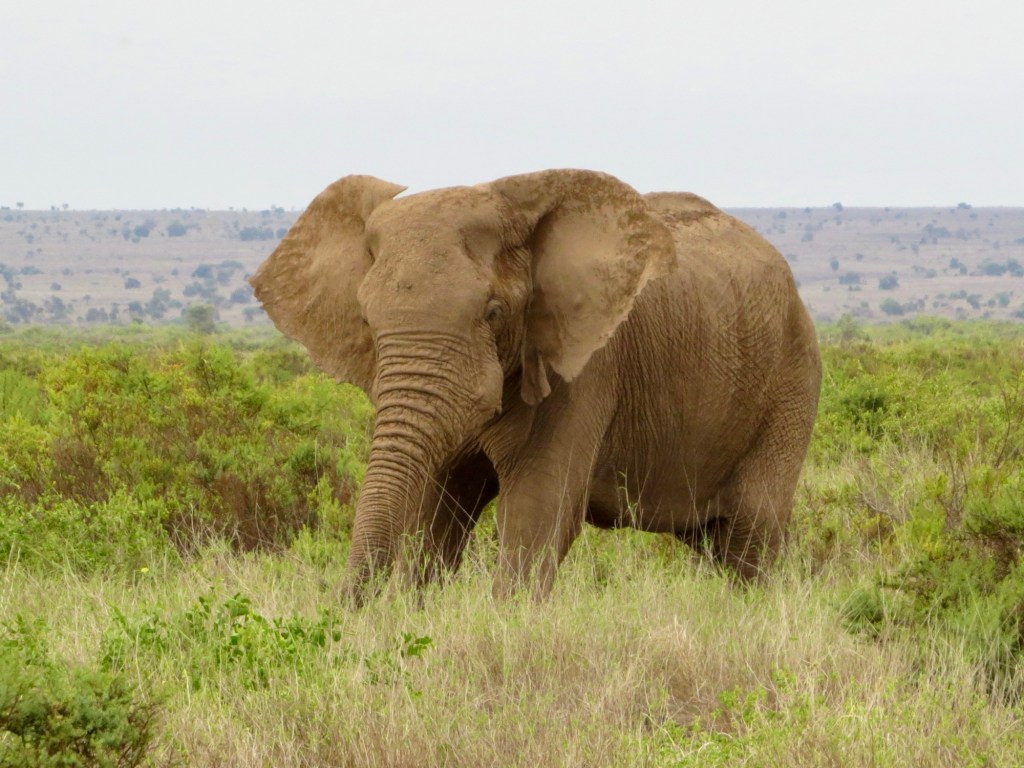
After lunch was the day’s game drive starting with an old lone elephant with one tusk. He is apart from his herd as his life expectancy is short.
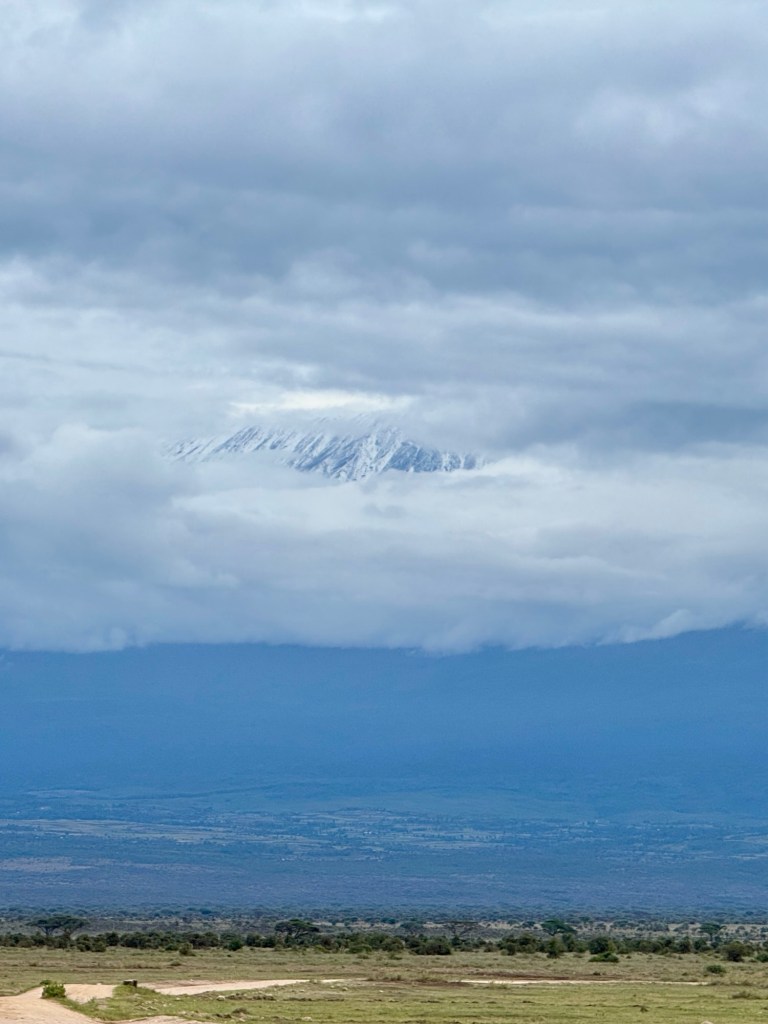
This was our not so spectacular view of Mount Kilimanjaro, just a bit of snow peeking out halfway up the photo. You still are able to imagine its size.
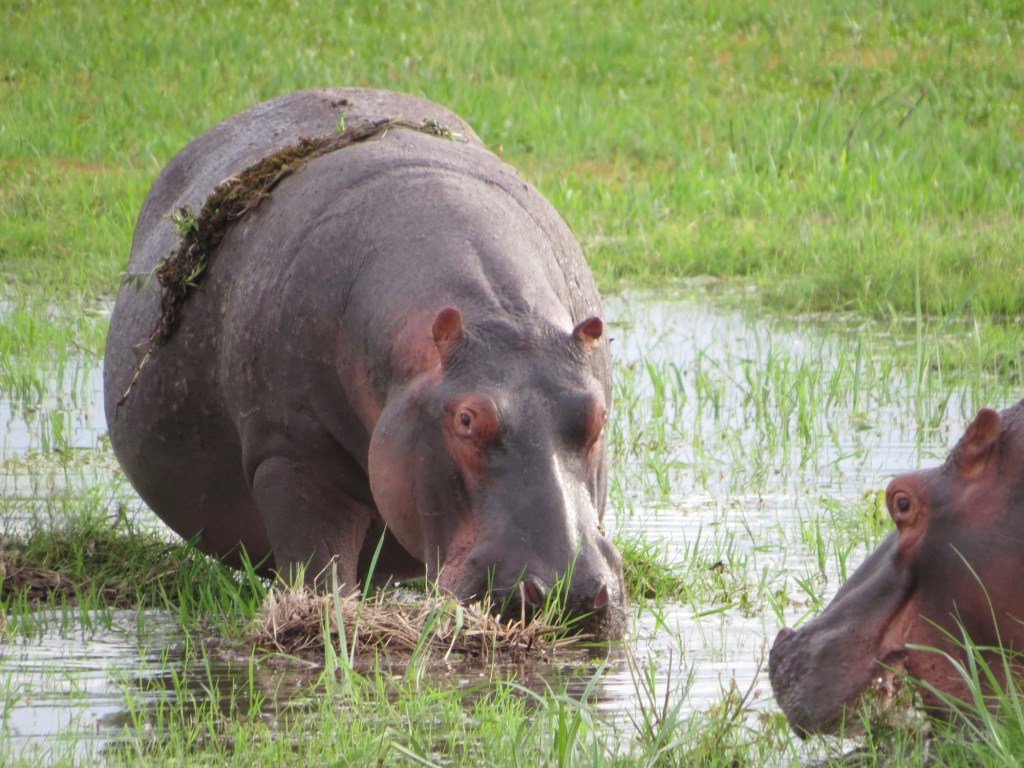
We discovered a series of mini hippo pools in the swampy fields.
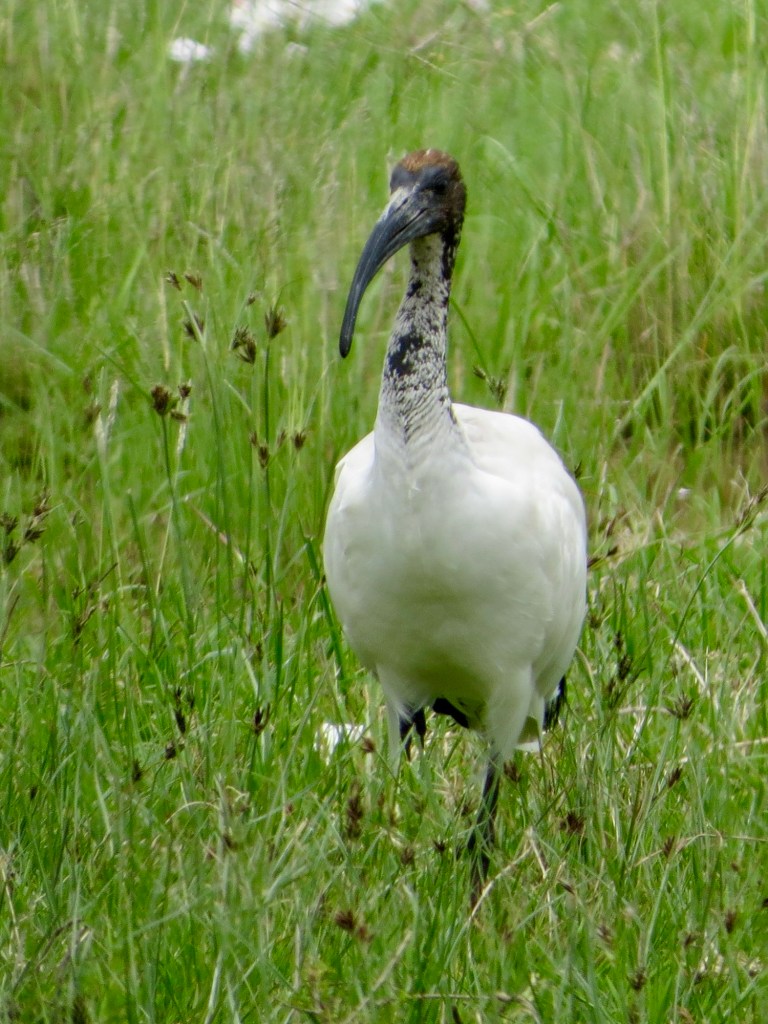
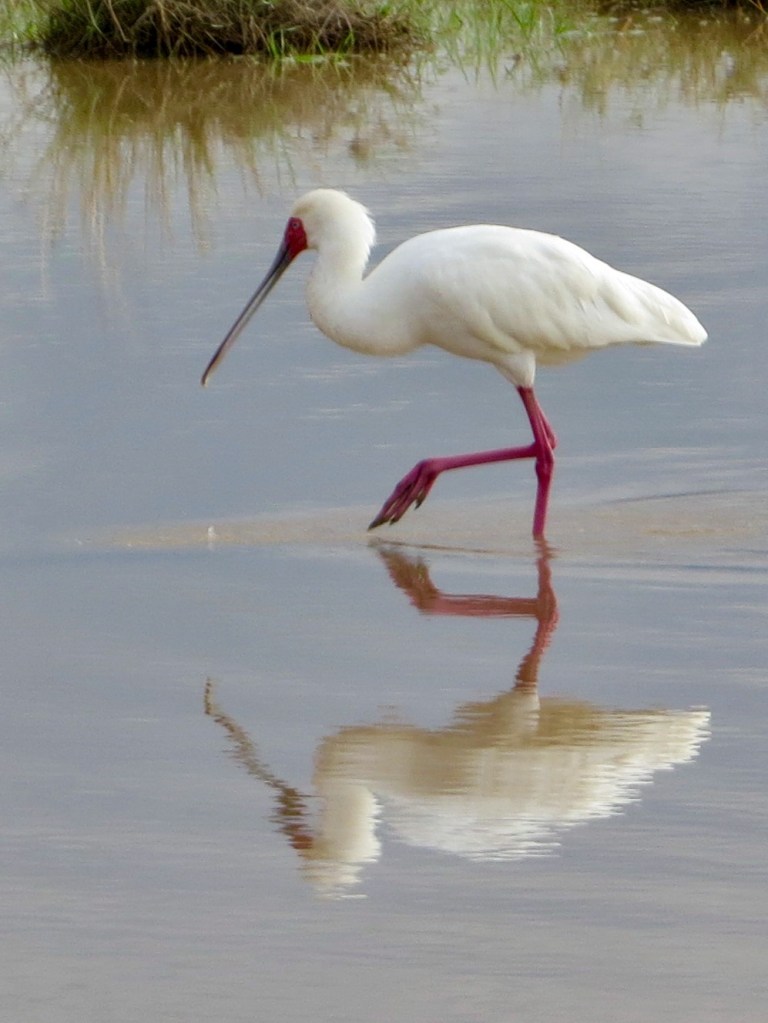
There was a Spoonbill catching fish
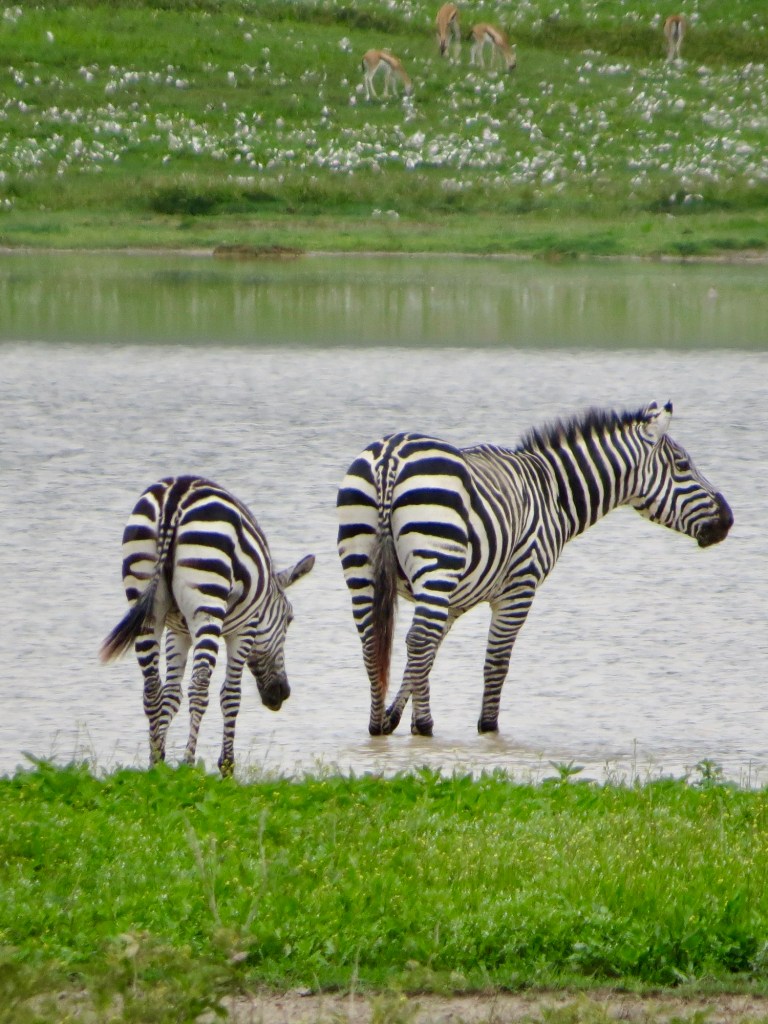
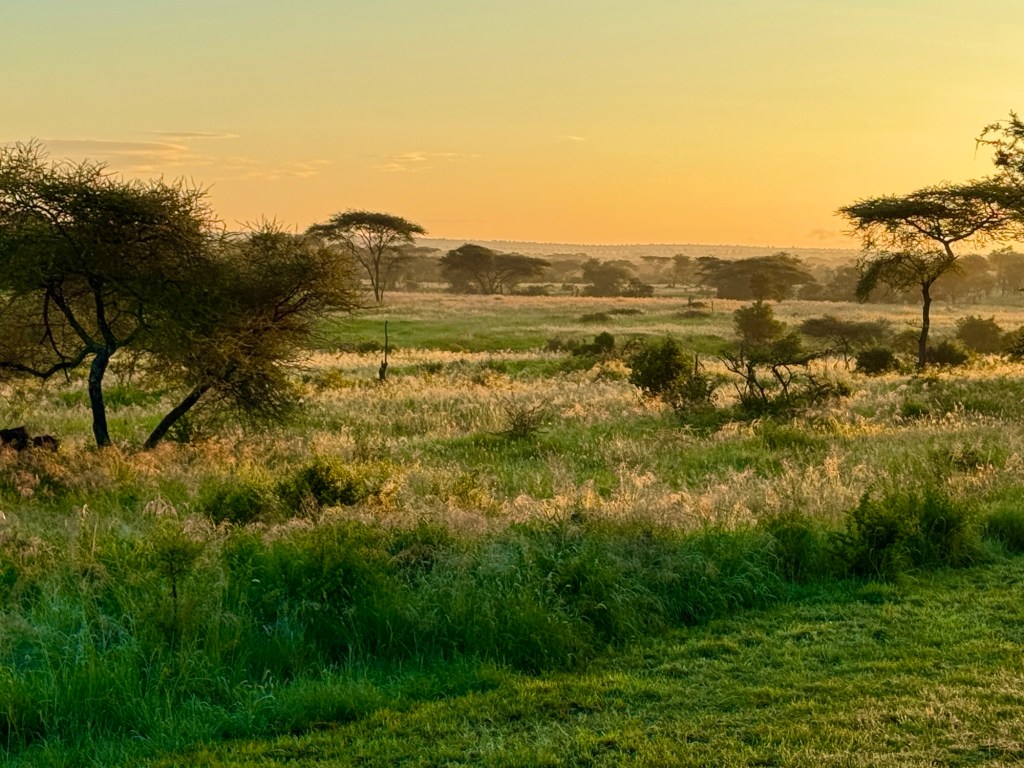
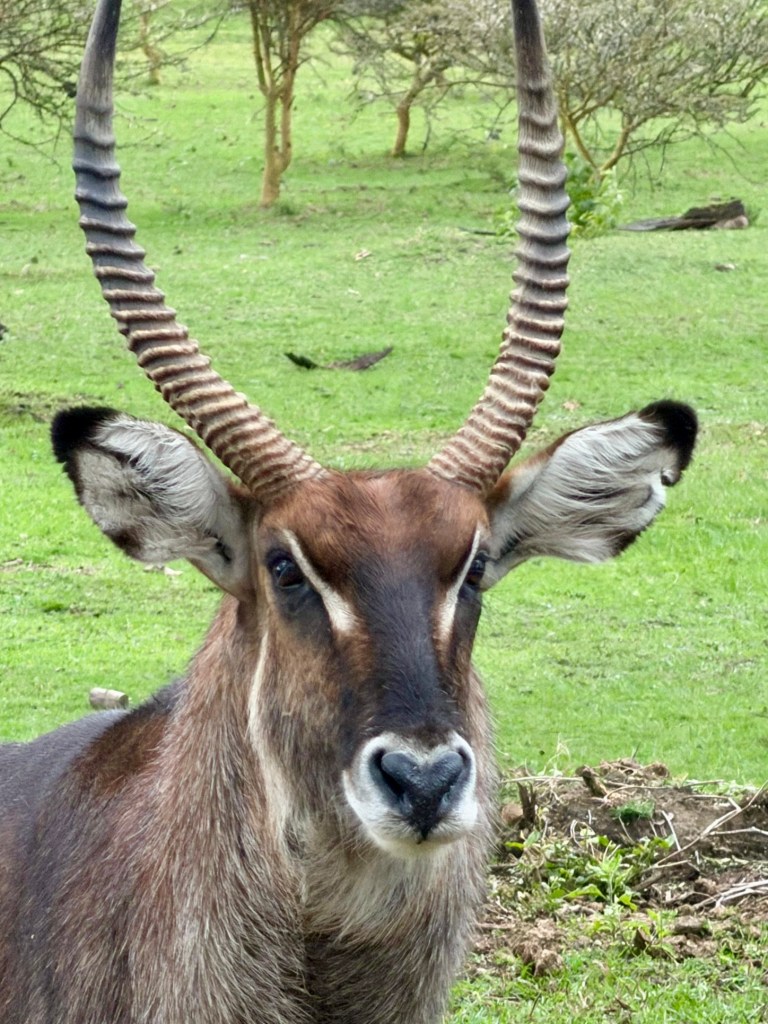
We were on the flat part of the savannah with foothills in the background and had our daily intake of giraffes, zebras, antelope, and gazelles.
I’ll add more photos once our travel mates upload theirs to our PhotoCircle.
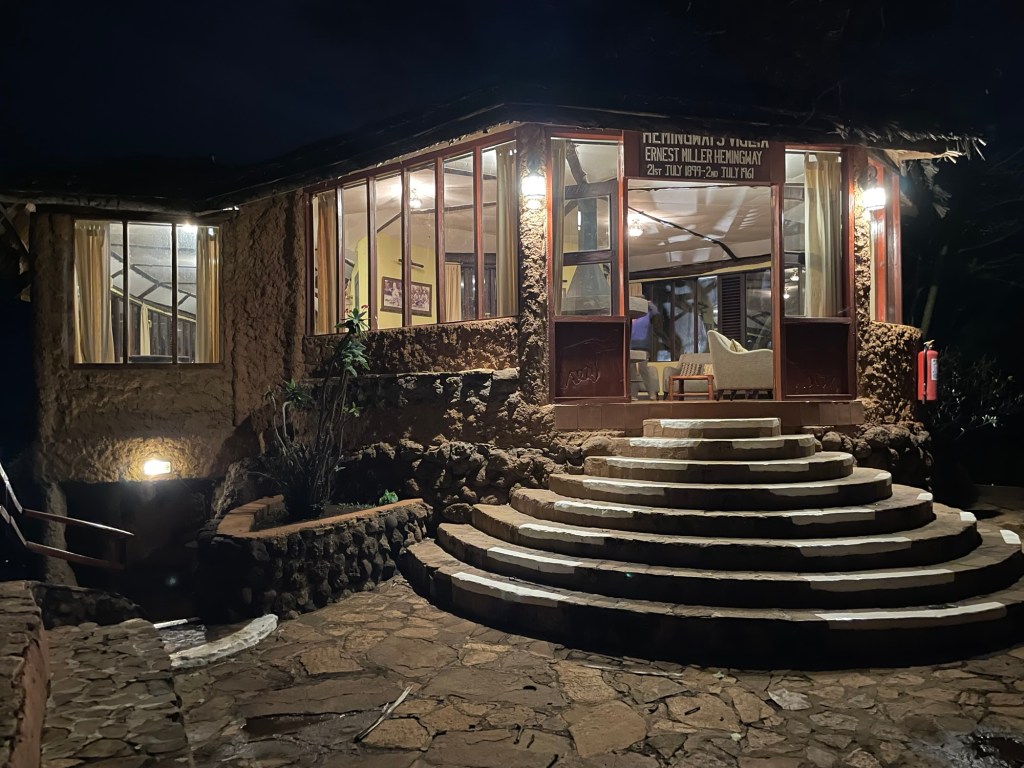
In the evening we trekked up the long path to Hemingway’s Bar.
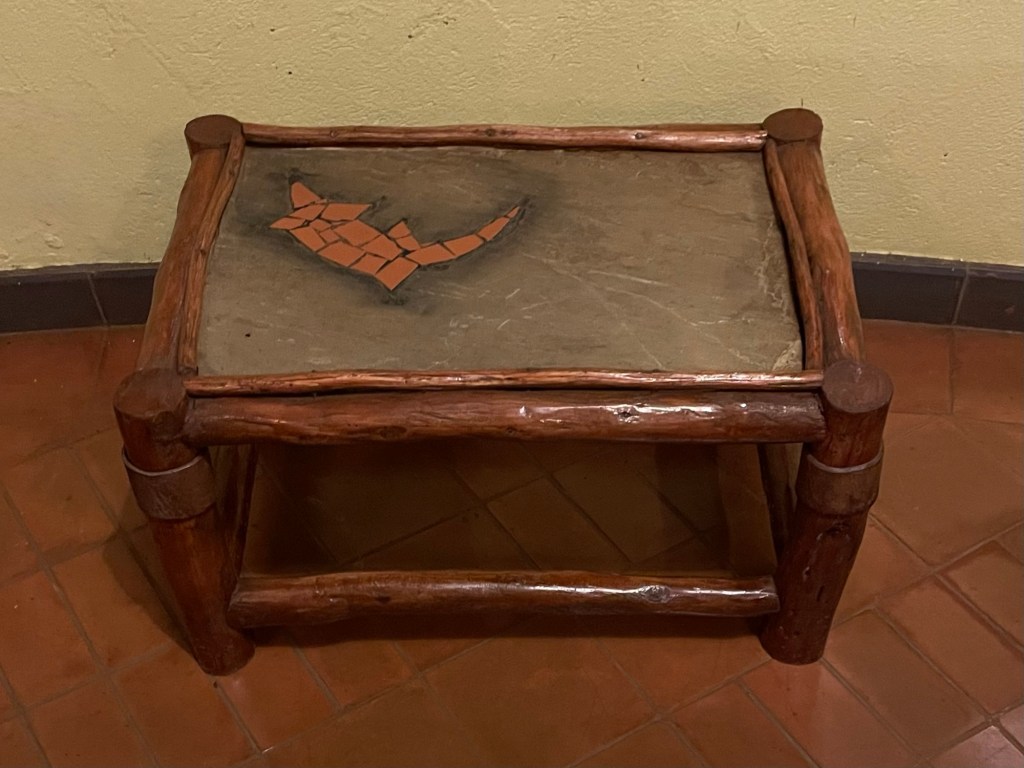
This was the house Hemingway built in the 1960’s, in the shape of Africa, and is now a bar/museum, with original furniture and fixtures.
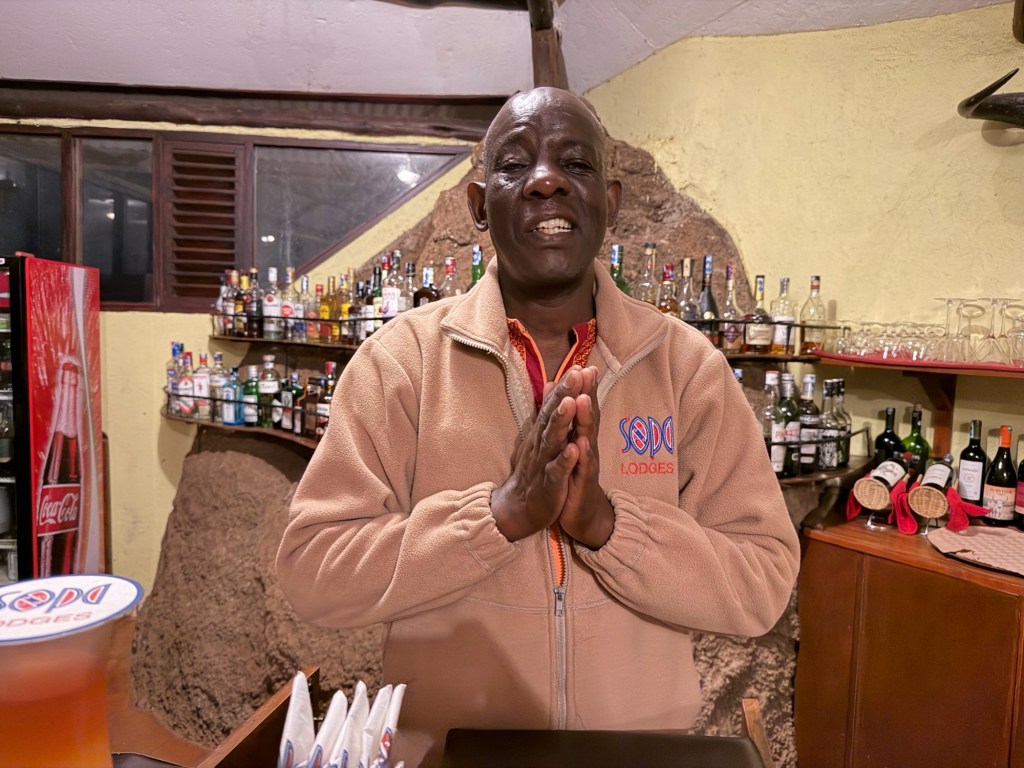
Over time Hemingway developed a close relationship with the local Maasai people. We were the only ones in the bar and were treated to passionate storytelling by the bartender/house caretaker, who is the nephew of a pictured Maasai warrior and grandson of the chief who befriended Hemingway.
He also gave us background on the Sopa Lodges, owned by one family who are good employers. He pointed out a photo of his uncle with Hemingway.
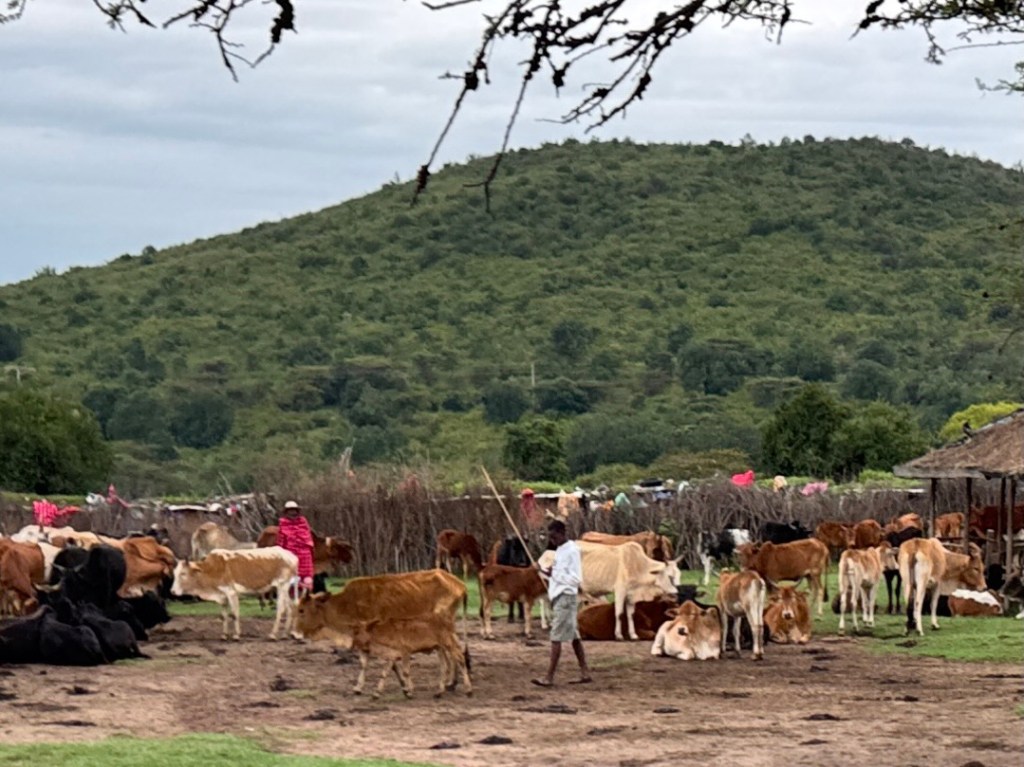
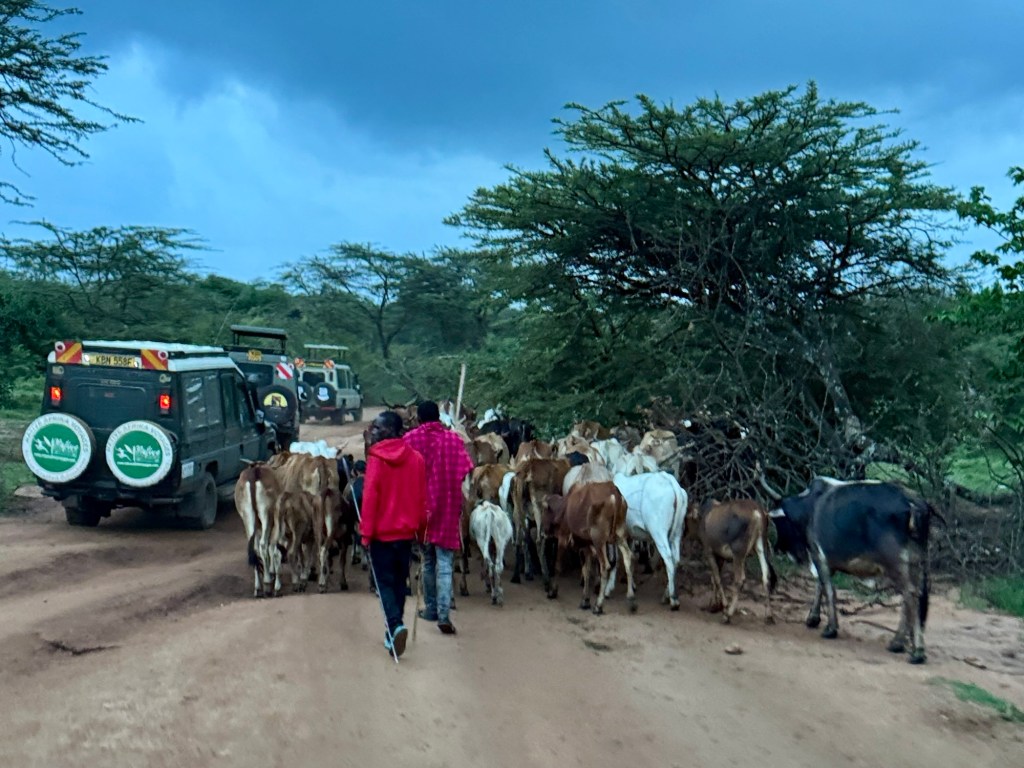
An early start for the 4 hour drive to Lake Naivasha, again passing many herdsmen and their livestock.
It is not yet official rainy season, but the forecast called for showers every day. We lucked out and it stayed dry for every scheduled game drive. Today did not disappoint.
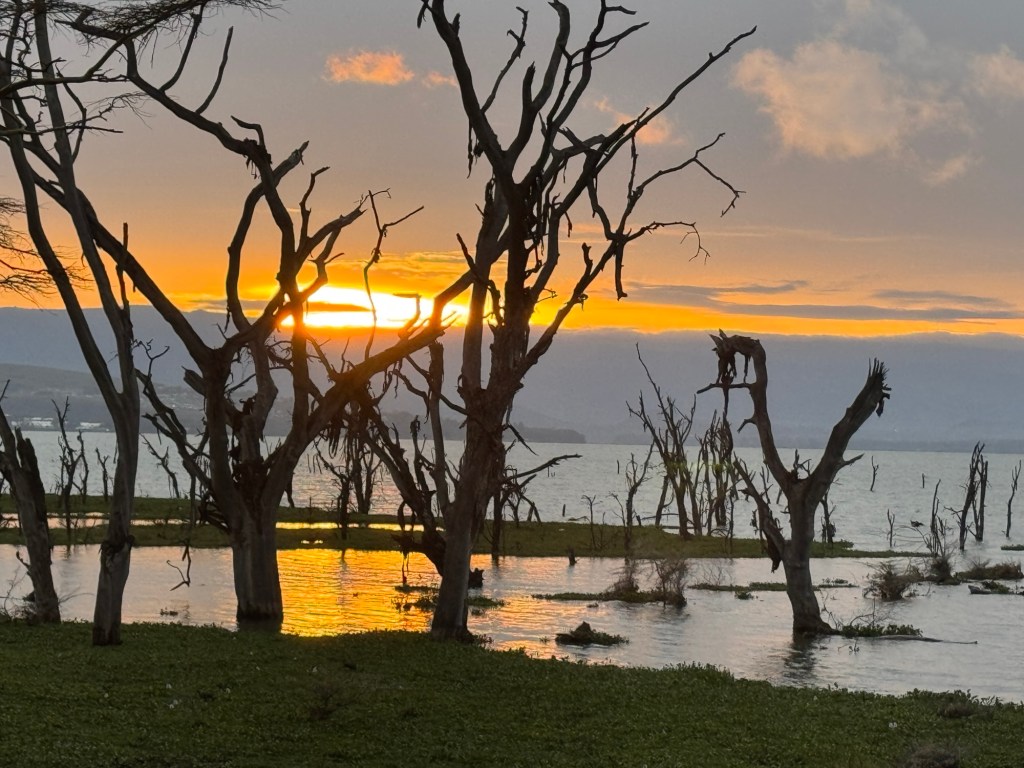
We arrived at Lake Naivasha for a sunny boat safari.
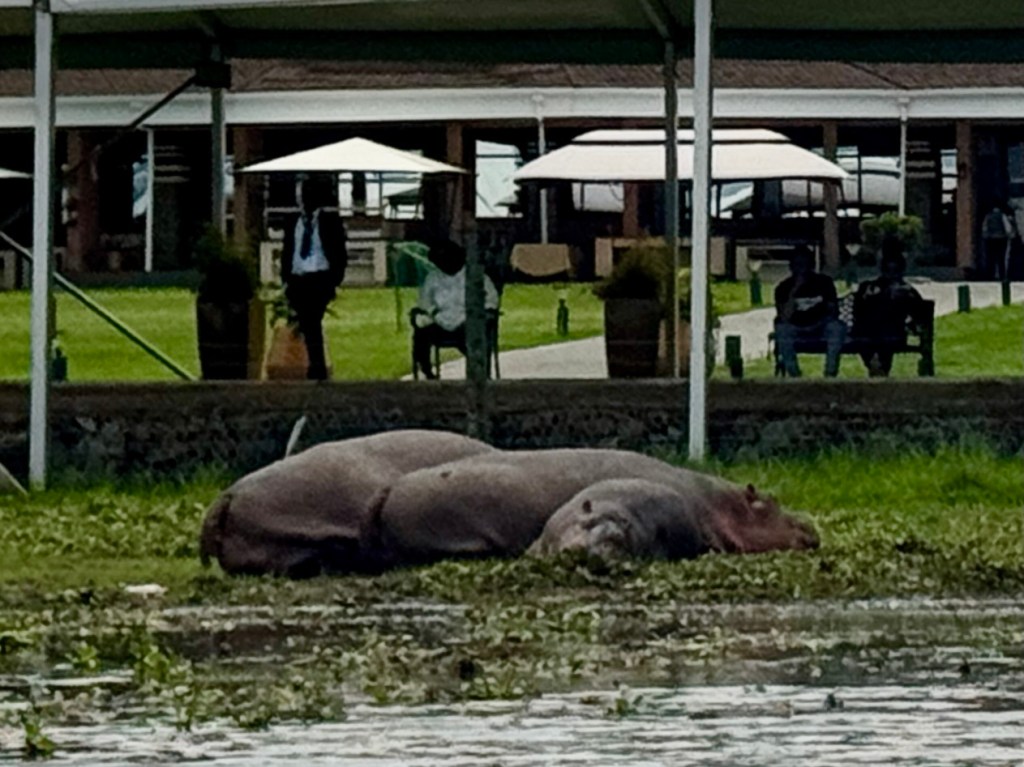
First were the hippos.
Then we circumnavigated Crescent Island, a paradise without predators for the resident animals.
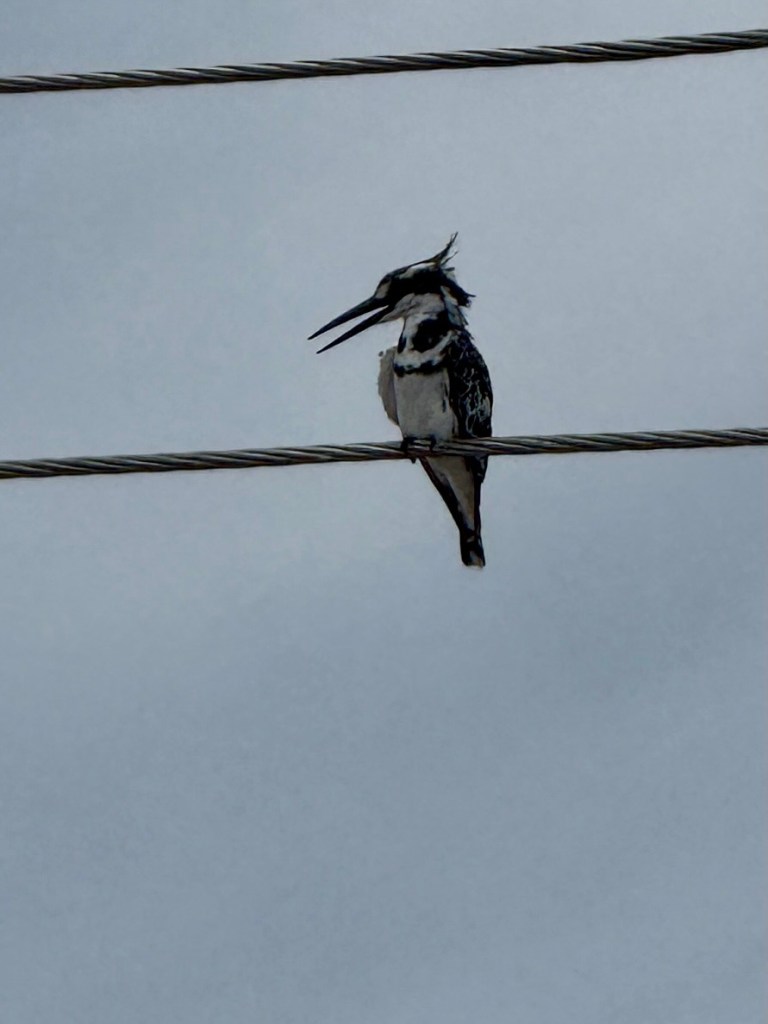
The lake’s bird population was impressive. I was luck to snap a quick photo on my phone of my favourite bird, a kingfisher.
I wasn’t fast enough to get the one with a fish in his beak.
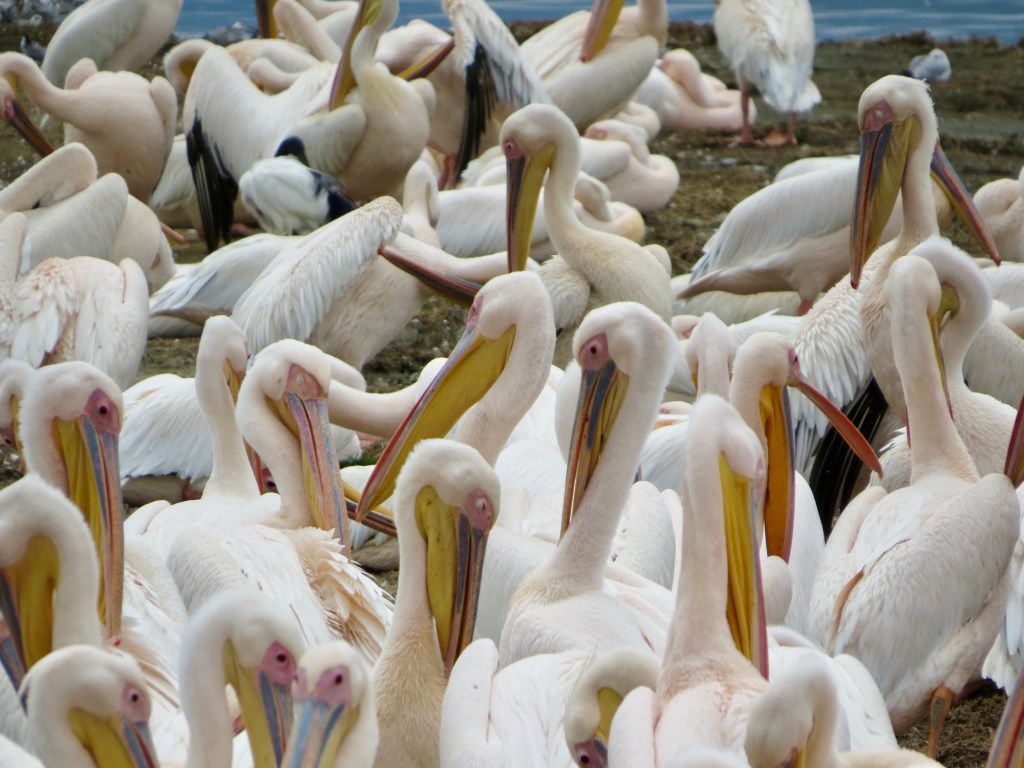
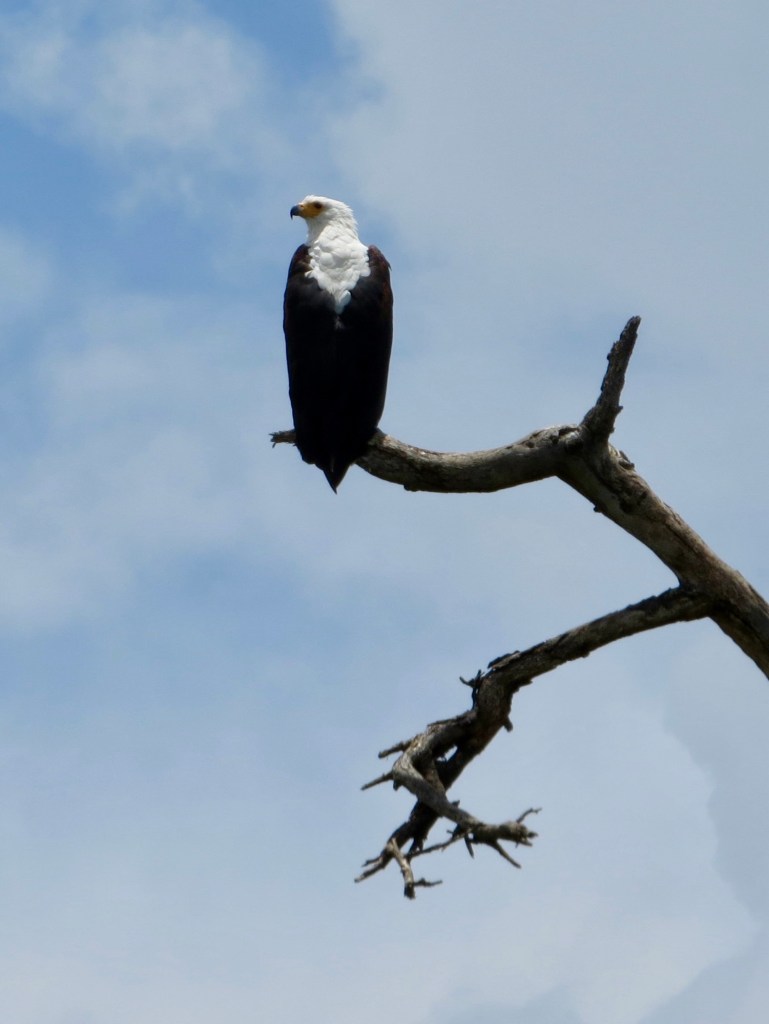
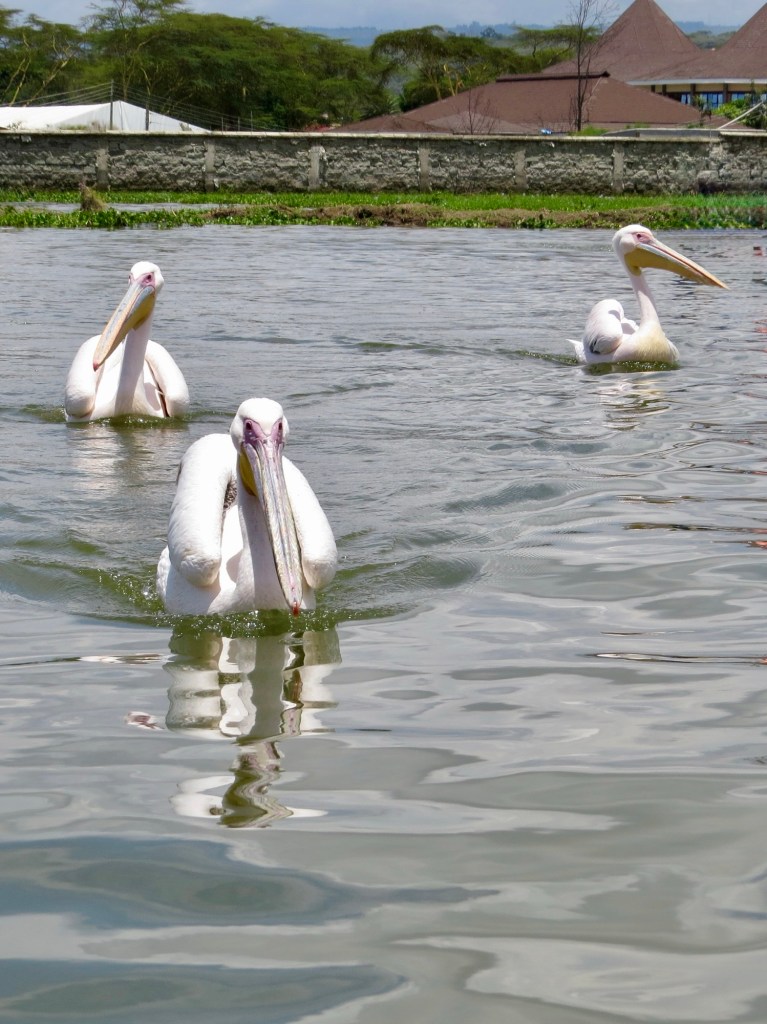
EaglePelicans
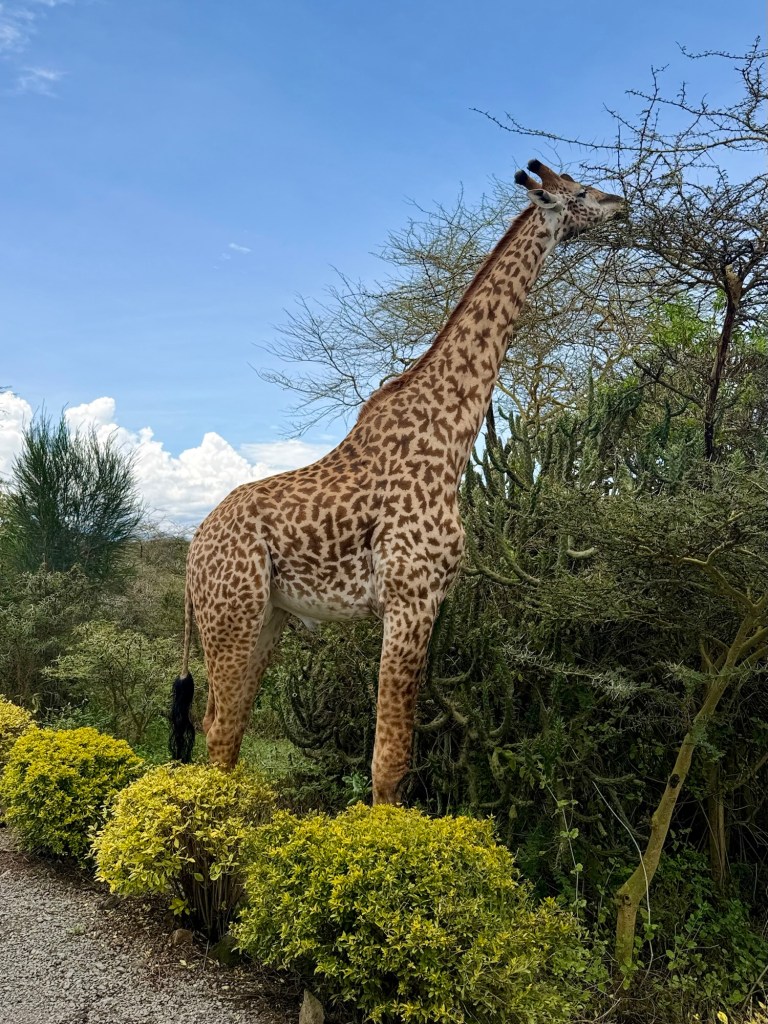
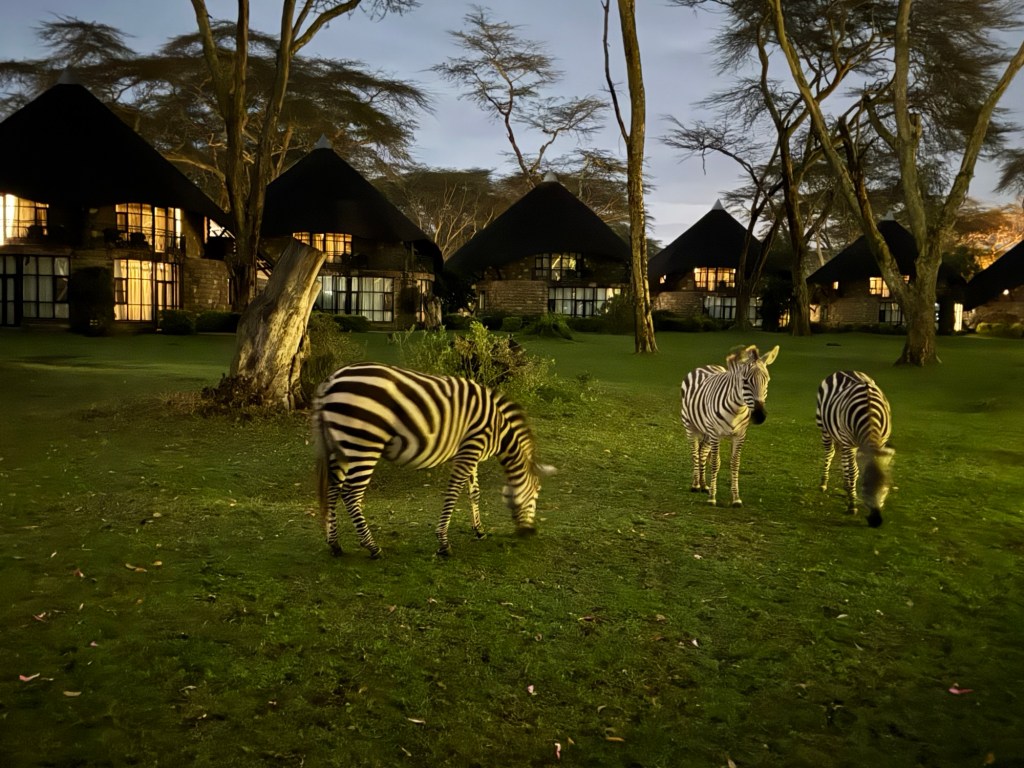
The Sopa Lake Naivasha Lodge was spectacular, luxurious with the bonus of animals roaming freely on the grounds.
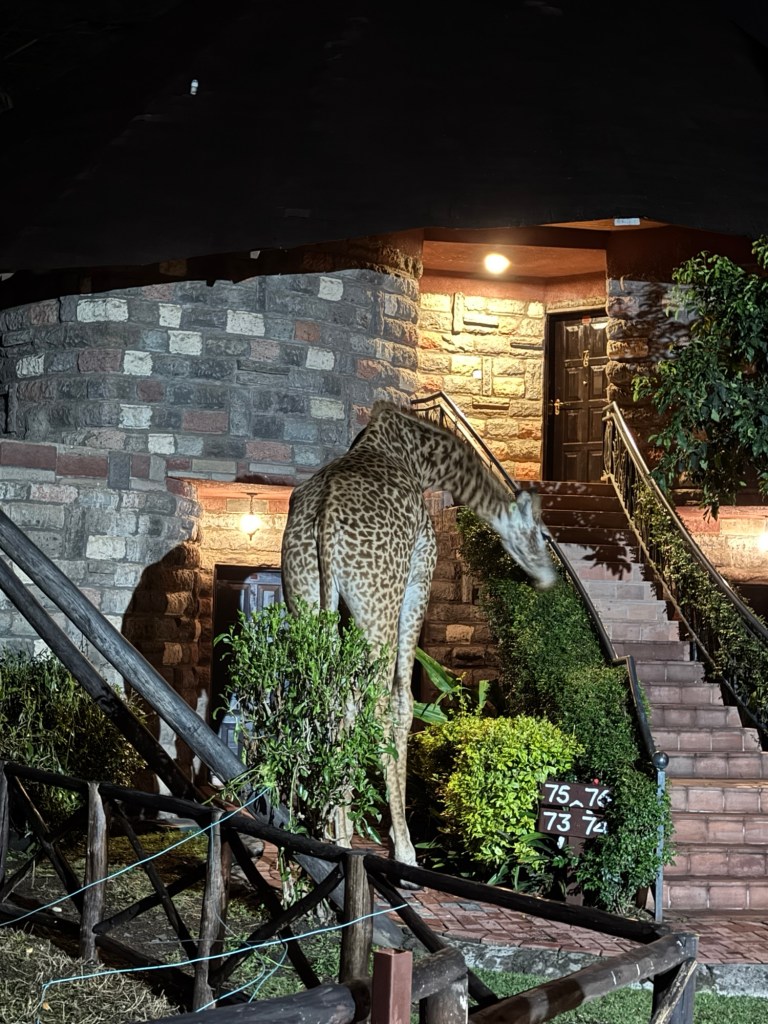
Greeted by a giraffe in the hotel’s driveway
Our room was waterfront and at one point we had a hippo view.
Re registered with the resort’s naturalist for a nighttime hippo walk. Hippos rest during the day in the water and come to land in the evening to graze. Their diet is vegetarian. It’s hard to imagine attaining their weight by eating grass.
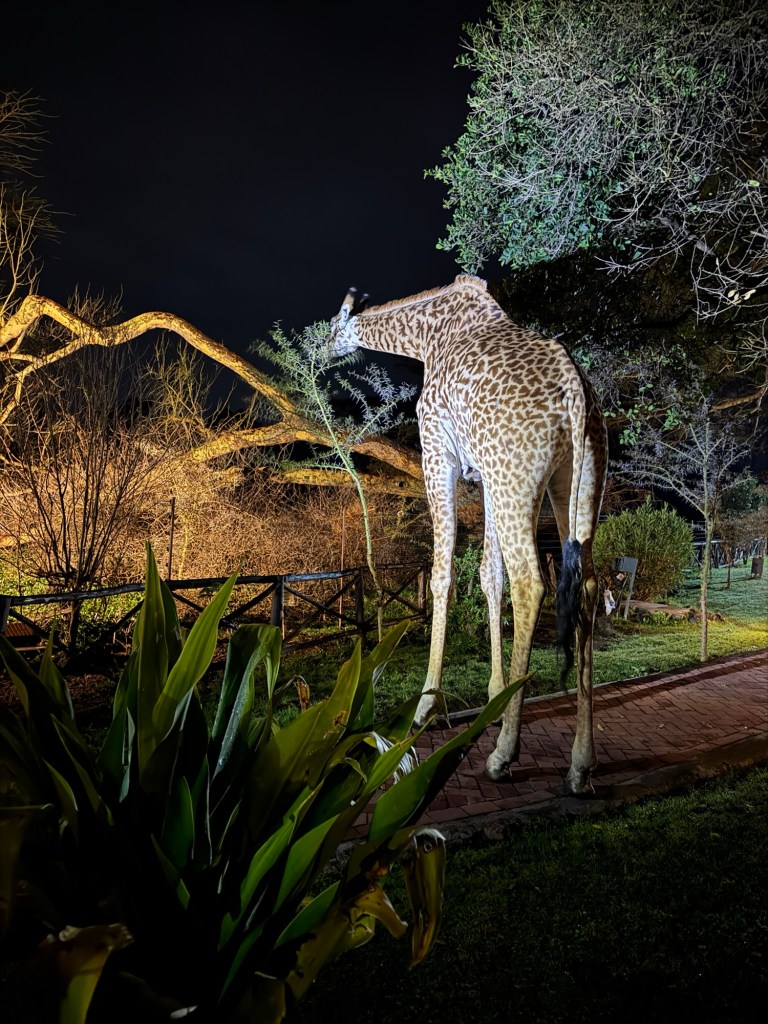
We were treated to close up encounters with zebras and giraffes.
Returning to our room we were met by a giraffe busy trimming the hedge by our stairs.
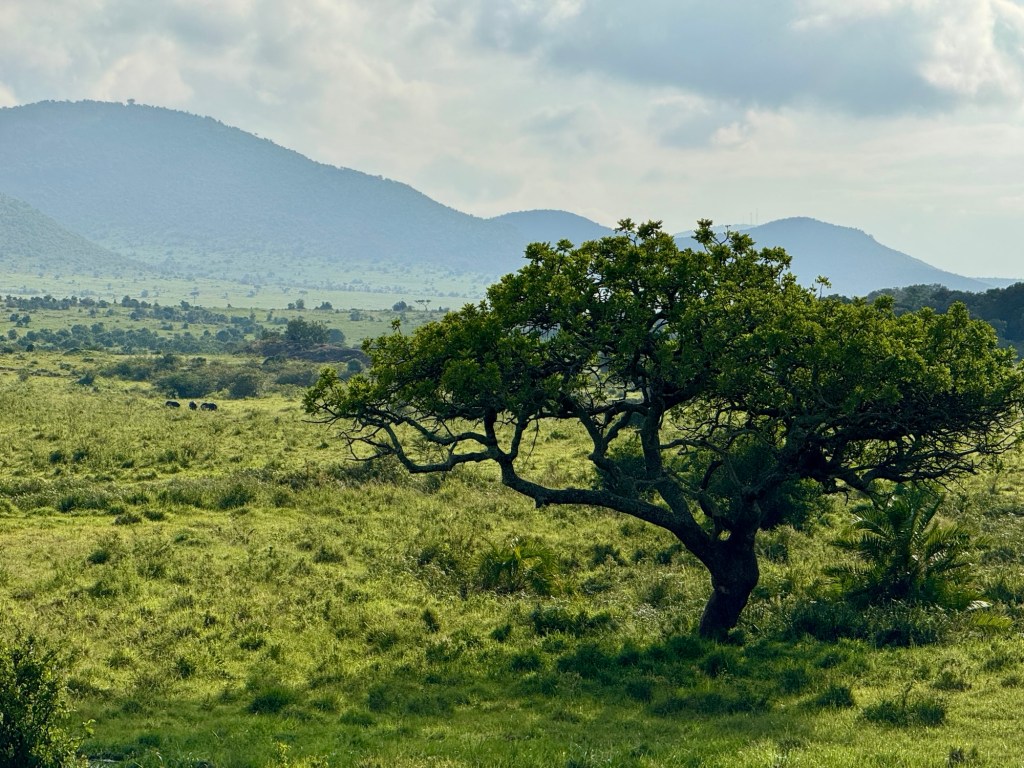
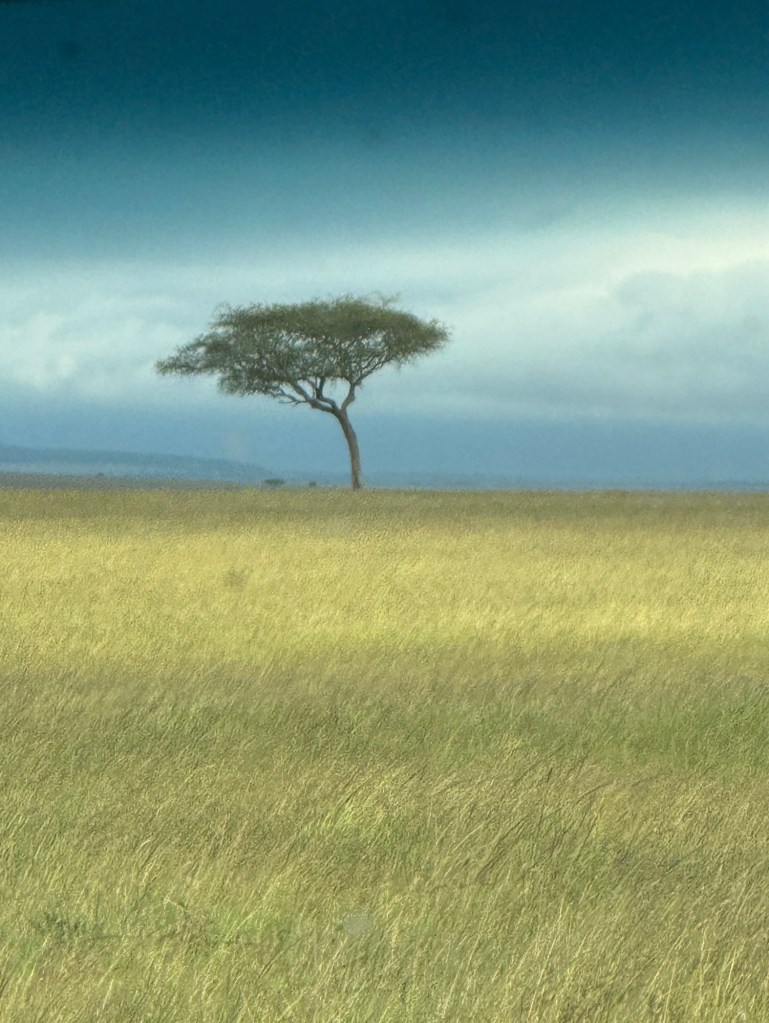
The park, comprised of savannah wilderness, is named for the Maasai people and the Mara River. There were rolling green hills and stretches of wheat coloured fields.
We were given the choice of an all day game drive or sunrise and sunset drives with lunch and afternoon at the lodge. The six of us chose a compromise of an abbreviated day drive, 7:00 am to 2:00 pm as we had already done the evening one yesterday.
Although every day was good, in retrospect, this day was the highlight of the trip. Early on we spotted a Cheetah, probably the one we saw yesterday, as although a distance from where we originally sighted him, it was still within his territorial range.
Everyone on Safari hopes to view the “Big Five” animals—lion, leopard, rhinoceros, elephant, and Cape buffalo. “Originally coined by big-game hunters to describe the most difficult and dangerous animals to hunt on foot, the term now represents top wildlife viewing in countries like Tanzania, South Africa, and Kenya.”
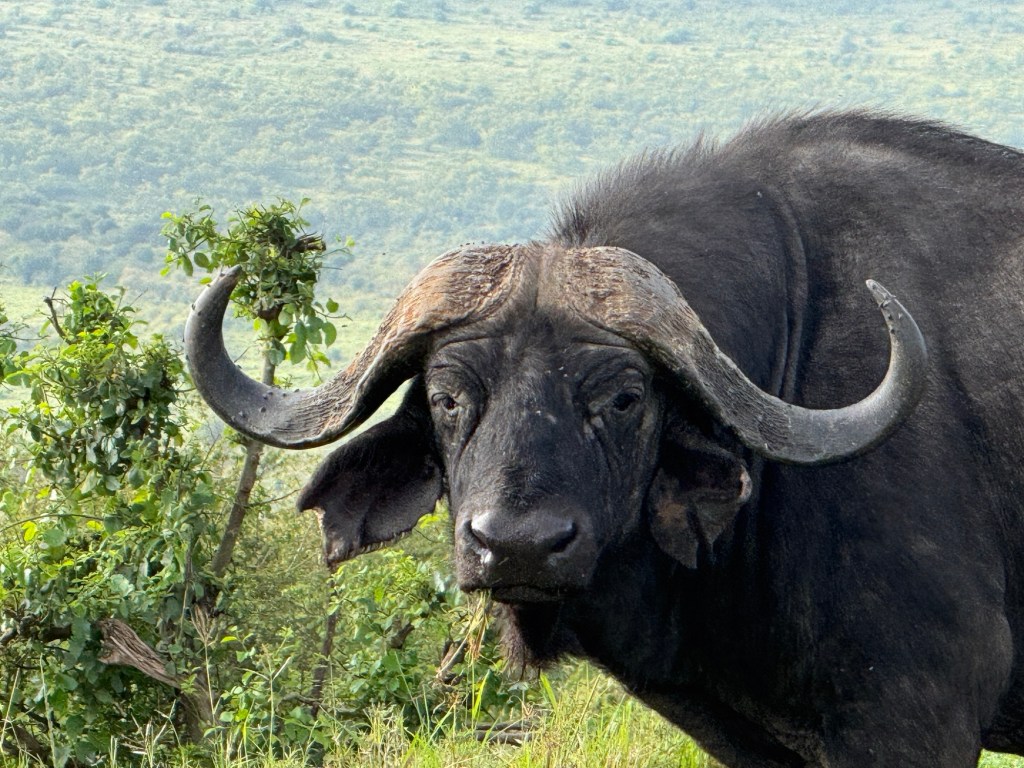
In Nairobi we checked two off that list: lion and rhino. Yesterday we saw elephants and today the buffalo.
Only the leopard to go, but we were warned that they were shy and not to have our expectations too high.
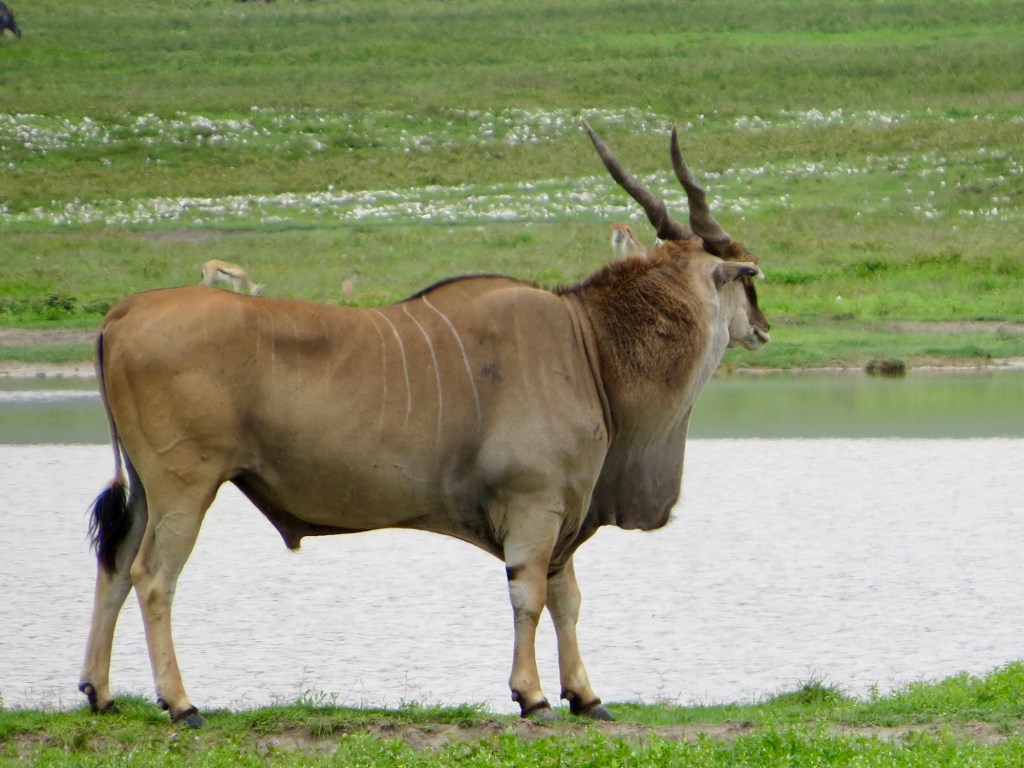
Along the way we saw gazelles, gnus aka wildebeests, mongooses, giraffes, impalas, ostriches, zebras, baboons, buffalo, warthogs…It was amazing that all these creatures lived together, some in a predatory relationship, others in a peaceable kingdom. Sometimes in one pasture there would be several different species all getting along.
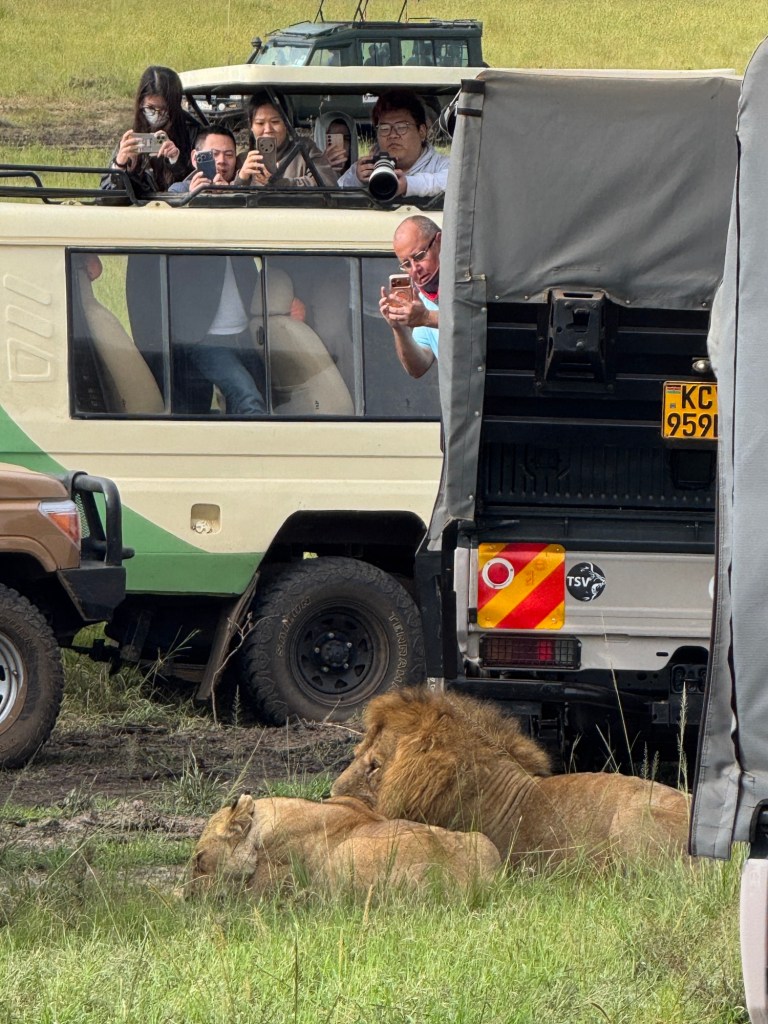
We saw a group of safari vehicles ahead, indicating a sighting of interest. It was a lioness relaxing in the grasses. She decided to move and the Land Rovers followed. Although this photo might give the impression of being irresponsibly close to wildlife, it was the opposite. The lion pair parked themselves right in the middle of the trucks.
We continued toward our destination with an unexpected treat, a rest area in the middle of nowhere.
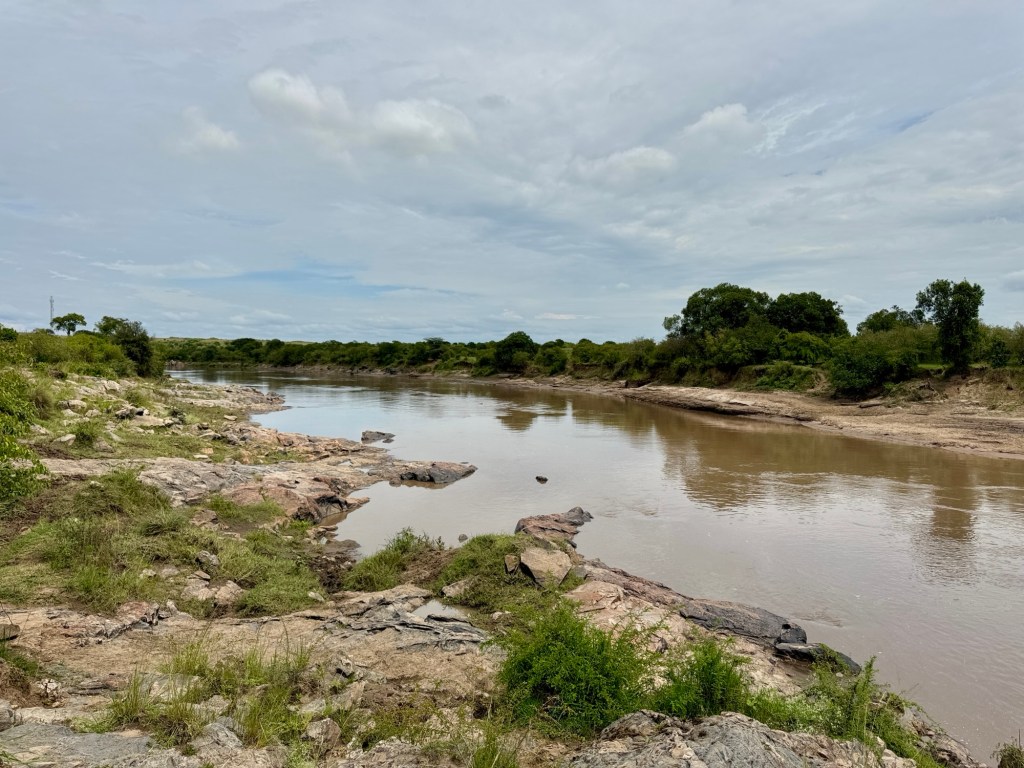
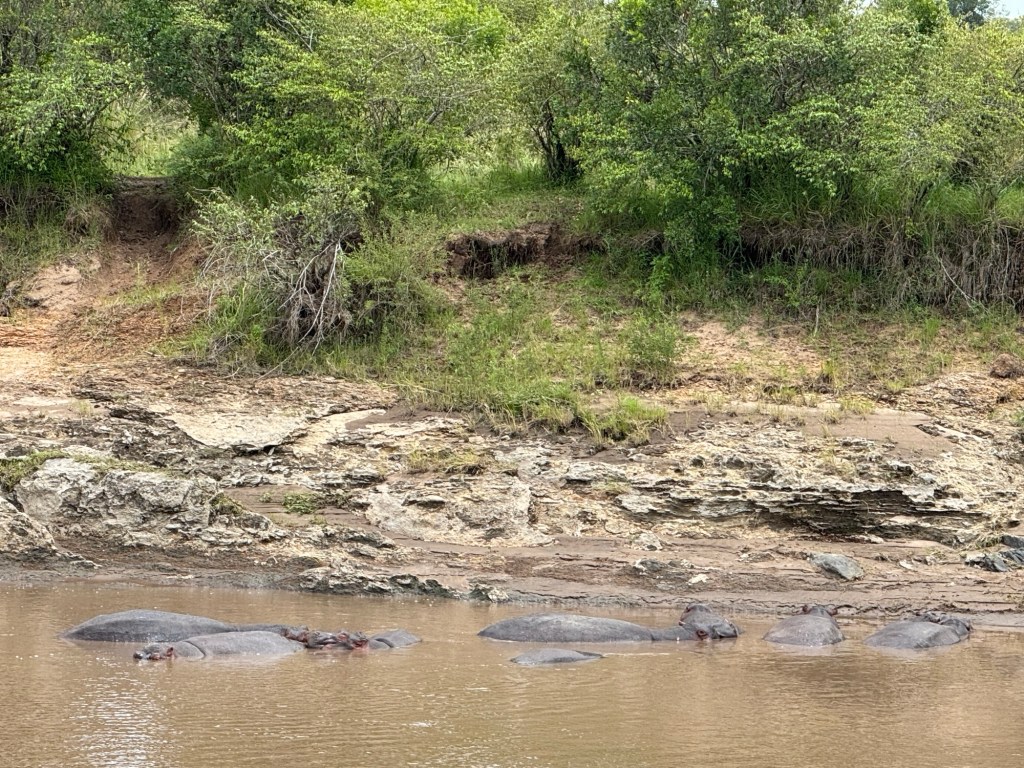
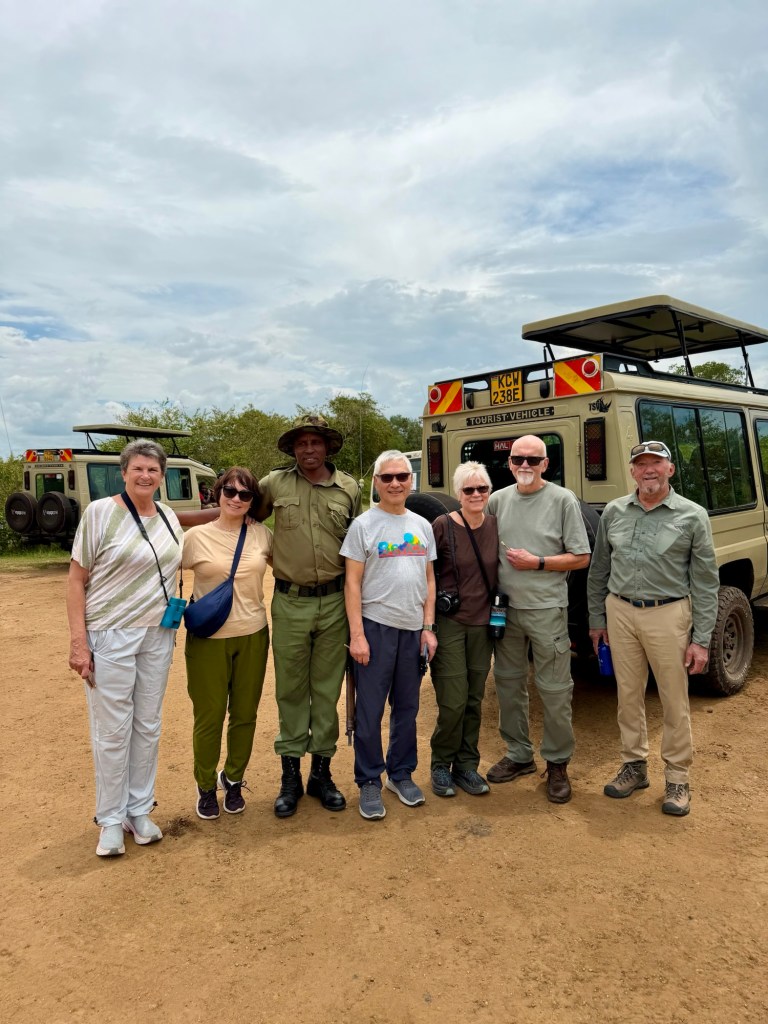
The farthest point of the day was the Mara River where a regional guide took us on a river walk to see crocodiles and hippos.
The Mara River
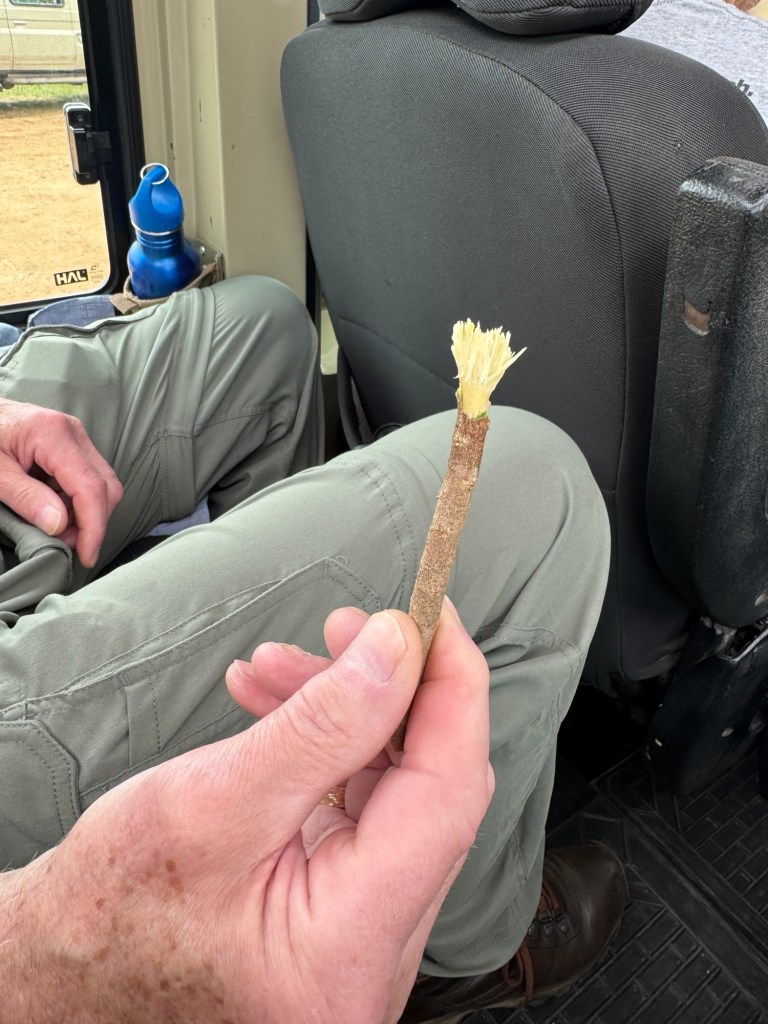
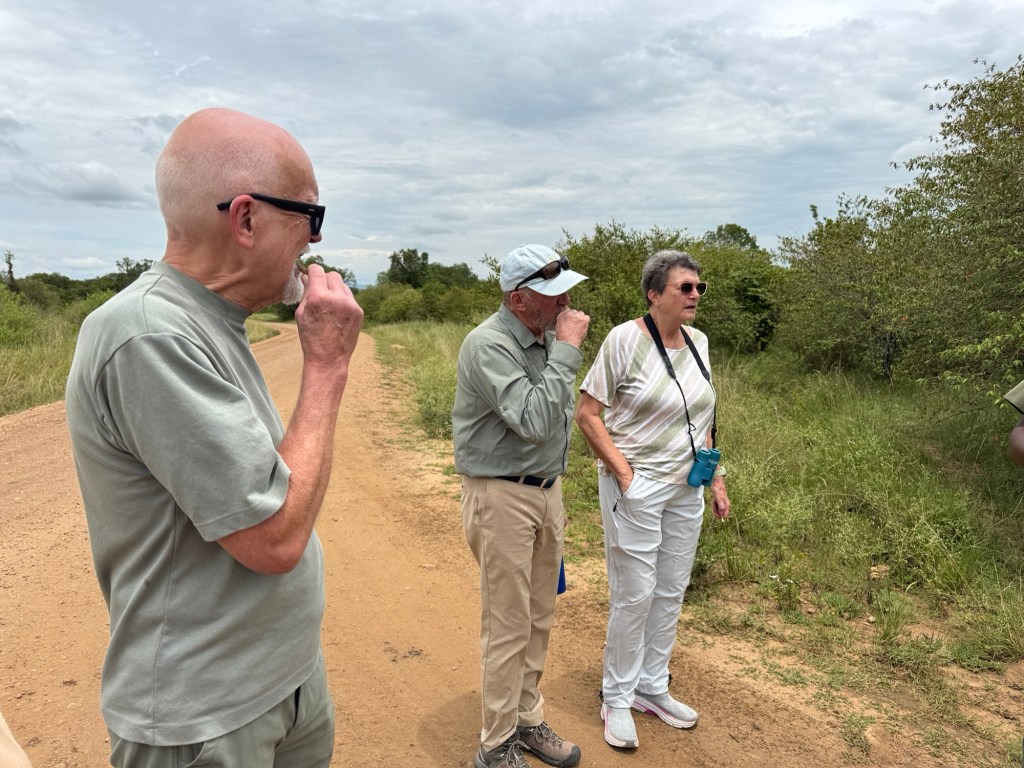
He taught us about Maasai culture and demonstrated how to use a twig of the green hat tree as a toothbrush.
The guides are in contact with each other via radio communication. Ours was advised of lions in the immediate vicinity. We came upon a male sitting in the field of flowers reminding me of Ferdinand the Bull from a childhood storybook. The bull, destined for the bullring, wasn’t fierce at all. His happy place was sitting in a field, smelling the flowers.
The next lion was of the fierce variety, munching on a buffalo carcass.
I’ll spare you the video with sounds of crunching bones.
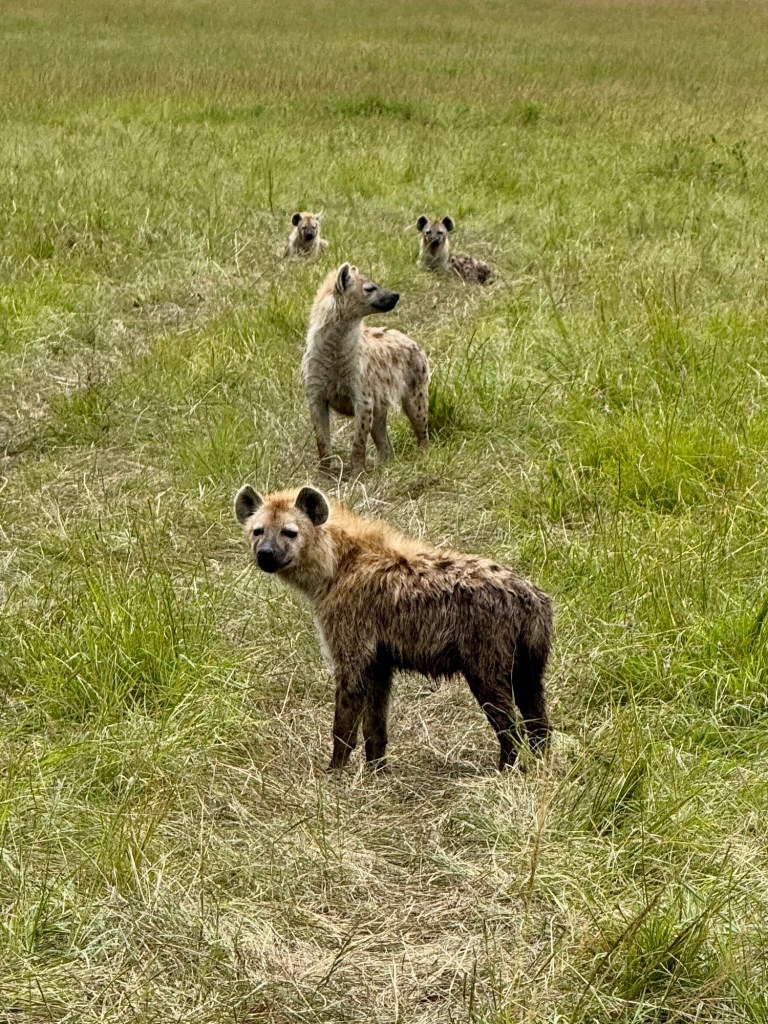
Across the road hyenas and vultures were awaiting their turn.
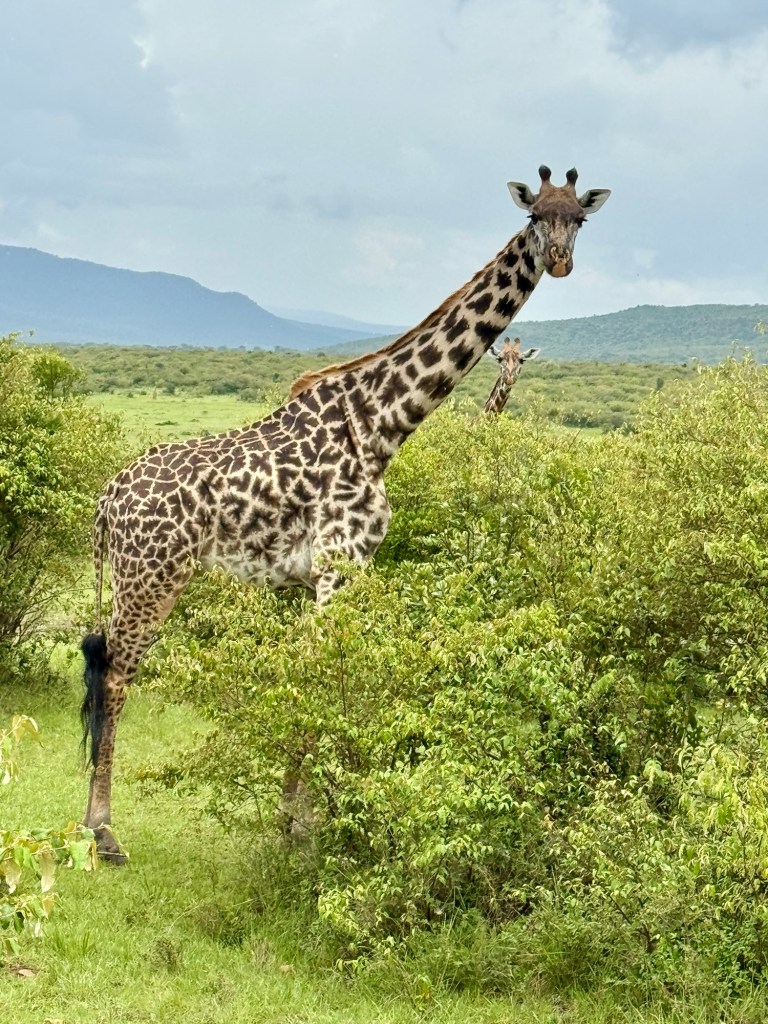
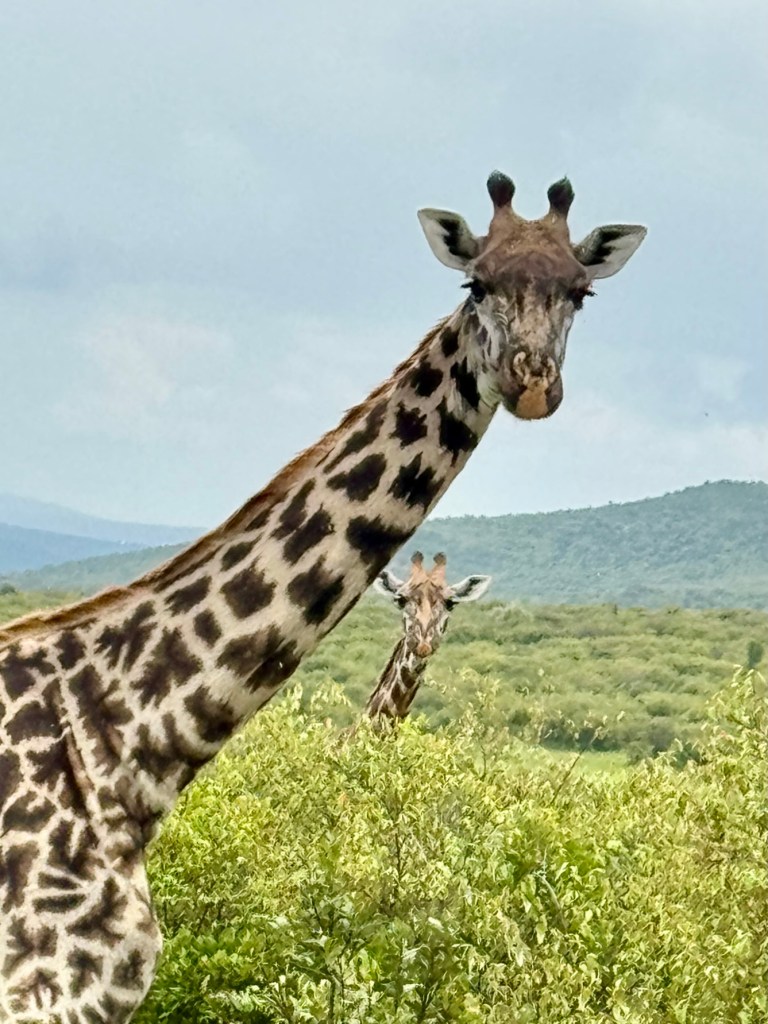
On the way back to the lodge we had a giraffe photobomb experience. As I took the picture another giraffe popped up out of the trees.
The real fun begins. At 7:30 we met our guide, David, from Nairobi and the rest of our group, Brian and Mindy, a couple from San Diego. We boarded our Land River for a 245 kilometer (152 miles), five hour ride from Nairobi to Maasai Mara.
Two rest stops were included: the great rift valley overlook:
and a giant souvenir shop where an employee follows you encouraging you to fill a shopping basket. They won’t price an item individually, wanting to give you one total at the end. It’s not the way I shop so I left empty handed.
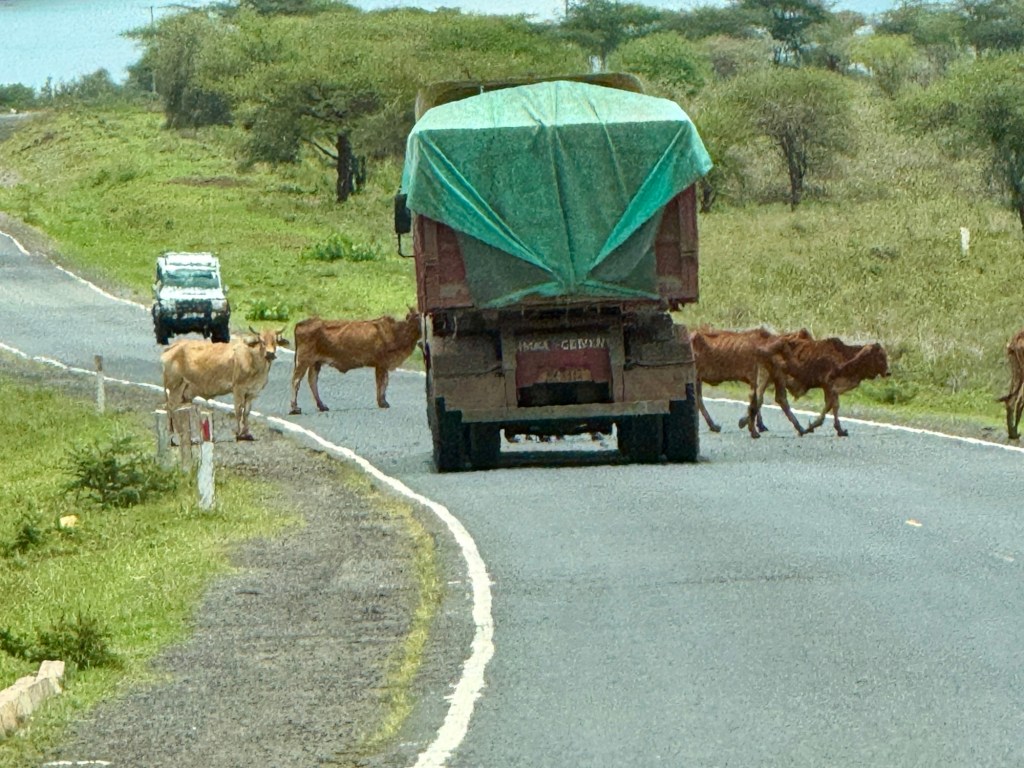
We passed many Maasai herdsmen and their goats, sheep and cows, having to slow down for road crossings. The law says if you hit one of their animals you are responsible for compensating the owner.
The pavement stopped 45 minutes before our destination, replaced by bumpy clay and rock roads, which David dubbed a free Kenyan back massage.
We arrived at the Sopa Maasai Mara Lodge in time for our first evening game drive.
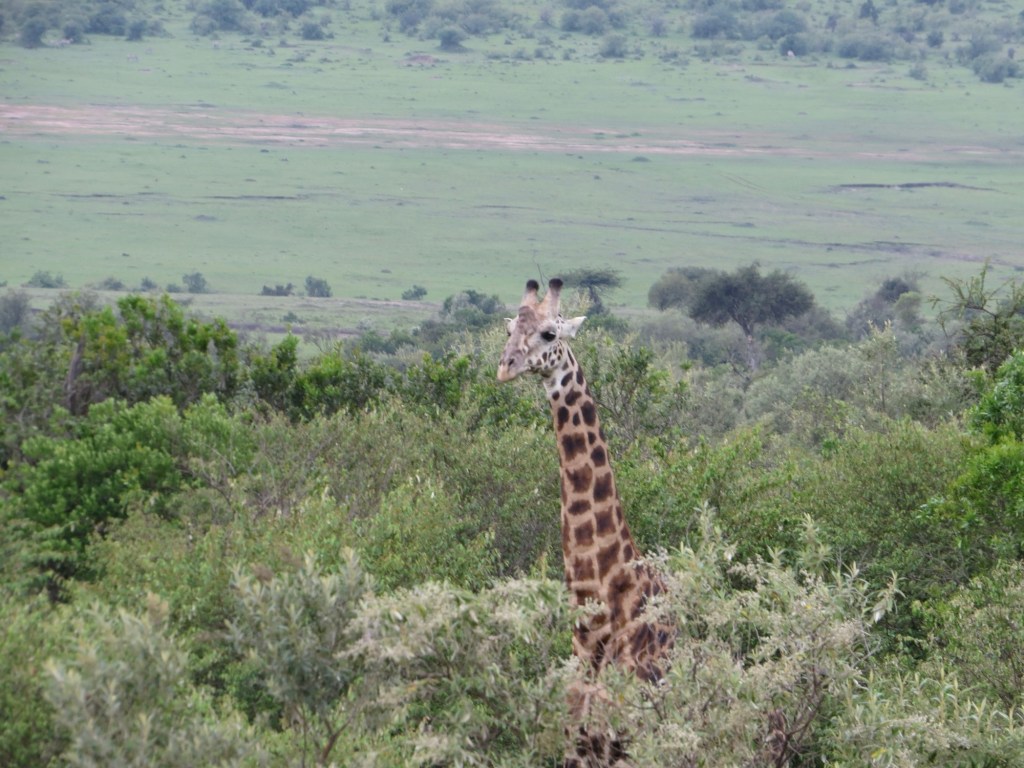
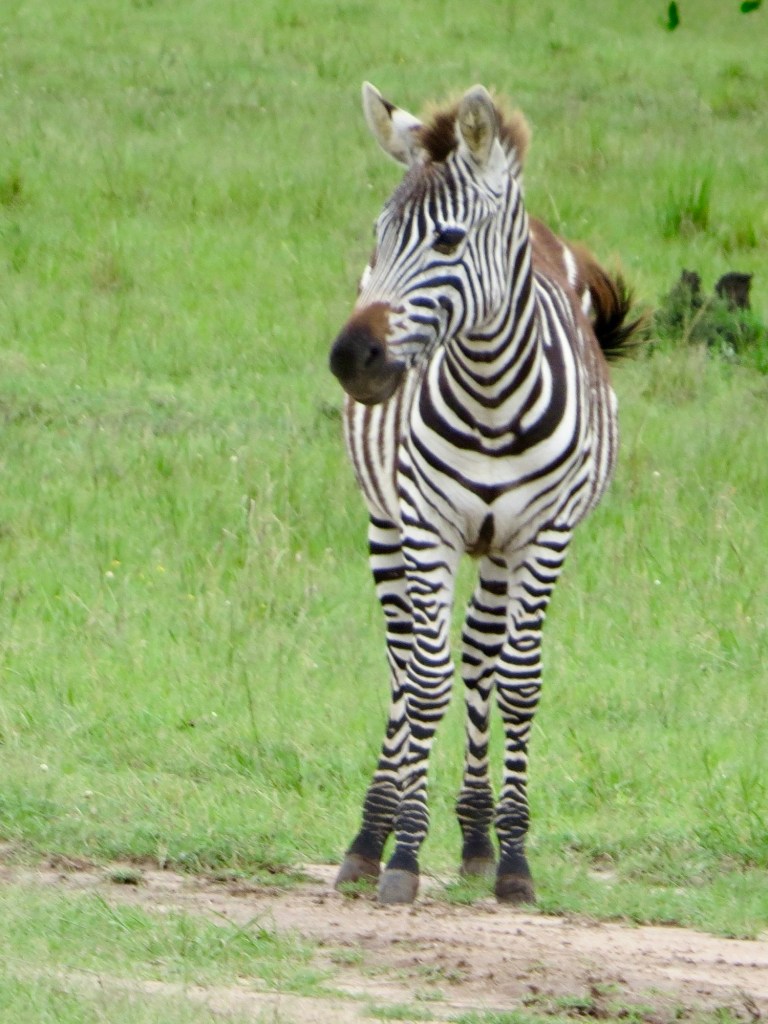
Maasai Giraffe – you can tell by the patterns of their spots.A young zebra, besides from their small size they have some brown stripes.A cheetahA gnu aka wildebeest.HyenaAn elephant family
We were stunned by the amount and variety of animals; there was hardly a time when you didn’t see something.
























 Life's a Stitch